
Over a third of American adults consume alcohol on a regular basis, but many of them are unaware that the effects of alcohol can be felt very quickly on the scale.
Alcohol abuse is full of empty calories and interferes with the body’s ability to burn fat, making it incredibly easy to gain weight when consuming alcohol.
Understanding the effects of alcohol on weight, as well as your eating and drinking habits, is key to making the best choices for your body.
Table of Contents
- Alcohol And Weight Gain: Core Facts
- How Alcohol Influences Metabolism And Fat
- Hidden Calories: Alcohol’s Role In Diets
- Alcohol’s Impact On Appetite And Decisions
- Reducing Alcohol For Weight Management Success
Key Takeaways
| Point | Details |
|---|---|
| Caloric Impact of Alcohol | Alcohol significantly contributes hidden calories, often totaling hundreds per drinking session, which can hinder weight management. |
| Metabolic Disruption | Alcohol consumption slows down fat metabolism as the liver prioritizes alcohol processing over energy utilization. |
| Hunger and Decision-Making | Alcohol increases appetite and impulse control issues, leading to poorer food choices and overeating. |
| Strategic Reduction | To manage weight effectively, consider reducing alcohol intake and opting for lower-calorie options and mindful consumption practices. |
Alcohol and Weight Gain: Core Facts
Alcohol consumption has a profound effect on the body weight due to a number of different mechanisms that are involved. The research shows that alcohol not only adds up to a great amount of calories in a person’s diet, but also disrupts some essential metabolic processes in the body.
The caloric content of many alcoholic drinks is often underestimated due to the fact that alcohol is mixed with various other ingredients to make different cocktails. One shot of spirit has about 150 calories, and it does not take that many shots to reach 600 or even 1000 calories in one go.
One should also consider the fact that alcohol abuse affects the body’s ability to break down fat, essentially stopping the process while the liver deals with the metabolism of alcohol.
The increased consumption of alcohol also leads to weight gain due to a number of different hormonal and behavioral reasons.
The research shows that alcohol not only increases a person’s appetite, but also causes them to make worse nutritional choices and have a harder time sleeping. All of these factors, when added together, can have a very severe effect on the body weight of a person who drinks alcohol frequently or in large amounts. People tend to eat more when they are drunk and also choose worse types of food, such as fast food.
Pro tip: If you do decide to have alcohol, then try to always choose lighter cocktails with fewer calories, such as vodka and soda water. You should also limit yourself to no more than 1 or 2 drinks and have a meal high in protein before going out or drinking.
How Alcohol Influences Metabolism and Fat?
Alcohol abuse has a damaging effect on the human body since it triggers several physiological processes that can contribute to weight gain and unhealthy weight loss.
Drinking heavily can considerably raise the risk of gaining weight due to several health conditions deriving from alcohol consumption.
The liver is highly involved in the process of alcohol metabolism, and it actively works on decomposing alcohol molecules. The liver stops working on fat molecules when it detects alcohol, so fat is not burned as efficiently as it should.
Research shows that heavy drinking can considerably hinder the fatty acid oxidation process, which is essential for breaking down fats in the body.

Apart from metabolic effects, alcohol consumption has a number of other adverse effects on the human body that are connected with weight gain. Specifically, alcohol consumption raises the level of hunger hormones, decreases inhibitions, and increases cortisol levels – a stress hormone that promotes fat storage in the abdominal area.
Moreover, the body’s metabolism processes alcohol as a foreign substance, which not only disrupts the breakdown of consumed food but also causes it to be stored as fat.
Pro tip: To reduce the harmful impact of alcohol on your body’s metabolism, try to alternate each drink with a glass of water, eat some protein-rich food before going to a bar or restaurant, and do not overindulge.
Hidden Calories: Alcohol’s Role in Diets
Alcohol calories may be one of the least considered aspects of a person’s diet that can severely impact their weight.
Alcohol can both impede weight loss and cause overweight if not consumed in moderation.
The calories that come from alcohol are empty calories, meaning they have no nutritional value and simply add up to the person’s daily count.
This can be highly detrimental to the person trying to go on a diet because their efforts can be quickly undone without them even realizing it.
The amount of calories in alcohol may also prove to be surprisingly high to the person.
A single 5-ounce glass of wine already has about 125 calories, and a 12-ounce beer has about 150 calories.
Mixed drinks can be even more caloric, with some of them containing as much as 500 calories.
All of these calories add up quickly and can severely affect a person’s weight if they are consuming such foods regularly.
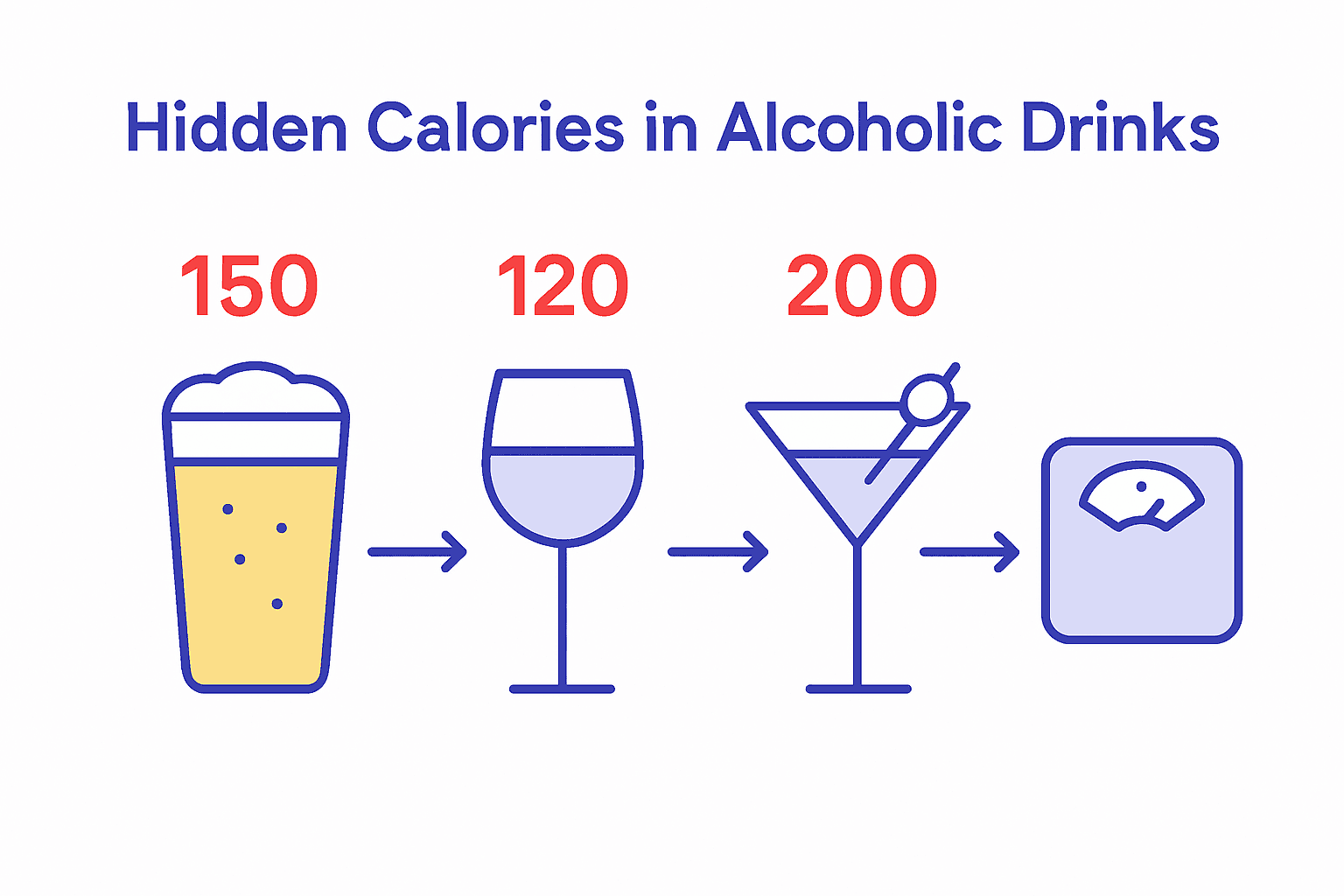
Here’s a comparison of common alcoholic drinks and their approximate calorie counts per serving:
| Beverage Type | Standard Serving Size | Approximate Calories | Additional Notes |
|---|---|---|---|
| Beer | 12 oz (355 ml) | 150 | Varieties can increase calories |
| Wine (red/white) | 5 oz (148 ml) | 125 | Dessert wines have more calories |
| Light Beer | 12 oz (355 ml) | 90-100 | Lower in carbs and alcohol |
| Vodka (plain) | 1.5 oz (44 ml) | 97 | Mixers can add significant calories |
| Sweet Cocktail | 6-8 oz (177-237 ml) | 200-500 | Depends on sugar and liqueurs |
Besides the caloric content, alcohol is uniquely challenging to the human organism. The reason is that when alcohol is ingested, the body’s metabolism shifts priorities to eliminate it, which in turn suppresses fat metabolism.
In other words, you are not just consuming empty calories with every drink; you are also preventing your body from burning existing fat.
Pro Tip: If you are calorie conscious and have to drink, choose lighter options (e.g., vodka with zero-calorie mixers) and limit yourself to one or two drinks per week. Remember that alcohol calories count towards your daily intake.
Alcohol’s Impact on Appetite and Decisions
Drinking alcohol fundamentally changes the decision-making process and perception of appetite.
The influence of ethanol on the brain is complicated, but scientists have established that alcohol consumption provokes changes in judgment formation and feeding behavior, which is a problem when reducing weight.
One of the reasons for the failure of a diet when a person drinks alcohol is a change in the quality and quantity of food due to altered decision-making processes.
There are several reasons why alcohol has such effects on the body.
First, drinking depresses the center of hunger and reduces the feeling of fullness for a certain period.
As a result, a person may eat much more than usually, especially when consumed food is calorie-dense.
Second, alcohol consumption may also cause a change in food choice, resulting from the altered functioning of the hypothalamus.
This part of the brain regulates appetite and the sense of satisfaction, so when it works improperly, it may provoke episodes of overeating and the selection of less healthy foods than usual.
Considering that the calories in alcohol are also significant, regular drinking may lead to weight gain, due to both the food and the drinks themselves.
Moreover, alcohol consumption may interfere with the work of a diet because it affects a lot of different processes in the body, like hunger and impulsivity.
This summary explains how alcohol affects weight regulation from multiple angles:
| Mechanism | Effect on Weight | Description |
|---|---|---|
| Hidden Calories | Promotes gain | Adds non-nutritive energy to diet |
| Fat Metabolism | Slows fat burning | Liver prioritizes alcohol over fat oxidation |
| Appetite Increase | Boosts food intake | Disrupts hunger and satiety signals |
| Impulse Reduction | Poor food choices | Decreases self-control and rational choices |
| Sleep Disruption | Alters hormones | Impacts metabolism and recovery processes |
Pro Tip: Impulse Control Strategy: Eat a protein-rich meal before drinking, stay hydrated with water between alcoholic drinks, and pre-plan healthy snack options to counteract alcohol-induced appetite disruptions.
Reducing Alcohol for Weight Management Success
Tips for Successful Weight Loss: Smart Drinking Habits
When it comes to losing weight, consideration must be given to alcohol consumption. After all, drinks sabotage any diet because they come with plenty of empty calories.
Moreover, alcohol abuse interferes with the normal functioning of the metabolism, as the body burns calories to get rid of alcohol instead of fat.
Therefore, if someone is serious about dropping pounds, they need to limit alcohol consumption to the minimum and go on a path to better health.
The main reason why people who want to lose weight should avoid drinking is the amount of calories in different types of alcohol.
Although different types of alcohol have different caloric content, mixed drinks and cocktails have the highest amount of calories in them, ranging from 200 to 500 calories per serving.
To reduce the number of calories that come from alcohol, one must develop new healthy habits and bring changes to their lifestyle.
For someone who wants to lose weight, the best dietic strategy would be to go from frequent drinking to special occasions to moderate use or even stop drinking altogether.
People can achieve success in weight loss if they replace evening cocktails with sparkling water and find an alternate way of relieving tension and stress.
In addition, it is important to note that even a small decrease in alcohol consumption can have a positive effect on one’s weight and overall health.
Finally, to stop drinking or reduce the amount of alcohol consumed, one needs to develop a strategic plan and adhere to it.
Pro Tip: An individual can monitor their progress and bring more and more restrictions by calculating how much they drink per week and replacing alcoholic drinks with zero-calorie water or tea.
Take Control of Alcohol’s Impact on Your Weight and Health Today
Struggling with the hidden calories and disruptions to metabolic processes that alcohol consumption brings can be stressful.
Increased hunger and the reduced ability of the body to burn fat, along with the decreased control over impulses, pose a significant challenge to weight loss efforts.
If cutting calories and exercising more is not an option, it may be time to consider alternative approaches to getting in shape.
Learn how to minimize the damage alcohol does to the liver with theLiver Damage – LeanAndFit and eliminate the cravings for liquor by mastering the valuable hydration tactics fromHydration Focus – LeanAndFit .
Right now is the best time to do something different and get healthier as hundreds of people have already done.
So why not join them and discover the most effective ways to fight alcohol abuse and weight gain that experts at LeanAndFit.info have to offer?