Over one third of American adults report regularly consuming alcohol, yet few realize how quickly those drinks can impact the number on the scale.
Alcohol is packed with hidden calories and disrupts your body’s natural ability to burn fat, so even moderate intake can lead to weight gain.
Understanding how drinking affects metabolism, appetite, and decisions can help you make smarter choices that support your health without sacrificing enjoyment.
Table of Contents
- Alcohol And Weight Gain: Core Facts
- How Alcohol Influences Metabolism And Fat
- Hidden Calories: Alcohol’s Role In Diets
- Alcohol’s Impact On Appetite And Decisions
- Reducing Alcohol For Weight Management Success
Key Takeaways
| Point | Details |
|---|---|
| Caloric Impact of Alcohol | Alcohol significantly contributes hidden calories, often totaling hundreds per drinking session, which can hinder weight management. |
| Metabolic Disruption | Alcohol consumption slows down fat metabolism as the liver prioritizes alcohol processing over energy utilization. |
| Hunger and Decision-Making | Alcohol increases appetite and impulse control issues, leading to poorer food choices and overeating. |
| Strategic Reduction | To manage weight effectively, consider reducing alcohol intake and opting for lower-calorie options and mindful consumption practices. |
Alcohol and Weight Gain: Core Facts
Alcohol consumption significantly impacts body weight through multiple complex metabolic and behavioral mechanisms.
Research indicates that alcoholic beverages contribute substantial hidden calories while simultaneously disrupting normal metabolic processes that regulate weight management.
The caloric density of alcoholic drinks is often overlooked. A standard alcoholic beverage contains approximately 150 calories, which can quickly accumulate.
When individuals consume multiple drinks, these calories add up rapidly – a single evening of drinking could introduce an extra 600 to 1000 calories into their diet.
Moreover, alcohol metabolism interferes with the body’s fat-burning capabilities, essentially pausing normal metabolic fat oxidation while the liver prioritizes alcohol processing.
Beyond direct caloric impact, alcohol consumption triggers significant hormonal and behavioral changes that promote weight gain.
Scientific evidence suggests that alcohol consumption increases appetite, reduces impulse control around food choices, and disrupts sleep patterns – all factors that contribute to potential weight gain.
Individuals who drink regularly often experience increased hunger, make less nutritionally sound food selections, and are more likely to consume high-calorie snacks during and after drinking.
Pro Tip: Strategic Drinking Approach: If you choose to drink alcohol, opt for lower-calorie options like vodka with soda water, limit your intake to 1-2 drinks, and always eat a protein-rich meal before consuming alcohol to help mitigate its metabolic disruptions.
How Alcohol Influences Metabolism and Fat?
Alcohol profoundly disrupts the body’s metabolic processes, creating a complex chain of physiological responses that dramatically impact fat storage and processing.
Chronic alcohol consumption fundamentally alters how the human body manages and metabolizes lipids, triggering a cascade of metabolic changes that can lead to significant weight gain and potential health complications.
The liver plays a critical role in this metabolic disruption. When alcohol enters the body, the liver prioritizes metabolizing alcohol over other metabolic functions, essentially halting normal fat burning processes.
Scientific research demonstrates that excessive alcohol intake impairs fatty acid oxidation, which means the body becomes less efficient at breaking down and utilizing fat stores.
This metabolic interference leads to increased fat accumulation, particularly in the liver, creating a condition known as fatty liver disease.

Beyond direct metabolic interference, alcohol consumption triggers hormonal changes that further complicate weight management. Alcohol stimulates appetite, reduces inhibitions around food choices, and increases cortisol levels – a stress hormone associated with abdominal fat storage.
Additionally, the body processes alcohol calories differently than food calories, converting them more readily into fat and disrupting the normal energy utilization pathways.
Pro Tip: Metabolic Protection Strategy: When consuming alcohol, alternate each alcoholic drink with a full glass of water, eat a protein-rich meal beforehand, and limit consumption to minimize metabolic disruption and potential weight gain.
Hidden Calories: Alcohol’s Role in Diets
Alcohol calories represent a surprisingly significant and often overlooked component of dietary intake, creating substantial challenges for individuals attempting to manage their weight.
Empty calories from alcoholic beverages can quickly derail weight loss efforts by introducing substantial energy without providing nutritional value, effectively sabotaging carefully planned diet strategies.
The caloric density of alcoholic drinks is frequently underestimated. A standard 5-ounce glass of wine contains approximately 125 calories, while a typical beer delivers around 150 calories.
Mixed drinks can be even more calorie-dense, with cocktails ranging from 200 to 500 calories depending on ingredients.
These seemingly innocent beverages can rapidly accumulate, potentially adding thousands of extra calories per week for regular drinkers, which translates directly into potential weight gain.
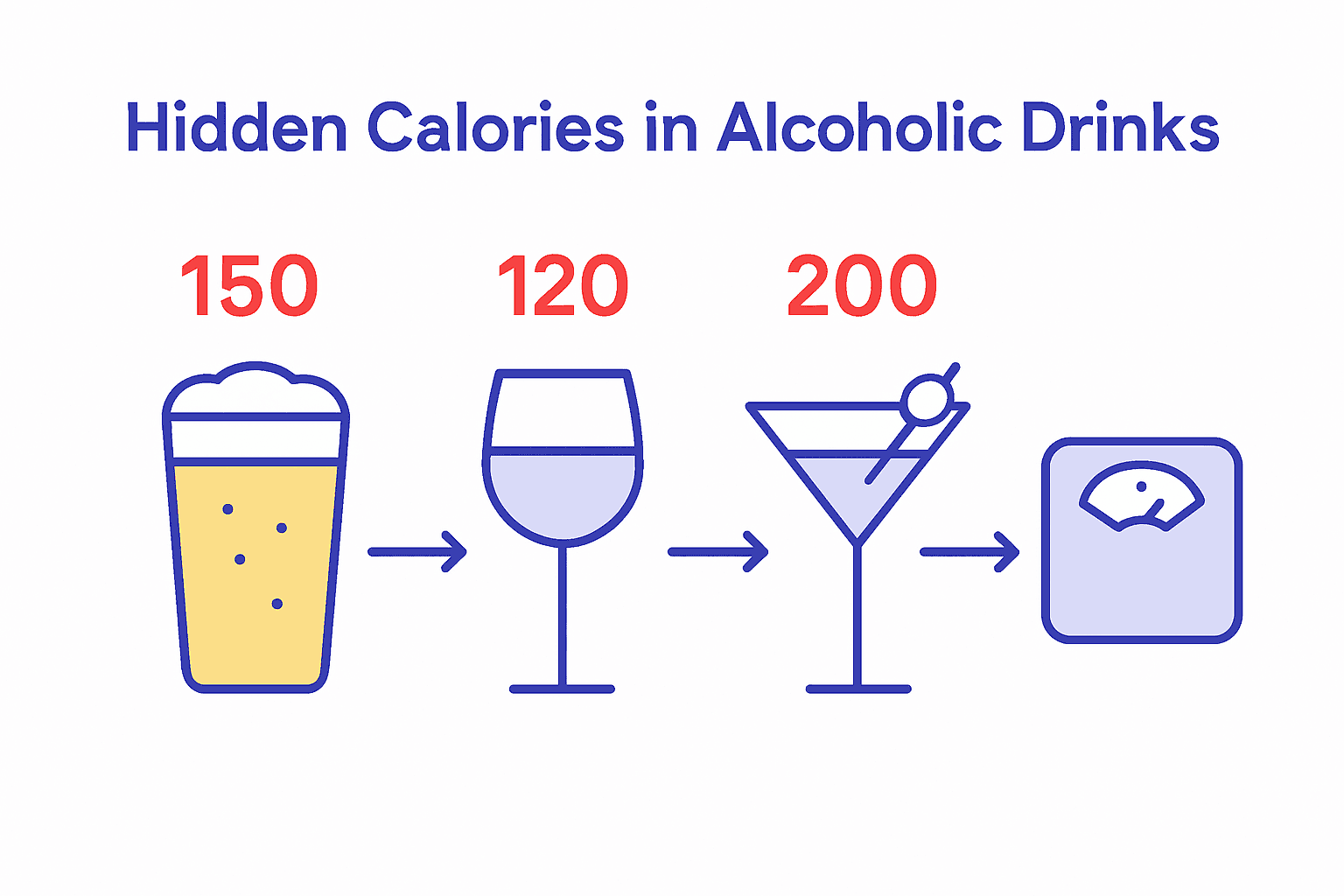
Here’s a comparison of common alcoholic drinks and their approximate calorie counts per serving:
| Beverage Type | Standard Serving Size | Approximate Calories | Additional Notes |
|---|---|---|---|
| Beer | 12 oz (355 ml) | 150 | Varieties can increase calories |
| Wine (red/white) | 5 oz (148 ml) | 125 | Dessert wines have more calories |
| Light Beer | 12 oz (355 ml) | 90-100 | Lower in carbs and alcohol |
| Vodka (plain) | 1.5 oz (44 ml) | 97 | Mixers can add significant calories |
| Sweet Cocktail | 6-8 oz (177-237 ml) | 200-500 | Depends on sugar and liqueurs |
Beyond pure caloric content, alcohol metabolizes differently compared to other nutrients, creating unique challenges for weight management. When alcohol enters the system, the body immediately prioritizes its metabolism, effectively pausing fat burning and nutrient processing.
This metabolic interruption means that not only are you consuming extra calories, but your body’s natural fat-burning mechanisms are temporarily suspended, creating a double-negative impact on weight loss efforts.
Pro Tip: Calorie Consciousness Strategy: Choose lower-calorie alcoholic options like vodka with zero-calorie mixers, limit weekly alcohol intake, and always account for these hidden calories in your overall dietary tracking.
Alcohol’s Impact on Appetite and Decisions
Alcohol consumption dramatically transforms decision-making processes and appetite regulation, creating a complex neurological landscape that undermines weight management efforts.
Alcohol’s profound impact on judgment significantly increases the likelihood of consuming high-calorie foods and making impulsive dietary choices that can derail even the most disciplined nutrition plans.
The neurological mechanisms behind alcohol’s appetite influence are intricate and multifaceted. Scientific research demonstrates that alcohol disrupts the body’s natural hunger and satiety signals, leading to decreased inhibition and increased food consumption.
Specifically, alcohol interferes with hypothalamic neurons responsible for appetite regulation, causing individuals to feel hungrier and make less nutritionally sound food selections.
This neurological disruption means that not only do people consume more calories through alcohol itself, but they’re also more likely to engage in additional unplanned eating.
Beyond direct appetite manipulation, alcohol creates a cascade of hormonal and psychological changes that compromise dietary discipline. Alcohol reduces prefrontal cortex functionality, which governs impulse control and rational decision-making.
This neurological impairment means that individuals are more likely to abandon dietary goals, choose convenience over nutrition, and consume larger portion sizes.
The combination of reduced inhibition, increased hunger signals, and compromised decision-making creates a perfect storm for potential weight gain.
This summary explains how alcohol affects weight regulation from multiple angles:
| Mechanism | Effect on Weight | Description |
|---|---|---|
| Hidden Calories | Promotes gain | Adds non-nutritive energy to diet |
| Fat Metabolism | Slows fat burning | Liver prioritizes alcohol over fat oxidation |
| Appetite Increase | Boosts food intake | Disrupts hunger and satiety signals |
| Impulse Reduction | Poor food choices | Decreases self-control and rational choices |
| Sleep Disruption | Alters hormones | Impacts metabolism and recovery processes |
Pro Tip: Impulse Control Strategy: Eat a protein-rich meal before drinking, stay hydrated with water between alcoholic drinks, and pre-plan healthy snack options to counteract alcohol-induced appetite disruptions.
Reducing Alcohol for Weight Management Success
Successful weight management requires strategic approaches to alcohol consumption, recognizing its significant impact on metabolic processes and overall nutrition.
Limiting alcohol intake represents a critical intervention for individuals seeking sustainable weight loss, as alcoholic beverages introduce substantial empty calories that can quickly derail dietary progress.
The metabolic consequences of alcohol consumption extend far beyond simple calorie counting. Alcohol disrupts normal metabolic functioning by forcing the body to prioritize alcohol processing over fat burning, essentially pausing the body’s natural weight management mechanisms.
This metabolic interference means that not only are individuals consuming extra calories, but they’re simultaneously reducing their body’s ability to efficiently metabolize existing fat stores.
Different types of alcohol vary in caloric density, with mixed drinks and cocktails often containing the highest calorie counts, ranging from 200 to 500 calories per serving.
Reduction strategies require a comprehensive approach that addresses both psychological and physiological challenges. For individuals committed to weight management, transitioning from frequent drinking to occasional, mindful consumption can yield significant benefits.
This might involve establishing specific alcohol-free days, choosing lower-calorie alcoholic options, or developing alternative stress management techniques that don’t involve alcohol.
Medical research indicates that even modest reductions in alcohol intake can substantially improve weight loss outcomes and metabolic health.
Pro Tip: Strategic Reduction Method: Implement a gradual alcohol reduction plan by tracking your weekly intake, replacing alcoholic drinks with sparkling water or herbal tea, and setting specific, achievable goals for decreasing consumption.
Take Control of Alcohol’s Impact on Your Weight and Health Today
Struggling with hidden calories and metabolic disruptions from alcohol can feel overwhelming.
The challenges of increased appetite, slowed fat burning, and impaired decision-making create barriers to effective weight management.
If you are ready to protect your liver health and boost your weight loss journey, focus on actionable strategies that empower you to make mindful choices.
Explore how Liver Damage – LeanAndFit reveals crucial connections between alcohol and metabolic stress while learning hydration techniques from Hydration Focus – LeanAndFit to reduce alcohol’s negative effects.
Now is the perfect time to join countless others who transformed their health by understanding alcohol’s real effects.
Visit LeanAndFit.info to access expert guidance, proven lifestyle tips, and natural solutions that help you break free from alcohol-related weight gains. Start your journey to a healthier, leaner you right now.