Getting started with low-impact exercise can feel intimidating, especially when balance and safety are a priority.
Many American seniors want to stay active while making sure their environment protects against slips or falls.
By focusing on creating a safe chair exercise space, you set yourself up for success and enjoy greater confidence during each workout.
Table of Contents
- Step 1: Set Up A Safe Chair Exercise Space
- Step 2: Warm Up To Prepare Your Body
- Step 3: Perform Core Chair Exercises For Seniors
- Step 4: Monitor Form And Adjust Movements
- Step 5: Track Progress And Celebrate Milestones
Quick Summary
| Key Takeaway | Explanation |
|---|---|
| 1. Create a Safe Exercise Space | Choose a stable chair, clear hazards, and ensure good lighting to enhance safety during exercises. |
| 2. Warm Up with Simple Movements | Perform gentle chair-based warm-up exercises for 5-8 minutes to prepare your body and reduce injury risk. |
| 3. Focus on Proper Exercise Form | Maintain correct posture and check for pain signals to maximize benefits and prevent injury during workouts. |
| 4. Track Progress Regularly | Use a workout journal and goal setting to monitor improvements, enhancing motivation and commitment to fitness. |
| 5. Celebrate Small Achievements | Acknowledge and reward yourself for progress, no matter how minor, to maintain enthusiasm and support mental wellness. |
Step 1: Set Up a Safe Chair Exercise Space
Creating a safe and comfortable chair exercise environment is crucial for seniors looking to improve mobility and wellness.
A well-prepared exercise space can help prevent injuries and make workouts more enjoyable.
When setting up your chair exercise area, start by selecting the right chair. Choose a stable chair without wheels that provides solid support.
The ideal chair should have:
- A sturdy, non-sliding base
- Firm seat with no cushioning that might cause instability
- No armrests to allow full range of motion
- Sufficient width to accommodate comfortable movements
Position the chair in an open area with plenty of space around it. Remove any potential tripping hazards like rugs, electrical cords, or low furniture.
The room should have good lighting and a clear path for movement in case you need additional support.
Here’s a comparison of chair exercise safety features and their impact for seniors:
| Safety Feature | Purpose | Impact on Seniors |
|---|---|---|
| Stable, no-wheel chair | Prevents movement during exercise | Reduces risk of falls or tipping |
| Non-slip footwear | Enhances traction on floors | Provides steadier footing |
| Clutter-free space | Minimizes tripping hazards | Improves accessibility and safety |
| Adequate lighting | Ensures better visibility | Helps identify obstacles easily |
Ensure you have supportive athletic shoes with non-slip soles to provide additional stability during exercises.
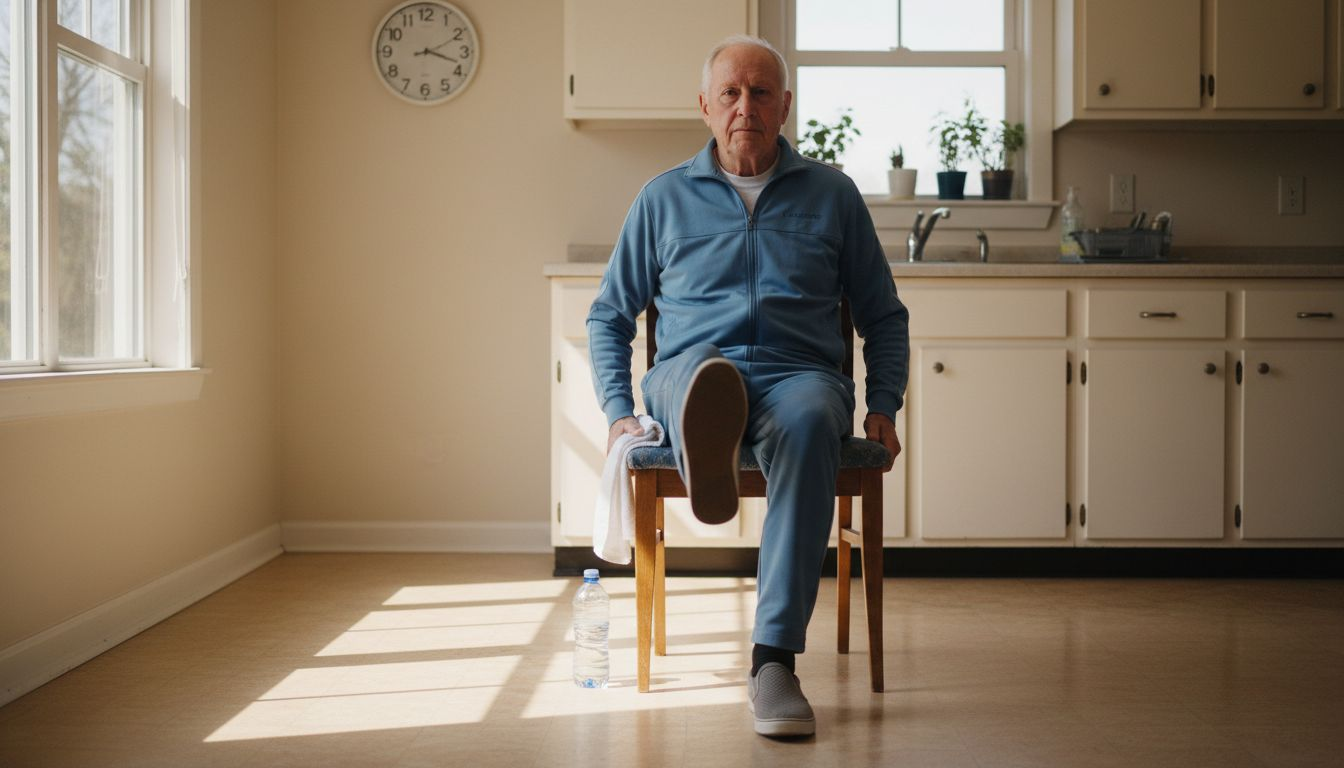
Keep a water bottle nearby and have a supportive surface or wall within reach if you need momentary balance assistance.
Safety is your top priority – always listen to your body and stop if you experience any discomfort.
Pro tip: Before beginning any exercise routine, consult with your healthcare provider to ensure the activities are appropriate for your individual health needs.
Step 2: Warm Up to Prepare Your Body
When engaging in chair exercises, preparing your body through a proper warm-up is essential for seniors looking to improve mobility and reduce injury risk.
Gentle warm-up movements gradually increase heart rate and prepare muscles for more intensive activity.
Start your warm-up routine with these simple chair-based movements:
- Seated marching: Lift your knees alternately while sitting
- Ankle rotations: Rotate each ankle in circular motions
- Shoulder rolls: Gently roll shoulders forward and backward
- Neck stretches: Slowly turn your head side to side
Focus on performing each movement slowly and deliberately.
Breathe steadily throughout the warm-up, maintaining a comfortable pace that allows your body to gradually increase circulation and muscle flexibility.
Aim to spend 5-8 minutes completing these preparatory exercises.
A proper warm-up reduces the risk of strain and helps your body transition smoothly into more challenging movements.
Pro tip: If you feel any sharp pain or excessive discomfort during warm-up, stop immediately and consult your healthcare provider.
Step 3: Perform Core Chair Exercises for Seniors
Core chair exercises help seniors build strength, improve balance, and enhance overall mobility.
These targeted movements can be performed safely from the comfort of a sturdy chair, allowing you to strengthen your core muscles without putting excessive strain on your body.
Begin your core workout with these essential seated exercises:
- Seated leg lifts: Slowly raise one leg straight out in front, hold for 3 seconds, then lower
- Knee extensions: Extend each leg forward, holding for 2-3 seconds at full extension
- Seated marches: Lift your knees alternately, simulating a marching motion
- Torso twists: Gently rotate your upper body from side to side while keeping your lower body stable
When performing these exercises, focus on maintaining proper posture and breathing steadily.
Start with 8-10 repetitions of each movement, gradually increasing as you build strength and confidence.
Remember to move slowly and deliberately, listening to your body and stopping if you experience any discomfort.
Consistency is key – even small, regular movements can significantly improve your core strength and overall mobility.
Pro tip: Always keep a water bottle nearby and take breaks as needed during your exercise routine.
Step 4: Monitor Form and Adjust Movements
Proper form is crucial for preventing injury and maximizing exercise benefits during chair exercises.
Paying close attention to your body’s signals and maintaining correct posture can help you perform movements safely and effectively.
Use these guidelines to monitor and adjust your exercise form:
- Check your posture: Sit upright with shoulders back and spine straight
- Breathe steadily: Maintain regular breathing during each movement
- Move slowly: Perform exercises with controlled, smooth motions
- Watch for pain signals: Stop immediately if you experience sharp or intense discomfort
Listen to your body and make modifications as needed. If a particular exercise feels too challenging, try reducing the range of motion or number of repetitions. Some movements might require partial adaptation based on your individual strength and flexibility levels.
Small adjustments can make a big difference in preventing strain and maintaining exercise safety.
Pro tip: Consider using a mirror or asking a family member to observe your form to ensure you’re performing exercises correctly.
Step 5: Track Progress and Celebrate Milestones
Tracking fitness progress helps seniors stay motivated and engaged in their chair exercise journey.
Monitoring your improvements can provide a sense of accomplishment and encourage continued commitment to your wellness routine.
Use these strategies to effectively track and celebrate your progress:
- Create a workout journal: Record the number of repetitions for each exercise
- Take periodic measurements: Note changes in mobility, strength, and flexibility
- Set realistic goals: Establish achievable milestones that challenge you
- Take progress photos: Capture visual evidence of your physical improvements
Recognize and reward yourself for every achievement, no matter how small.
Whether it is completing an extra repetition or maintaining consistency for a full week, these victories are significant.
Share your progress with supportive family members or friends who can help cheer you on and boost your motivation.
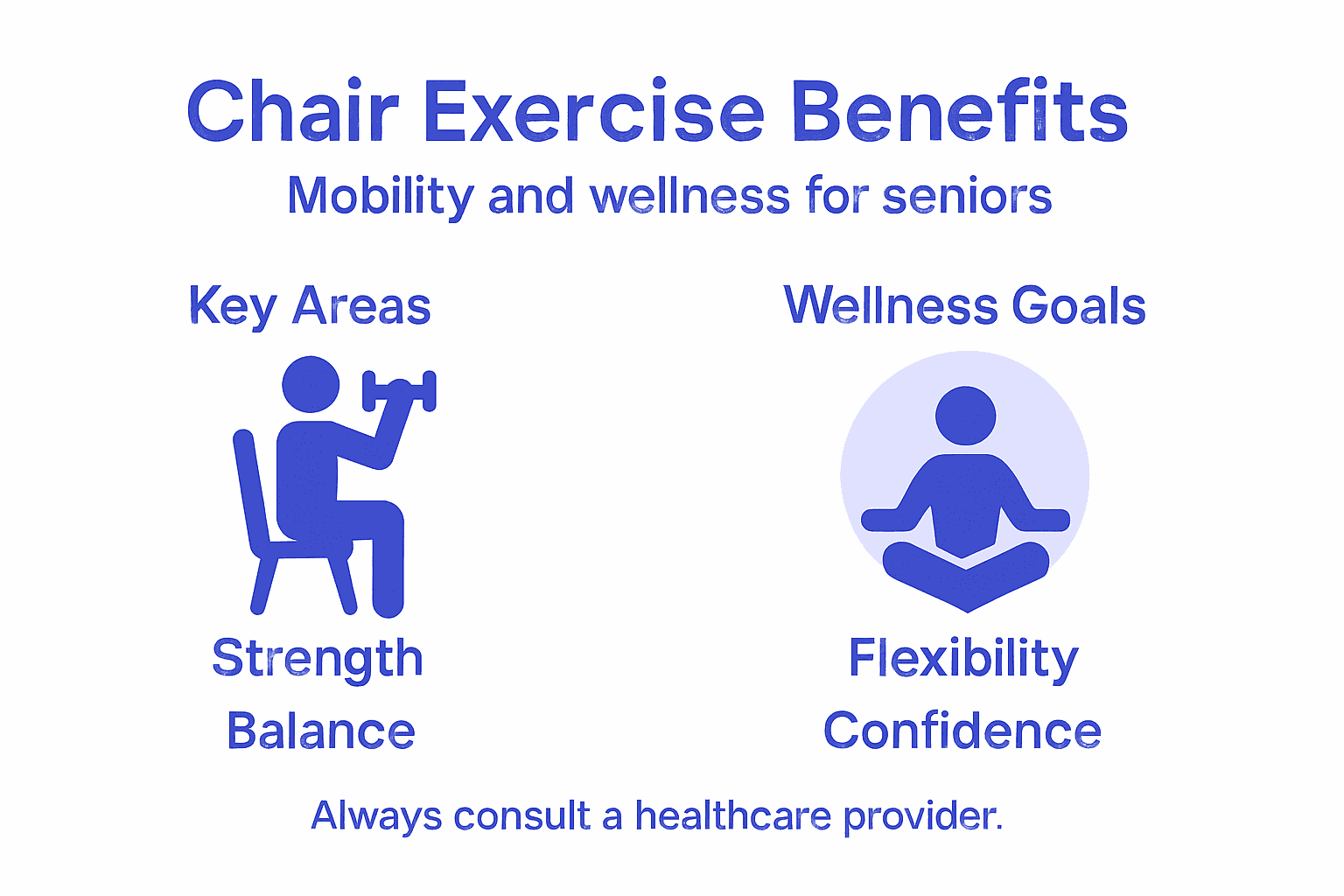
This summary table shows how different progress tracking methods help motivate seniors:
| Tracking Method | What It Measures | Motivation Benefit |
|---|---|---|
| Workout journal | Repetitions, workout details | Shows consistency and growth |
| Periodic measurements | Changes in mobility/strength | Highlights physical improvement |
| Progress photos | Visual body changes | Provides visible proof of gains |
| Set milestone goals | Achieved objectives | Creates sense of achievement |
Small, consistent improvements lead to remarkable long-term health transformations.
Pro tip: Consider using a simple smartphone app or notebook to log your daily exercises and track your steady progression.
Enhance Your Mobility Journey with Proven Chair and Bodyweight Exercises
Improving mobility and wellness through chair exercises is a smart step for seniors facing challenges like limited movement or balance concerns.
If you want to build strength safely from home while respecting your body’s signals, exploring Bodyweight Exercises – LeanAndFit can open up new possibilities for full-body conditioning without strain.
Pairing these with core-focused moves in your chair routine will help you steadily regain confidence in everyday activities.

Ready to take control of your mobility and wellness today?
Discover practical, step-by-step guidance and effective resistance training techniques by visiting Resistance Workouts – LeanAndFit and enrich your routine with inspiring methods from Pilates Sculpt – LeanAndFit.
Start now at LeanAndFit and experience the focused support your body deserves.
Frequently Asked Questions
Q-1: What are chair exercises for seniors?
A-1: Chair exercises for seniors are seated movements designed to enhance strength, balance, and flexibility. They are particularly beneficial for those who may have mobility limitations, allowing them to exercise safely from a sturdy chair. Start a routine with simple movements like seated leg lifts or knee extensions to improve your overall wellness.
Q-2: How can I create a safe space for chair exercises at home?
A-2: To create a safe space for chair exercises, select a stable chair with a sturdy base and no wheels. Ensure the area is free of clutter and tripping hazards, and position the chair in a well-lit area with plenty of space around it. Make these adjustments to your environment to promote a safe exercise experience.
Q-3: What should I do to warm up before chair exercises?
A-3: Warming up before chair exercises is essential to prepare your body and reduce injury risk. Engage in gentle warm-up movements like seated marching, ankle rotations, and shoulder rolls for about 5-8 minutes to gradually increase your heart rate and flexibility. Incorporate these warm-up activities into your routine before starting your exercises.
Q-4: How do I monitor my form during chair exercises?
A-4: To monitor your form during chair exercises, focus on maintaining an upright posture, steady breathing, and controlled movements. If you experience any discomfort, adjust your movements or reduce the range of motion. Pay attention to your body’s signals, and make modifications as needed to ensure you exercise safely.
Q-5: How can I track my progress with chair exercises?
A-5: Tracking your progress with chair exercises can keep you motivated and accountable. Use a workout journal to note repetitions, set achievable goals, and capture any improvements in strength or mobility. Regularly revisit your goals and celebrate small achievements to maintain your commitment to wellness.
Recommended
- Understanding Weight Loss for Seniors: A Clear Guide – LeanAndFit
- 7 Home Workout Ideas for Weight Loss and Fitness Success – LeanAndFit
- Home Exercises for Beginners: Start Weight Loss Today – LeanAndFit
- 7 Best Exercises for Core Strength and Weight Loss – LeanAndFit
- Schwimmen lernen im Alter: Schritt-für-Schritt zum Erfolg
- Why Trust Us?
- For medical purposes only