
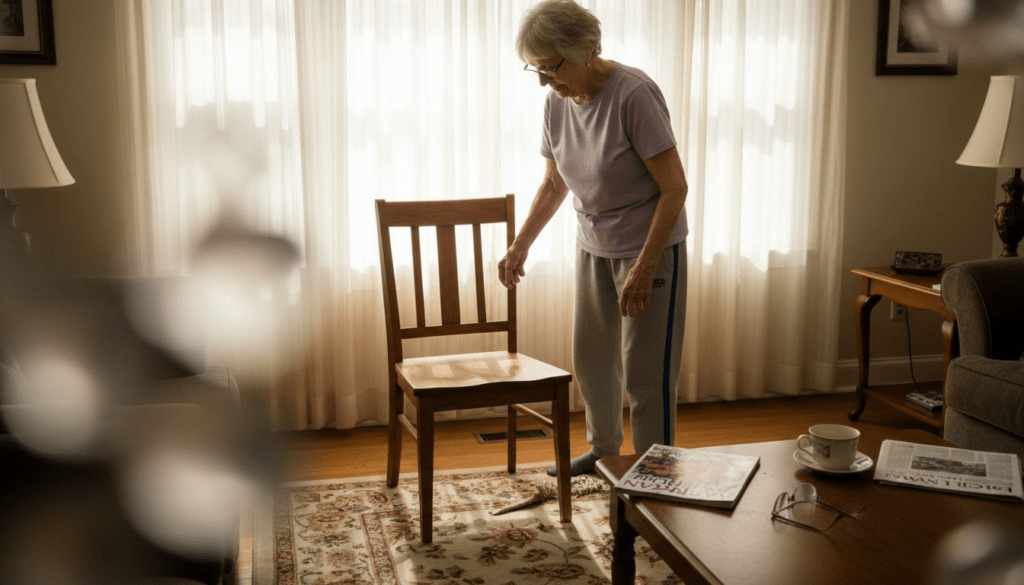
Getting started with low-impact exercise can be scary.
Many American seniors want to get active while also being able to prevent falls in their home.
By being able to create a safe chair exercise area, you will see success and feel better with every movement you make.
So, chair exercises for seniors to improve mobility is an ideal way to stay fit without any risk of unwanted injuries.
Table of Contents
- Step 1: Set Up A Safe Chair Exercise Space
- Step 2: Warm Up To Prepare Your Body
- Step 3: Perform Core Chair Exercises For Seniors
- Step 4: Monitor Form And Adjust Movements
- Step 5: Track Progress And Celebrate Milestones
Quick Summary
| Key Takeaway | Explanation |
|---|---|
| 1. Create a Safe Exercise Space | Choose a stable chair, clear hazards, and ensure good lighting to enhance safety during exercises. |
| 2. Warm Up with Simple Movements | Perform gentle chair-based warm-up exercises for 5-8 minutes to prepare your body and reduce injury risk. |
| 3. Focus on Proper Exercise Form | Maintain correct posture and check for pain signals to maximize benefits and prevent injury during workouts. |
| 4. Track Progress Regularly | Use a workout journal and goal setting to monitor improvements, enhancing motivation and commitment to fitness. |
| 5. Celebrate Small Achievements | Acknowledge and reward yourself for progress, no matter how minor, to maintain enthusiasm and support mental wellness. |
Step 1: Set Up a Safe Chair Exercise Space
Creating a safe and comfortable chair exercise environment is the key to seniors’ mobility and wellness.
An appropriately prepared exercise space can significantly reduce the risk of injuries and make workouts more enjoyable for the participant.
When exercising in a chair, the choice of furniture itself becomes part of the exercise equipment:
- The best option is a firm chair without wheels at the bottom.
- It should also be stable – without sliding on the floor, with a sturdy, hard seat, free of any additional cushioning, and no armrests on the sides.
- One should also make sure that the chair is wide enough to comfortably accommodate a person’s natural movements during exercise.
- The chair should be placed in a quiet and well-lit room that has enough space around it to free up enough space to stretch out if necessary.
- Wires or any other objects that could bump on the legs when performing movements should be removed from the room.
- There should also be a clear path to exit the room in case something is uncomfortable or a participant needs assistance during the workout.
Here’s a comparison of chair exercise safety features and their impact for seniors:
| Safety Feature | Purpose | Impact on Seniors |
|---|---|---|
| Stable, no-wheel chair | Prevents movement during exercise | Reduces risk of falls or tipping |
| Non-slip footwear | Enhances traction on floors | Provides steadier footing |
| Clutter-free space | Minimizes tripping hazards | Improves accessibility and safety |
| Adequate lighting | Ensures better visibility | Helps identify obstacles easily |
Make sure to have supportive athletic shoes with non-slip soles to help provide extra stability and have a water bottle nearby and a wall or chair to lean on (if needed).
Always remember to put your safety first by stopping if you feel any pain.
It is best to speak with your doctor before starting any physical activity to make sure the exercises are safe for you.
Step 2: Warm Up to Prepare Your Body
When doing chair exercises, it is important to warm up properly before the main workout for seniors to have a good warm-up for mobility and prevent injuries.
Warm-up movements should be gentle and help to raise the pulse and prepare muscles for active movements.
Most simple movements can be done while sitting in a chair to warm up:
- movement of legs up and down,
- rotation of the ankles,
- shoulders stretching,
- as well as lifting the head from side to side.
The movements should be slow and deliberate, and the breathing should be calm and steady.
As a result of such exercises, the muscles will be prepared for more intense activity, and joints will be warmed up.
The warm-up stage should ideally last from 5 to 8 minutes.
These exercises will help to gradually raise the pulse and prepare the muscles for upcoming physical activity.
If during the warm-up exercises some sudden pain occurs, the exercises should be stopped and the doctor should be contacted.
Step 3: Perform Core Chair Exercises for Seniors
You can do core chair exercises for seniors to help them strengthen their core and improve their balance and mobility
All the following workouts are perfect for a senior to do from a sitting position. They will work on core strength, flexibility, and balance.
A few basic core exercises that seniors can do from a chair include:
- Seated leg lifts
- Knee extensions
- Seated march
- Seated twist
When exercising the core, it is critical to have the correct posture.
When starting, 8-10 repetitions per exercise are ideal. Also, seniors should take small steps and work at their own pace. It is a good idea to suggest that a senior stops the exercise if they feel any pain.
The core muscle group is a fantastic place for seniors to start when working out.
If you are a senior, you can use the following chair exercises to work on strengthening your core. Strengthening the core helps older adults maintain balance and flexibility and prevents falls.
Seniors must always stretch and work out at their own pace.
Even working out slower for a more extended period can yield excellent results. Core chair workouts are perfect for seniors because they are simple, effective, and can be done anywhere.
Tip of the Day: Remember to breathe while doing these core chair workouts. Also, seniors should always have water nearby and take breaks if needed.
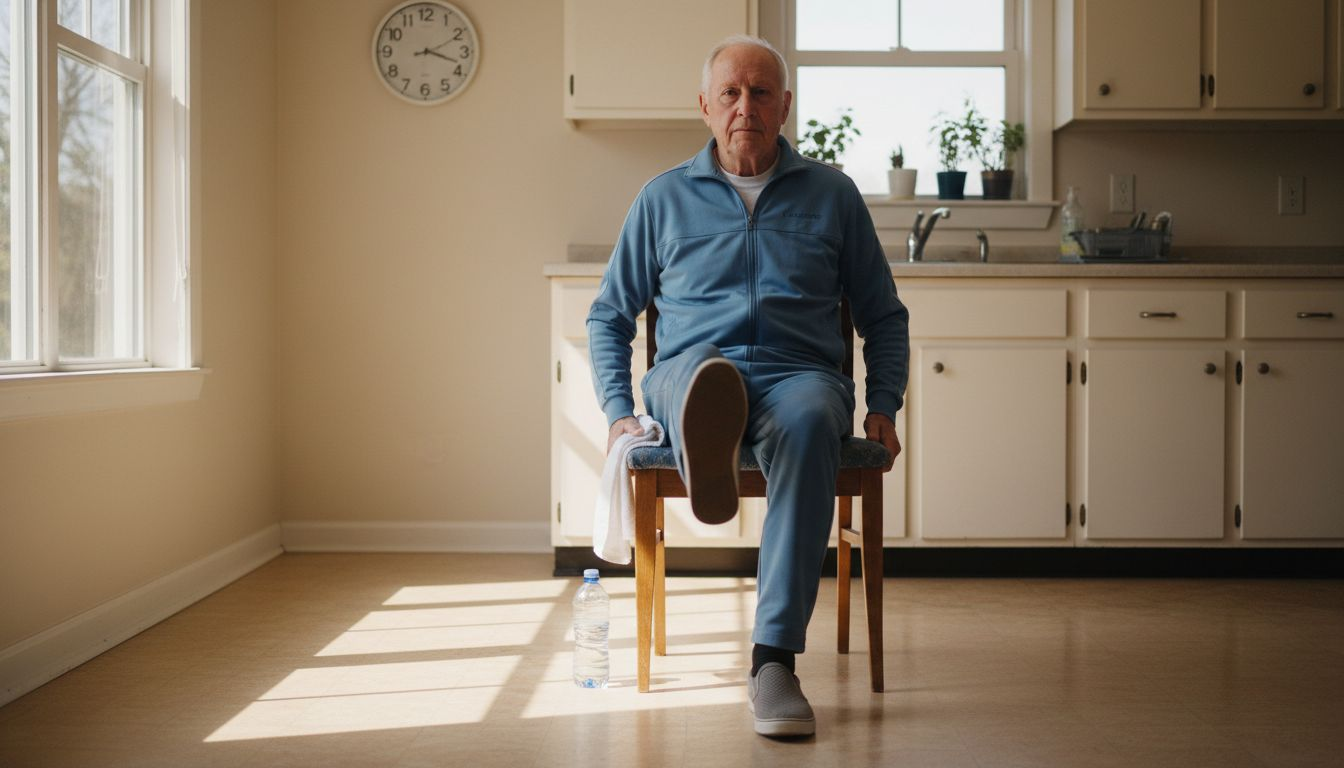
Step 4: Monitor Form and Adjust Movements
Proper form is important to prevent injury and get the most out of your workouts while sitting on a chair. It will help you to listen closely to your body and control how you’re exercising. By following these tips on proper form when working out on a chair, you can prevent any injuries and keep exercising effectively.
Here are some ways to keep exercising properly on your chair:
- Make sure that you are sitting up straight with a good posture
- Breathe regularly
- Always move slowly
- Most importantly, if you feel any type of pain, immediately stop
You should always adjust your movements to whatever you are comfortable with. If you don’t want to do a certain exercise, then find an easier version or cut down on the amount of repetitions.
Sometimes there are small changes you can make to help an exercise be safer.
An important tip to remember is to possibly get a mirror or have a family member watch you exercise so you can make sure you are doing everything right.
Step 5: Track Progress and Celebrate Milestones
Tracking your progress towards your fitness goals can be a great way to help motivate and engage seniors into a chair exercise routine.
Having the ability to see improvements made can give the participant a sense of accomplishment and will ensure that they are staying on track with their fitness journey.
Here are some ways to ensure that you are tracking and celebrating your progress:
- Set up a workout journal to log how many reps you are doing for each exercise
- Take measurements at certain points to show improvement in mobility, strength, and flexibility
- Set SMART goals that can help challenge you
- Take progress pictures to visually see a difference in your body
- Celebrate your accomplishments no matter how big or small they may be
- Whether its doing an extra rep or sticking to a routine for a week, everything is a victory.
- Ask family or friends to help keep you accountable or share the news of your accomplishments with you.
This summary table shows how different progress tracking methods help motivate seniors:
| Tracking Method | What It Measures | Motivation Benefit |
|---|---|---|
| Workout journal | Repetitions, workout details | Shows consistency and growth |
| Periodic measurements | Changes in mobility/strength | Highlights physical improvement |
| Progress photos | Visual body changes | Provides visible proof of gains |
| Set milestone goals | Achieved objectives | Creates sense of achievement |
Small, consistent improvements lead to remarkable long-term health transformations.
Pro tip: Consider using a simple smartphone app or notebook to log your daily exercises and track your steady progression.
Enhance Your Mobility Journey with Proven Chair and Bodyweight Exercises
Improvement of mobility and wellness through chair exercises is an excellent way to address the difficulties associated with the decreased range of motion and balance that often accompany aging.
By focusing on ways to gain strength from the comfort of your home and not go beyond your limits, the chance to improve your overall well-being and achieve total body conditioning will become highly possible with the help of Bodyweight Exercises – LeanAndFit .
Combined with effective core workouts, this mode of improving your health will allow you to return to performing everyday tasks with increased confidence and control.
Are you ready to start making a difference in your life today?
Check out Resistance Workouts – LeanAndFit , which provides the necessary guidance for accomplishing your goals, and add Pilates Sculpt – LeanAndFit to your chair workouts to gain access to an array of motivational techniques and resistance training advice.
So why wait? Get started with LeanAndFit now and give your body the special attention it needs!
Frequently Asked Questions:
Q-1: What are the best chair exercises for seniors to improve mobility and balance at home?
A-1: Chair workouts are beneficial as they reduce stress on joints while enhancing flexibility and balance.
Chair marches, leg extensions, arm raises, and twists are excellent senior chair exercises that can be performed at home to improve functionality and flexibility.
In America, approximately 36% of Americans aged 65 years and older experience limited mobility. Therefore, it is essential to identify the best chair workouts that can be performed at home.
A well-structured set of chair exercises can provide an appropriate daily routine that would last between 10 and 15 minutes. Moreover, it is possible to enhance mobility and balance by simply moving daily, even if only for a few minutes.
Q-2: What are easy seated exercises for elderly people to increase flexibility and strength?
A-2: Seated knee lifts, ankle rotations, shoulder rolls, and forward reaches are ideal flexibility and strength exercises for elderly people. Stretching and flexibility exercises play a significant role in enhancing the lives of seniors.
Flexibility exercises are necessary because they reduce the likelihood of injury and enhance balance. Forward reaches, side bends, and torso twists are appropriate flexibility exercises for elderly people.
It is typically recommended that seniors begin with 8 to 10 repetitions. However, repetitions can be increased as seniors gain flexibility and strength.
Q-3: How do chair workouts benefit seniors with limited mobility and joint pain?
A-3: Chair workouts reduce stress on the knee and hip joints, which is ideal for seniors with limited mobility or chronic pain. When working out, the most appropriate position is to sit down and then stand up slowly to minimize the effects of pain or limited mobility.
Working out regularly helps to improve blood flow throughout the body, which reduces stiffness, joint pain, and inflammation. In America, millions of people suffer from chronic musculoskeletal pain, and in such cases, exercising is often the first treatment option.
Q-4: What is a daily chair exercise routine for seniors to improve wellness and independence?
A-4: A daily chair exercise routine can be performed for a minimum of 15 minutes, with a set of simple chair workouts that can help to achieve fitness and wellness objectives.
A simple chair workout routine would include 3-minute seated marches, 2-minute arm circles, 3-minute leg extensions, 2-minute torso twists, and 5-minute stretching. According to the CDC, older adults should participate in at least 150 minutes of physical activity per week.
Q-5: Are low-impact chair exercises effective for older people with mobility difficulties?
A-5: Low-impact chair workouts are appropriate forms of exercise for seniors with mobility issues because they reduce stress on the body while still improving muscle strength.
Such exercises also reduce stiffness and enhance flexibility, which results in improved mobility levels. Low-impact exercises can help older people with chronic medical conditions to improve their quality of life.
Q-6: How does chair yoga help older people improve flexibility and posture?
A-6: Chair yoga is a gentle stretching and breathing exercise, which enhances strength as well as flexibility. Furthermore, it is critical to note that flexibility and posture exercises can improve posture, which reduces the risk of developing osteoporosis later in life.
Poor posture can cause excessive rounding, forward head, and other musculoskeletal difficulties, which is why seniors need to work on strengthening their posture. Moreover, chair yoga is a relatively simple stretch that can be performed anywhere.
Q-7: What is an effective 15-minute chair workout for seniors?
A-7: Warming up, strengthening, and stretching are appropriate sets of chair exercises that seniors can perform during a 15-minute workout session. Seniors can perform shoulder rolls and ankle rotations for 5 minutes as warm-up stretches.
In addition, strengthening exercises include seated squats (assisted), seated rows (assisted), and arm raises. Finally, stretching should be performed for a minimum of 5 minutes following the warm-up and strengthening exercises.
Q-8: How do chair workouts prevent falls and improve balance in older adults?
A-8: The core is one of the most vital parts of the body when it comes to working out, and chair workouts help to strengthen it. The primary purpose of these workouts is to strengthen the core and leg muscles that support the body.
In America, falls are the leading cause of injury among older people. However, exercising and especially working out helps reduce the likelihood of falls.
Q-9: What are the best seated strength-training exercises for seniors?
A-9: Seated leg lifts, resistance band rows, arm curls, and seated push-ups (assisted) are appropriate strength training exercises for older people.
Strength training is essential because it helps to build and maintain muscle mass. Resistance band rows, for instance, is an advanced level lower-body muscle workout, which targets the back muscles while strengthening the legs and core.
Q-10: Can chair-based exercises help older people with arthritis and stiffness?
A-10: Chair-based exercises are suitable for seniors with Arthritis because they reduce stiffness and, therefore, improve mobility levels. Stiffness is a primary symptom of Arthritis, and regular exercise is often the first line of treatment for this condition.
For older people, exercise is essential for maintaining a healthy weight, which in turn reduces stress on the joints.
📊 Key U.S. Statistics
- 36% of adults 65+ have mobility limitations
- 1 out of 4 seniors falls every year
- Only 28% of older people get the recommended amount of exercise.
- Exercise can cut falls by up to 30%
💡 Actionable Chair Exercise Routine (Beginner-Friendly)
Warm-Up Exercise (5 minutes):
- Shoulder rolls (10 repetitions)
- Neck stretches (gentle, 5 repetitions on each side)
Main Exercise (10 minutes):
- Seated marches (2 minutes)
- Leg extensions (10 repetitions for each leg)
- Arm raises (10 repetitions)
- Torso twists (10 repetitions on each side)
Cool Down Exercise (5 minutes):
- Deep breathing
- Gentle stretching
⚠️ Safety Tips for Seniors
- Using a Stable Chair With Back Support
Keeping Your Feet Flat on the Floor
Avoiding Sudden or Quick Movements
Stops Exertion if You Feel Nauseous or Have a Headache
Talk to Your Doctor Before Engaging in These Exercises
Free Tip for the Day:
Final rewritten version of the content is given below.
Chair exercises represent an excellent opportunity for seniors to remain active and flexible while greatly reducing the risks associated with traditional physical activities.
Such a call for action becomes particularly compelling when examined through the US context, where a disproportionately high number of people face increased risks of diminished mobility or even falls.
The main advantage of the suggested course of action is its relative accessibility, as it does not require a trip to the gym or complex equipment.
Instead, a few simple movements performed on a regular basis will be sufficient to improve one’s balance and, by extension, their quality of life.
Therefore, it may be concluded that chair exercises are a great way to boost seniors’ activity levels and flexibility.
Recommended:
- Understanding Weight Loss for Seniors: A Clear Guide – LeanAndFit
- 7 Home Workout Ideas for Weight Loss and Fitness Success – LeanAndFit
- Home Exercises for Beginners: Start Weight Loss Today – LeanAndFit
- 7 Best Exercises for Core Strength and Weight Loss – LeanAndFit
- Schwimmen lernen im Alter: Schritt-für-Schritt zum Erfolg
- Why Trust Us?
- For medical purposes only