
Finishing the most challenging parts of your workout makes you feel sore and tired, and it also makes it more difficult to lose weight.
So, recovery after workouts is vital for enjoying long term health benefits.
Many American adults who are working hard to get rid of unwanted weight are doing everything they can to lose the weight.
Working out in the proper ways is crucial during recovery and will help your body heal and regain energy for optimal performance, and this will help you get the motivation you need to reach your health goals.
Table of Contents
- What Is Recovery After Workouts?
- Active Vs. Passive Recovery Methods
- How Recovery Supports Weight Loss Goals
- Nutrition’s Role In Effective Recovery
- Common Recovery Mistakes To Avoid
Key Takeaways
| Point | Details |
|---|---|
| Importance of Recovery | Recovery is an active process that plays a vital role in muscle repair and overall performance after workouts. Proper recovery strategies can enhance fitness and prevent injury. |
| Active vs. Passive Recovery | Engaging in light activities after intense exercise promotes circulation and may improve performance, whereas complete rest relies on natural healing. |
| Role of Nutrition | Strategic intake of protein, carbohydrates, and micronutrients is crucial for effective recovery and should be tailored to support post-workout healing and metabolism. |
| Common Mistakes | Avoid overtraining, inadequate nutrition, and poor sleep habits, as they can significantly disrupt recovery and hinder fitness goals. |
What Is Recovery After Workouts?
Workout recovery is the fascinating physiological process that makes your body return to its normal state after physical stress.
Contrary to myths about muscle rest and regeneration, the process is anything but simple.
There are several active mechanisms in your body that contribute to workout recovery, which means that your muscles are repaired, and energy is restored during the post-exercise period.
Overall, there are various recovery mechanisms for muscles since they undergo the most stress during workouts.
The primary purpose of muscle tissue recovery is to restore the structures damaged during physical activity.
Intense exercises cause micro-trauma to muscles, resulting in depleted energy reserves.
Therefore, muscle recovery is a complicated set of processes, including repair of structural components, restoration of energy resources, and reduction of damaging inflammation.
Your body uses several mechanisms for muscle tissue recovery, namely:
1. Muscle protein synthesis.
2. Storage of glycogen.
3. Hormonal cycle regulation.
4. Reduction of inflammation.
Moreover, recovery is not a process that occurs only while exercising.
On the contrary, muscles heal primarily when the body is in a state of rest, meaning that adequate nighttime sleep is essential for workout recovery. During sleep, your body produces growth hormones necessary for the regeneration of muscular tissue.
As a result, the process of muscle tissue recovery is rather involved and contributes to the overall feeling of post-workout malaise.
There is an extended set of mechanisms responsible for repair, growth, and restoration of muscle structures as well as hormonal balance in the body.
Tracking your muscle recovery progress can help you assess your fitness level and determine your current limits.
Active Vs. Passive Recovery Methods
In the context of fitness and weight loss, it is essential to distinguish between active and passive recovery.
The former refers to a concept that employs active but still low-intensity exercises as a healing mechanism.
Active recovery is a process that facilitates the return of the body to its normal state after strenuous physical activity and enables it to prepare for the next one.
The key difference between active and passive recovery is that the former involves some physical activity while the latter does not.
In other words, active recovery is a period of deliberate but gentle exertion, while passive recovery is a state of rest.
Active recovery is particularly useful for boosting endurance and power performance, while passive recovery is more effective for muscle repair.
However, these differences are not absolute, as both types of recovery have their unique benefits.
Active recovery:
>>> Can be used to improve performance
>>> Involves some light physical activity
>>> Facilitates circulation
>>> Helps remove metabolic waste
Passive recovery:
>>> Leads to total muscle relaxation
>>> Is a natural process
>>> Involves little or no movement
The choice between active and passive recovery depends on an individual’s preferences, fitness level, and the type of sport they are engaged in. Moreover, some people use a combination of both to ensure their bodies heal properly.
Here is a summary of how different recovery methods influence your fitness progression:
| Recovery Method | Typical Activities | Benefits for Fitness | Best For |
|---|---|---|---|
| Active Recovery | Walking, light stretching | Faster circulation, energy boost | Reducing next-day soreness |
| Passive Recovery | Rest, relaxation | Deeper muscle repair, hormone balance | Preventing overtraining |
| Combination Approach | Alternating both options | Balanced healing, enhanced motivation | Long-term workout adherence |
Pro tip: Monitor your body’s response to different recovery methods and adjust your strategy based on how quickly you feel refreshed and ready for your next workout.
How Recovery Supports Weight Loss Goals
Weight loss is not simply a matter of calories in and calories out.
It is important to understand that in addition to physical activity, weight loss and fitness require recovery.
Your recovery process directly affects your metabolism and ability to lose weight.
Recovery helps your body repair itself and get back to its normal state.
This means that the muscles you have worked are now stronger and ready to burn more calories, and your metabolic rate is stable.
The following are some of the ways in which recovery aids in weight loss:
>>> Muscle repair and growth
>>> Hormone regulation
>>> Energy restoration
Muscle repair and growth is essential to weight loss, as it helps the body maintain a stable metabolic rate and allows muscles to burn more calories.
Hormone regulation is crucial, as it prevents a decrease in metabolism and helps the body deal with stress.
Finally, energy restoration is necessary to ensure that the body is able to function properly and perform physical activities.
With this in mind, it is important to take the time to allow your body to recover, in order to ensure that your weight loss efforts are successful.
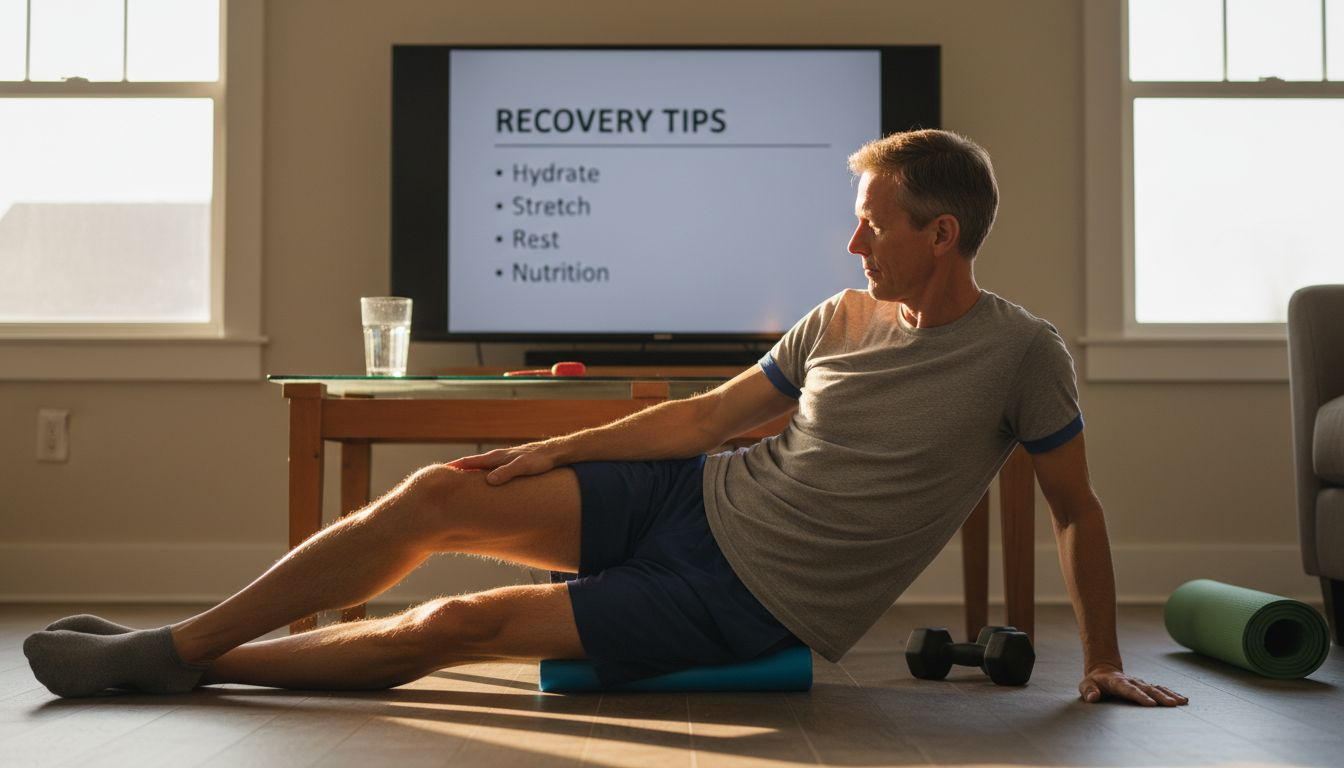
Pro tip: Track your recovery indicators like sleep quality, muscle soreness, and energy levels to fine-tune your weight loss strategy.
Nutrition’s Role in Effective Recovery
Nutrition is the foundation of effective workout recovery, playing an essential role in allowing your body to heal, repair, and prepare itself for the next challenge.
It is important to fuel your body correctly to optimize the recovery process – not only to gain the most benefit from your training but also to support your long-term athletic performance.
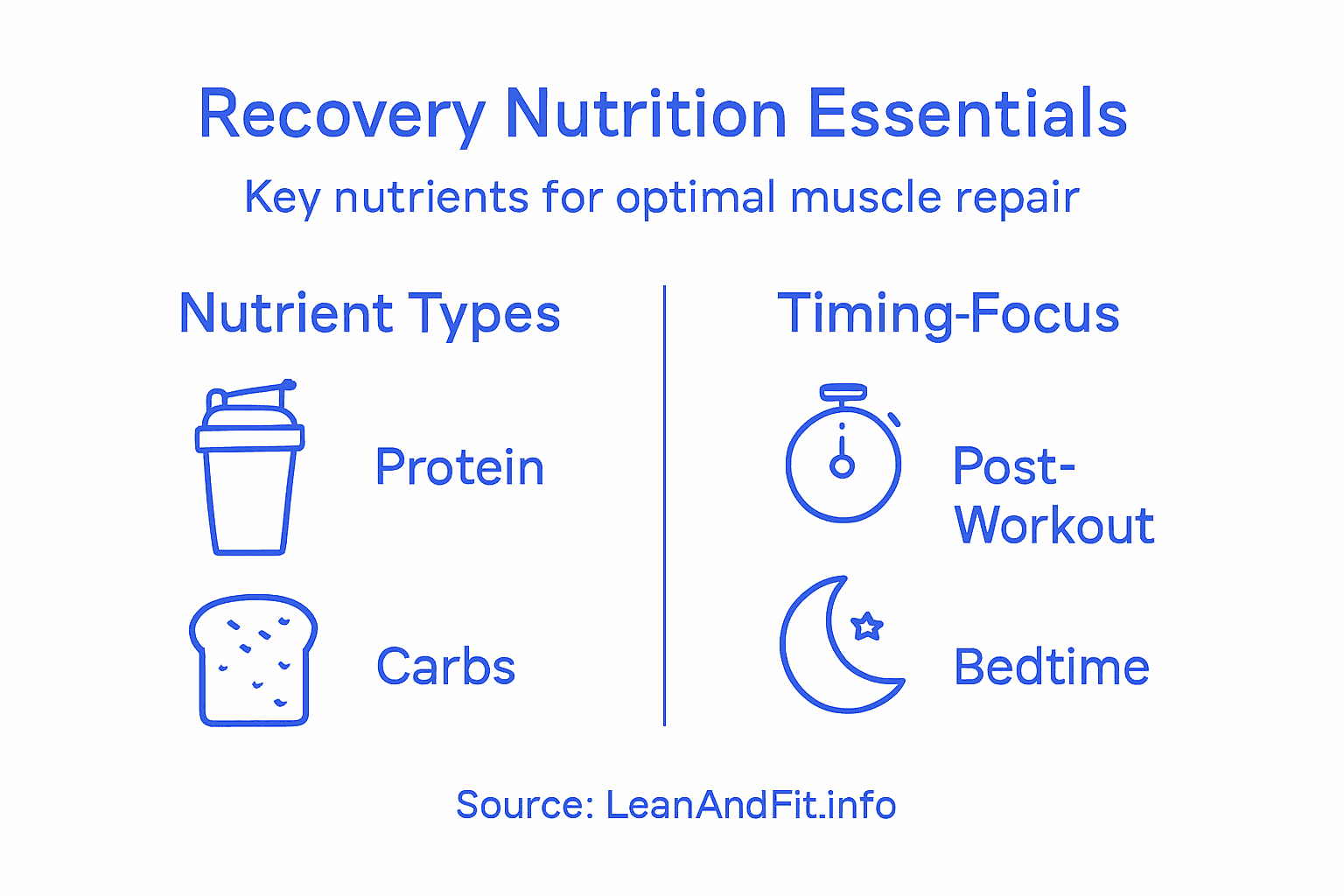
The human body needs certain nutrients for optimal functioning and to allow it to recover after strenuous activity.
Protein, carbohydrates, and micronutrients are essential for repairing tissues, rebuilding energy reserves, and reducing inflammation.
A proper diet can control the body’s response to physical activity and aid in the healing process.
The key components that the human body needs for optimal recovery are as follows:
Proteins
• rebuild and repair muscles;
• synthesize new muscle proteins;
• reduce muscle pain;
Carbohydrates
• restore energy reserves;
• provide the body with energy;
• regulate insulin levels;
Micronutrients
• reduce inflammation;
• strengthen the immune system;
• facilitate the body’s healing response.
It is therefore important to note that the body needs nutrients for optimal recovery.
Each component is vital and should not be ignored. It is not enough to simply eat more: one must eat the right foods at the right time.
The correct diet can maximize the results of weight loss and fitness training by accelerating the body’s recovery.
To help you optimize your recovery, here is a quick reference for ideal post-workout nutrition:
| Nutrient Group | Best Timing | Food Examples | Primary Benefit |
|---|---|---|---|
| Protein | Within 30 minutes | Greek yogurt, eggs | Muscle fiber repair |
| Carbohydrates | Within 1 hour | Bananas, rice cakes | Glycogen restoration |
| Micronutrients | Throughout day | Berries, leafy greens | Inflammation reduction |
Pro tip: Prepare recovery meals and snacks in advance to ensure you have nutrient-dense options immediately after your workout.
Common Recovery Mistakes to Avoid
Recovery is a subtle art that can be easily hampered by several common mistakes that all fitness enthusiasts make. Lack of knowledge about key recovery strategies can hinder your weight loss plans.
Recognizing these mistakes is essential if you want to ensure that you stay on top of your workout performance and achieve your desired results.
The following are some of the most common mistakes that people make when it comes to post-exercise recovery.
Some of the most common mistakes that derail your weight loss plans are:
>>> Overtraining
>>> Failure to time your exercise program correctly in relation to your menstrual cycle (for women)
>>> Not allowing enough rest and repair time between workouts
>>> Failure to eat a healthy balanced diet that supports fitness goals
>>> Poor sleeping patterns
>>> Lack of sleep
>>> Overtraining
This occurs when people push themselves too hard or do too much. It may also occur when they ignore their body’s natural need for rest and continue exercising regardless.
It is a common mistake among fitness enthusiasts and can be easily prevented. Overtraining can result in injuries and compromised immune function.
Inadequate food intake:
This is a serious mistake and one that has adverse health consequences. People lose track of what they eat or skip exercising altogether when they do not eat. Not eating enough after a workout can lead to poor muscle recovery. In addition, not eating enough can result in slow metabolism and promote weight gain.
Poor sleep and lack of sleep:
Without sufficient sleep at night, people are unable to perform well during the day. Lack of sleep also interferes with the body’s hormone production processes which can derail healthy weight loss. A good rule of thumb is to try and get at least seven hours of good quality sleep on a daily basis.
Unlock Faster Weight Loss with Smart Workout Recovery
Recovering properly from each exercise is one of the challenges that all fitness enthusiasts face while trying to increase their fat loss and gain muscle mass.
In this article, you will find several important guidelines and recommendations on muscle recovery, as well as hormonal and nutritional aspects of bodybuilding that should be taken into account to avoid overtraining and maintain an accelerated metabolism.
These pointers can be helpful to everyone who wants to track their progress and achieve new results in their gym performance.
On the LeanAndFit.info resource, you can find the tools and knowledge necessary for effective muscle building.
By visiting the Exercise Regimens – LeanAndFit page, you will be able to select a set of exercises based on the principles of proportional training and muscle recovery.
In addition, to restore muscle tissue, you need to consume quality food with a high caloric value. To do this, you can use the information from the Protein Intake – LeanAndFit page.
Frequently Asked Questions:
Q-1: Why does it feel like recovery is hindering my fat loss?
A-1: Unfortunately, the process of building up your muscles through recovery has an impact on the whole body, boosting your metabolism – therefore, it accelerates fat loss. Without proper recovery, you will feel tired, meaning your future workouts will be lower in intensity, which will prolong the process.
Q-2: Do late nights after a workout negate the calories I have burned?
A-2: They might, as lack of sleep raises stress levels and causes cravings that can promote weight gain. If you sleep less than 6 hours a night, your body will not be able to recover properly, therefore the chance of storing fat increases.
Q-3: Does soreness point to improper recovery or is it a good sign?
A-3: Not all soreness is a bad sign – in fact, slight soreness means that the muscles have been exercised. However, if you feel sore after almost every workout, it indicates that your body is lacking the nutrients to repair itself. Recovery is not linear and it is individual, so it is best to listen closely to your body.
Q-4: What is the importance of staying well hydrated after a workout?
A-4: Staying well hydrated is an essential part of any post-exercise recovery. Water is a key player in the recovery process and an active part of many bodily functions. Lack of water may slow you down and prevent your body from getting rid of waste.
Q-5: Can I benefit from active recovery days in terms of calories burned?
A-5: Active recovery days are the best kind, in my opinion – and they definitely help you burn calories as they contribute to your overall calorie expenditure for the day. They keep your body from being completely at rest, which means that your metabolism is still active.
Q-6: Does the proper diet after a workout play a significant part in weight loss?
A-6: It most definitely does, as post-workout meals and snacks are the ones that put the muscles back together. Your body keeps burning calories even after your workout, so it is important to give it the right amount of nutrition to keep it going.
Q-7: How can one tell whether their recovery process is beneficial?
A-7: You should feel more energetic during your workouts and more rested in general. The feeling of soreness should decrease throughout the recovery process and your sleep should be deeper. If you feel like you have been through a workout just after you finished one, there is a problem.
Recommended
- Strength Training for Weight Loss: Effective Strategies That Work – LeanAndFit
- Top Healthy Weight Loss Tips for Lasting Results – LeanAndFit
- Overcoming Weight Loss Setbacks Naturally: Step-by-Step Guide – LeanAndFit
- How to Choose the Best Protein for Muscle Recovery? – LeanAndFit
- Why trust us?
- For educational purpose only