

Trying to lose weight is not an easy task, especially when a lot of diets that promise rapid results are dangerous for your health.
Many Americans are concerned about putting their bodies through a ketogenic diet and all the harmful side effects that it can cause.
In this article, leanandfit.info research team will be discussing the effects of the ketogenic diet on the body and give advice on the type of food that is better to eat for gradual and healthy weight loss.
This article will help you if you want to learn more about the ketogenic diet and make wiser dietary choices.
Table of Contents
- What Is The Ketogenic Diet And How It Works
- Common Misconceptions About Keto Safety
- Short-Term Health Risks And Side Effects
- Long-Term Dangers And Nutritional Deficiencies
- Who Should Avoid The Ketogenic Diet
- Safer Alternatives For Lasting Weight Loss
Key Takeaways
| Point | Details |
|---|---|
| Keto Diet Basics | The ketogenic diet limits carbohydrates to induce ketosis, relying primarily on fat for energy. |
| Health Risks | Significant health risks exist, particularly for those with pre-existing conditions; medical supervision is essential. |
| Common Misconceptions | Not all fats are beneficial, and rapid weight loss does not equate to improved health; nutrient balance is critical. |
| Safer Alternatives | Sustainable weight loss is best achieved through balanced nutrition, physical activity, and lifestyle changes rather than restrictive diets. |
What Is the Ketogenic Diet and How It Works?
The ketogenic diet, or keto diet, is a revolutionary way of eating that profoundly impacts the human metabolism.
The main characteristic of the keto diet is that it is designed to limit carbohydrate consumption.
Because of this, the body converts fat into ketones that fuel the body, and this process is called ketosis.
A ketogenic food regimen is high-fat and moderately protein-rich with fewer than ten percent of daily calories from carbohydrates.
So, in terms of the usual recommendations, a keto diet suggests ingesting seventy to eighty percent of calories in the form of fats and ten to twenty percent in the form of proteins and ten percent of total calories as carbohydrates.
The goal of the diet is based on a drastic decrease of the bodies’ carbs consumption. Hence, when the body becomes depleted of glucose, and it will try to turn fat into the energy, it needs.
The physiology of the process is quite interesting.
The main reason is based on restricting the amount of carbohydrates as a sugar. Consequently, the body responds by decreasing the blood sugar concentration dramatically.
As a result, the cells signal for insulin reduction since there is enough of it. Hence, the insulin decreases, so all the fat is burned when converting to energy.
The process is very complex and should be performed carefully.
It is a completely different type of burning. When the diet begun, after three to four days, the body usually gets deprived of glycogen and starts craving fat, so the process of ketosis begins.
Key Characteristics of the Ketogenic Diet:
- Extremely low carbohydrate (usually below 50g per day)
- High amount of fats that constitute 70 – 80% of overall consumption
- Protein is consumed in moderate amounts
- The diet is based on natural, non-processed food products
- Aim at maintaining the balance of calories and macronutrients.
Although the diet originated from the medical field to address epileptic disorders, it has become extremely popular among those who want to lose weight.
The transition to this type of nutrition is complicated and requires medical attention to avoid health issues.
Therefore, it is better to consult a physician or a dietician before making such a drastic step.
Common Misconceptions About Keto Safety
The ketogenic diet is a subject of controversy nowadays as there are many myths concerning.
This way of eating is dangerous if a person knows nothing about all the pitfalls that may be waiting for them.
Many people start using it without knowing the potential risks and long-term consequences that ketodietics may bring.
One of the essential dangers that keto imposes on the body is cardiovascular system disease in the long run.
There are several crucial myths concerning the ketogenic diet and keto eating in general that may put people’s health at risk:
- The myth of the benefits of all fats
- The myth that a decrease in weight means everything is fine
- The myth that being in ketosis is safe
- The myth of the lack of nutrients
- The myth that everybody’s bodies work the same way
- A widespread myth about a ketogenic diet is a belief that decreasing carbohydrates in the daily diet is safe no matter what.
Keto risks include an increase in bad cholesterol, absence of fruits and vegetables in the diet, and interaction with some medications.
Key Safety Misconceptions to Understand:
- The diet is not a complete guide because
- extreme proportions of macronutrients may cause health issues,
- medical advice is essential,
- and the diet’s effectiveness depends on personal preferences and health indicators.
One should be especially cautious about the popular belief that ketogenic diets are universally healthy.
Although the diet may be appropriate for some individuals, medical professionals warn that it can be dangerous in the long run.
Those with heart conditions and other health issues should be particularly careful about adopting it.
Pro tip: Before starting a ketogenic diet, consult with a dietician or another medical professional to determine if it is safe for you and if there are any potential health risks.
Short-Term Health Risks and Side Effects
The ketogenic diet involves a complex set of short-term health risks that many people who go on it may not be aware of.
While it may seem like a good idea to cut out an entire food group like this, your body may not react too kindly to such a sudden change in nutrition.
The keto flu symptoms can be an unpleasant surprise for anyone who decides to go on a ketogenic diet.
Possible side effects of the keto flu can include:
- Tiredness, headaches, irritability, indigestion, difficulty concentrating, and muscle cramps
- Dieting like this can cause your body to have a difficult time adjusting to your new eating habits.
- Keto flu occurs because your body goes through a physiological shift
- and can experience a number of different uncomfortable symptoms.
Large changes in diet can lead to the keto flu, which can include a number of different uncomfortable symptoms
Key Short-Term Health Risks to Monitor:
- Potential electrolyte imbalances
Increased risk of dehydration
Potential nutrient deficiencies
Gastrointestinal complications
Potential interactions with existing medications
People with existing medical conditions are particularly vulnerable.
Those with diabetes, heart disease, or taking specific medications should be especially cautious.
The drastic shift in the body’s metabolism can wreak havoc on a person’s existing medical treatment.

Pro tip: Consult your healthcare provider and consider a gradual transition into the ketogenic diet, monitoring your body’s response and conducting regular health check-ups during the initial adaptation phase.
For quick reference, here are common symptoms and risks to monitor when starting a ketogenic diet:
| Symptom/Risk | Likely Onset | Precaution Needed |
|---|---|---|
| Persistent fatigue | Early days | Hydration and gradual start |
| Digestive issues | First weeks | Fiber supplementation |
| Nutrient deficiency | Months to years | Regular blood tests |
| Electrolyte loss | First month | Electrolyte monitoring |
Long-Term Dangers and Nutritional Deficiencies
The dark side of the seemingly innocent ketogenic diet can be extremely dangerous to one’s health in the long run.
Although the results in the short term may appear desirable, the damage it can cause after years of strict adherence can take a toll on one’s overall health and wellbeing.
There are numerous health hazards and potential risks that cannot be ignored or disregarded.
Some of the most dangerous and frightening effects of the ketogenic diet include things such as:
- higher risk of cardiovascular diseases,
- higher possibility of getting cancer,
- nutritional deficiencies,
- kidney and liver issues,
- and
- impaired glucose tolerance among other things.
The issue of nutritional deficiency within the context of the ketogenic diet is extremely worrying.
Due to the ketogenic diet putting an enormous strain on the body to process the food in a strange way, there can be issues with the proper assimilation of nutrients and vitamins.
These problems can range from something relatively benign to outright life-threatening.
Things such as impaired function of the endocrine system, impaired cognitive function, lowered immune system functionality, and decreased bone density can all be the result of a ketogenic diet.
In addition to that, there are also more serious health risks that have been tied to the ketogenic diet. These types of risks generally require a more involved medical investigation before anything can be done about them.
Conditions such as impaired glucose tolerance, diabetes, liver disease, and kidney disease are examples of that particular type of health hazard.
Critical Nutritional Deficiency Risks:
- Not enough fiber
low antioxidant intake
low micronutrient diversity
hormonal imbalance
poor microbiome health
Pro tip: Get a full nutritional workup and consult a dietician who can help you develop a suitable eating plan to prevent future health concerns.
Who Should Avoid the Ketogenic Diet?
The keto diet is not suitable for everyone and averse for certain population groups.
It is important to recognize which categories of people cannot go on a keto diet, thus avoiding possible health hazards and minimizing the risk to life and limb.
Several medical conditions are related to the keto diet and contraindicated in certain patient categories, several of which are as follows:
- People suffering from coronary artery disease
- Blood thinners – patients on antiplatelet drugs should take special care when using a keto diet.
- Pancreatic disease patients
- Endocrine system diseases – a problem with the thyroid is a serious contra for using a keto diet.
- Live and gall bladder diseases
- People suffering from eating disorders should consider that a keto diet may exacerbate their condition.
There is also a category of diabetics for whom a keto diet may be dangerous – due to significant fluctuations in blood sugar levels and the ineffectiveness of the therapeutic effects of insulin and SGLT-2 inhibitors.
Therefore, it is essential to coordinate these factors with a personal doctor to avoid negative consequences.
High-Risk Groups for Ketogenic Diet:
- Pregnant and breastfeeding women
- People with chronic kidney disease
- Individuals with a history of metabolic syndrome
- Persons suffering from nutritional deficiency
- Patients with active cancer
- Individuals with compromised immune systems
- Medical guidance is necessary in these cases.
This type of diet may also have an adverse effect on the psyche due to the imposed restrictions.
It is crucial to consult a competent physician and get an appropriate examination before starting a ketogenic diet.
Safer Alternatives for Lasting Weight Loss
While fads like the keto diet may offer fleeting benefits, they rarely lead to lasting, healthy weight loss
It is important to consider other diet and lifestyle factors to understand the broader context of achieving lasting health.
Healthy, sustainable weight loss will most often be achieved through an overarching set of healthy habits rather than a single restrictive diet.
A balanced approach to weight loss and management includes factors such as:
- Proper nutrition
- Physical activity
- Sleep
- Stress management
- And monitoring progress and behaviors.
Registered dietitians can recommend a variety of well-balanced eating plans
that may include more flexible options such as the Mediterranean diet, rather than highly restrictive diets like keto.
Proven Weight Loss Strategies:
- Emphasize whole, unprocessed foods
- Include diverse vegetable and fruit selections
- Maintain moderate protein consumption
- Incorporate healthy fat sources
- Practice portion control
- Focus on nutrient quality over caloric restriction
The most effective weight loss journeys recognize that health is not about rapid transformation but consistent, incremental changes.
Gradual weight loss of 1-2 pounds per week creates more lasting metabolic adaptations and reduces the risk of nutritional deficiencies associated with extreme dietary interventions.
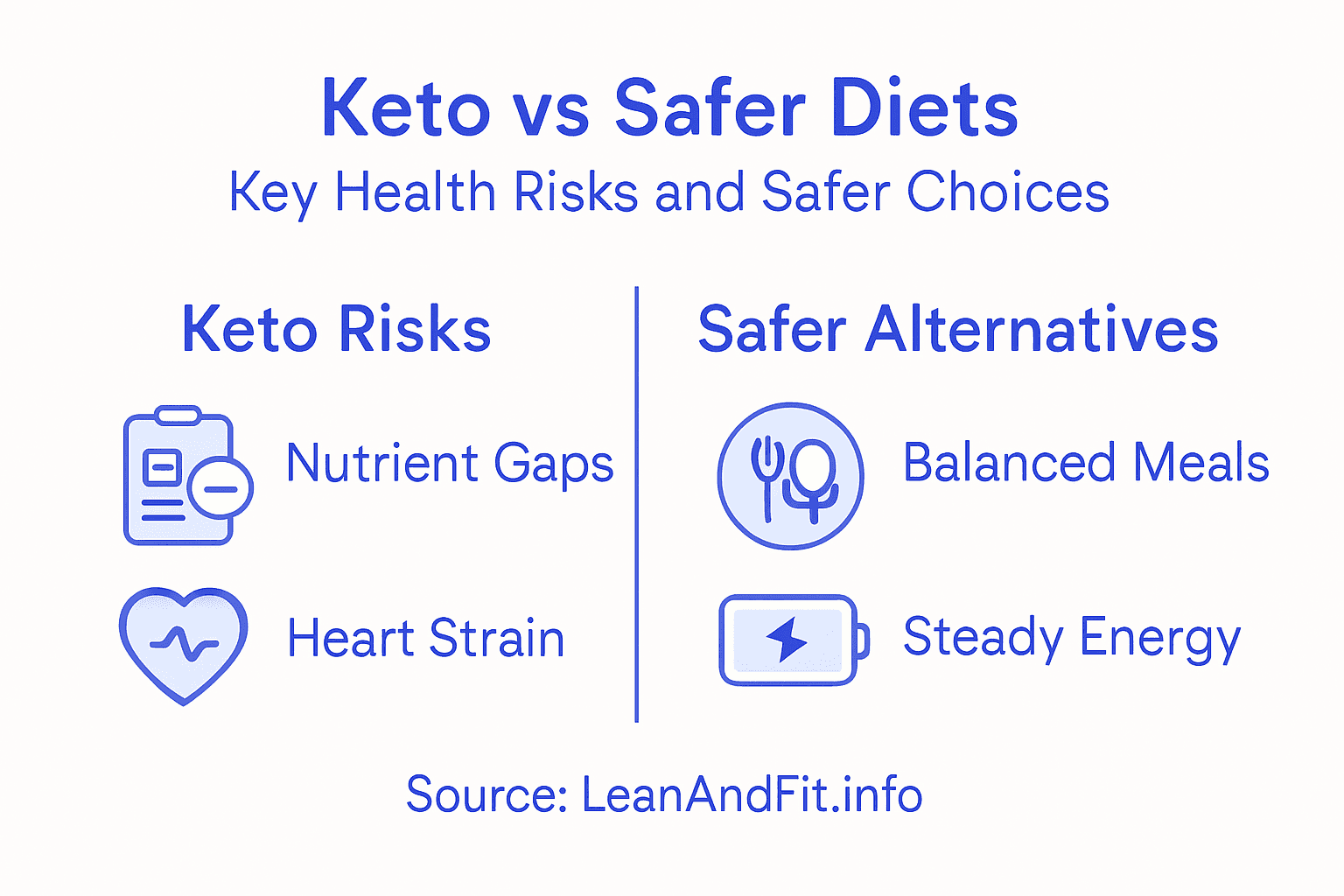
Here’s a comparison of the ketogenic diet and the Mediterranean diet for weight loss and overall health:
| Aspect | Ketogenic Diet | Mediterranean Diet |
|---|---|---|
| Main Nutrient Focus | High fat, low carb | Balanced fats, moderate carbs |
| Long-Term Safety | Under scientific scrutiny | Backed by extensive research |
| Nutritional Variety | Often restricted | Wide variety of foods |
| Sustainability | Challenging for many | Easily adopted long-term |
| Heart Health Impact | May raise cholesterol | Shown to improve heart health |
Pro tip: Consult a registered dietitian to develop a personalized nutrition plan that considers your unique metabolic profile, lifestyle, and health goals.
Discover Safer Paths to Weight Loss Beyond Keto Risks
Facing the dangers of the ketogenic diet is never an easy task. Especially when you need to get rid of excess pounds as soon as possible.
This article raises some valid points that may be a showstopper for everyone who is thinking of going on a keto diet or have already been on it for a relatively long period of time.
If you are determined to improve your health conditions and reduce your weight in a safe and sustainable way, and you have no clue about the proper and healthy ways of weight loss – Calorie Restriction – LeanAndFit and a better understanding of diseases like Type 2 Diabetes – LeanAndFit and Insulin Resistance SE – LeanAndFit will provide you with the necessary know-how.
So why not invest a couple of minutes of your time and check out our website – LeanAndFit.info?
There are plenty of useful things you may want to consider for your health’s sake.
And the dangers of the ketogenic diet may no longer be a problem.
Frequently Asked Questions
- Dangers of Crash Diets – Impact on Health and Weight – LeanAndFit
- Dangers of Fad Diets – How Quick Fixes Can Harm Health – LeanAndFit
- Qué es una dieta cetogénica: Impacto real en peso y salud – LeanAndFit
- Insulin Resistance and Obesity: Uncovering the Hidden Health Dangers – LeanAndFit
- Supplements That Cause Hair Loss: Understanding the Risks and Realities | MyHair
- Why Trust LeanAndFit.info?
- For educational purposes only