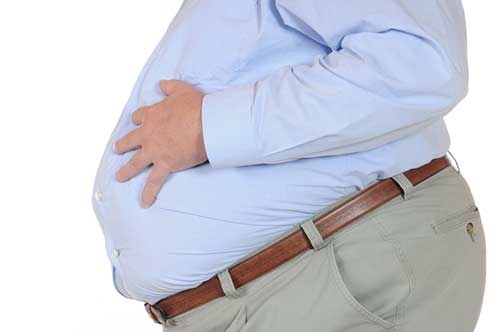

Most American adults would be surprised to know that putting off the dinner plate by just four hours can profoundly affect their body’s ability to store fat and control hunger.
From home kitchens to offices, late-night snacks and their effects on our bodies are a must-understand topic for those interested in making wiser dietary choices.
In this article, we’ll examine and discuss the science of late-night eating, as well as some common misconceptions about it, and analyze the effects that such feeding has on our body’s metabolism and overall health.
Table of Contents
- Late Night Snacking Defined And Myths
- Common Types And Drivers Of Late Snacking
- How Metabolism And Sleep Are Impacted
- Risks For Weight Gain And Chronic Disease
- Better Snacking Alternatives And Proven Strategies
Key Takeaways
| Point | Details |
|---|---|
| Late Night Snacking Is Complex | Late night snacking involves more than hunger; it can reflect physiological needs and emotional responses. Understanding personal cues is essential for managing this behavior. |
| Impact on Metabolism and Sleep | Eating late disrupts metabolic processes and can lead to weight gain by affecting calorie burning and hunger hormones. Establishing a cutoff time before bed can help minimize these effects. |
| Health Risks of Late Night Eating | Consistent late night eating increases the risk of chronic conditions such as diabetes and obesity. It can lead to metabolic dysfunction, making weight management more challenging. |
| Mindful Snacking Strategies | Opt for healthy snacks like Greek yogurt or vegetable sticks to support metabolic health. Implementing behavioral strategies, such as stress management and mindful eating, can help reduce impulsive snacking. |
Late night snacking defined and myths
Eating at late hours of the night can be defined is a complex human behavior with multiple psychological and physiological aspects. Namely, the phenomenon can be described with reference to the timing of food consumption in the evening.
It is a common belief that eating after dinner hours leads to weight gain regardless of the amount of food intake. However, according to scientific research, the caloric content of food eaten at late hours is not the defining factor of weight gain.
Specifically, the scientists discovered that eating 4 hours later than usually results in significant changes to hunger and satiety hormones, as well as fat metabolism genes.
The key point is that the body treats calories dependent on the time of eating. Therefore, eating the same amount of food late at night may not lead to weight gain as frequently as consuming it in the morning.
Multiple myths related to eating at late hours of the night are commonly believed by people despite lacking scientific evidence. For example, some people consider such behavior to be a result of their lack of self-control.
Yet, from the scientific standpoint, late-night eating can be explained by various factors such as energy deficiency, chronic stress, and irregular circadian rhythm.
Pro Tip: Understanding the mechanism of hunger can be critical in managing unhealthy late-night cravings. Specifically, it may be beneficial to drink a glass of water before giving in to cravings and determining whether hunger is present at all.
Common types and drivers of late snacking
Late-night eating may be full of various reasons that can push a person to choose different types of food.
So, people usually prefer the sweet snacks and desserts or savory ones like chips or nuts. Some like to eat fruit or ice cream or candy. Mostly it is a matter of taste.
But what are the reasons why people eat at night?
It can be a lack of some nutrients that forces the body to signal the brain that it is hungry. It can also be stress, or just being bored, or craving sweets. People often eat to satisfy their emotions or have no idea what to do at home so they turn to eating.
Those who suffer from overweight or obesity often have bad habits of late-night eating. Such a diet leads to higher risk of cardiovascular diseases, high cholesterol levels and type 2 diabetes. Sometimes it is marketing or social reasons or availability of certain foods that make people choose them.
People often eat at night not only to fill their stomachs but also to replace a main meal or satisfy their cravings or emotions.
Therefore, it is important to understand what prompts to late-night eating to make better choices and avoid harmful foods.
Here’s a summary of key psychological and biological drivers behind late-night snacking:
| Driver Type | Description | Common Triggers |
|---|---|---|
| Psychological | Emotional responses influence choices | Stress, boredom, anxiety |
| Biological | Body signals for energy or nutrients | Genuine hunger, fatigue |
| Behavioral | Patterns shaped by environment | Routine, food availability |
Pro tip: Create a designated evening snack plan with nutritious options prepared in advance to reduce impulsive and potentially unhealthy late-night eating.
How metabolism and sleep are impacted?
Late-night eating is significantly associated with disruptions in metabolic functions, forming a complex set of mechanisms involving hunger, sleep, and obesity.
The sleep loss-induced metabolic disturbances raise the likelihood of night-eating by promoting hunger and enhancing appetite.
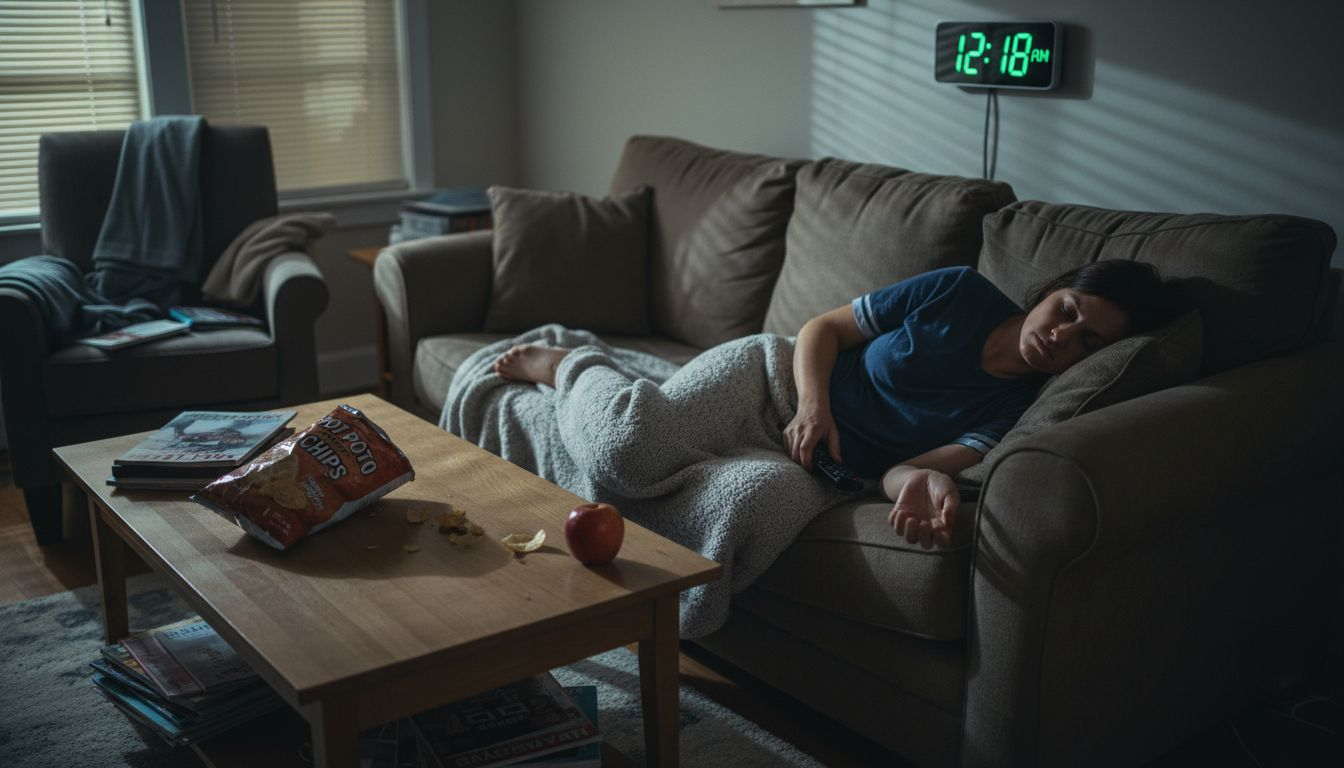
Research shows that the late dinners affect the basic metabolism processes. Studies conducted by Harvard prove that when people eat later in the evening, they burn fewer calories for energy and change the fat storage mechanisms in the body, thus altering the way the body works with energy.
The metabolism process is slowed down to a minimum when people eat close to bedtime, resulting in higher calorie intake and increased hunger hormones production.
The connection between sleep patterns and metabolism is too strong to be overlooked. Nighttime sleep loss and disruption of circadian rhythms lead to serious metabolic complications, which favor weight gain and put people on the scale.
Poor sleep patterns result in increased impulsive eating tendencies. Therefore, late dinners in the evening are much more dangerous for people who want to watch their weight.
Pro Tip: Set a three-hour limit each night to keep your metabolism working properly and to ensure a good sleep quality.
Risks for weight gain and chronic disease
Eating late at night increases the risk of metabolic disease and creates a set of negative effects that interfere with normal health on a much broader scale than just weight gain.
Altering the body’s circadian rhythm, the natural pattern of physical and psychological processes that occur over a 24-hour period, can have adverse effects that go beyond changes in metabolism.
Late-night consumption of food can decrease the number of calories burnt by the body, contribute to higher levels of fat storage, and increase feelings of hunger.
As a result, the likelihood of gaining weight increases, and the risks of developing diabetes and other metabolic diseases also rise.
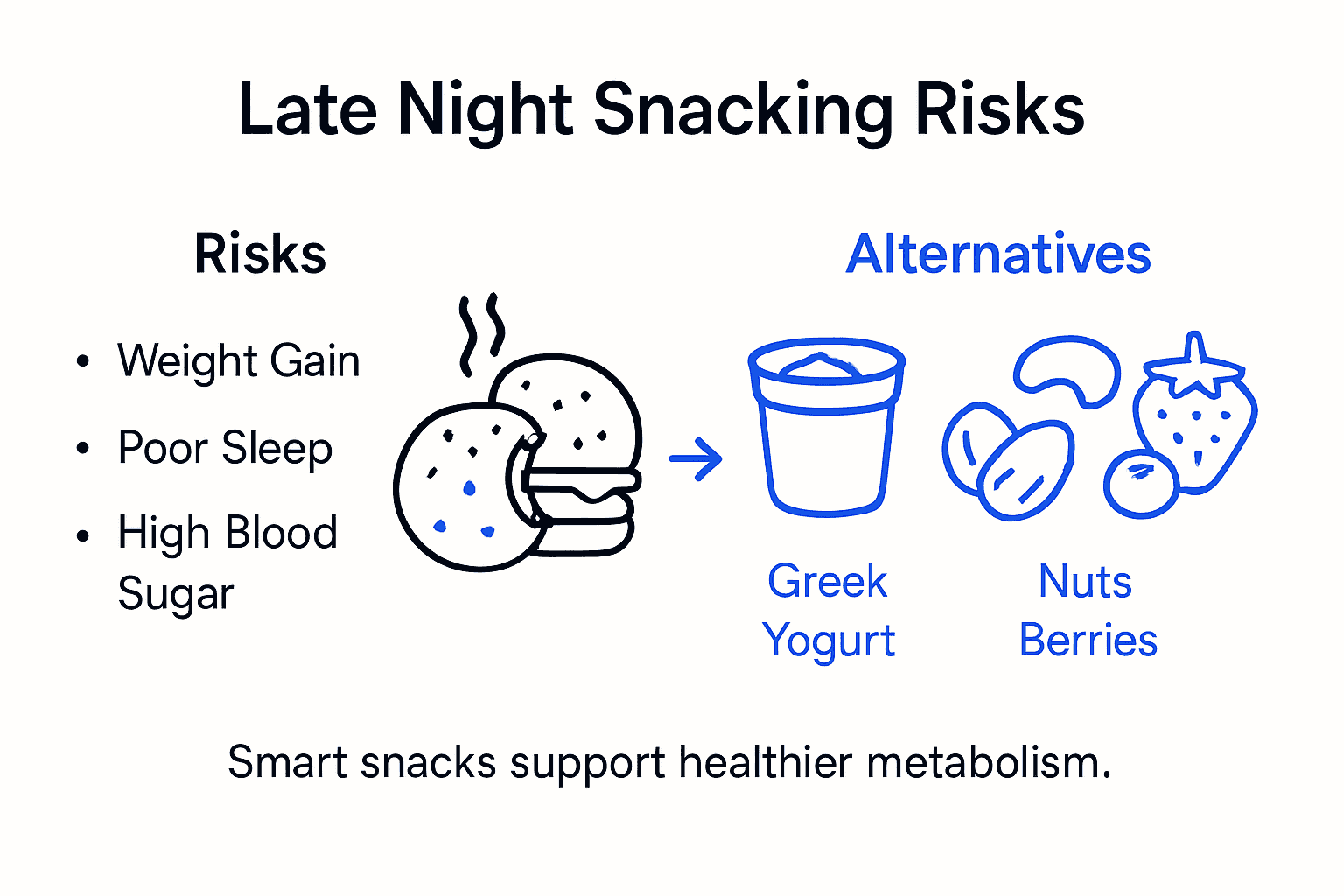
Furthermore, having a late dinner regularly disrupts natural metabolic processes and can lead to increased inflammation and hormonal imbalances.
The metabolism becomes disordered, and it becomes much harder to lose weight.
Those who have late dinners are likely to experience far worse metabolic problems, which can lead to a host of other issues, and not just obesity.
Pro Tip: A good rule of thumb is to stop eating three to four hours before going to bed to avoid late-night snacking and to reduce the risk of many diseases.
Better snacking alternatives and proven strategies
What are some healthy late-night snacking ideas in order to lose weight? The first and most important thing to understand what is late-night hunger and how to control it.
There are several things that you can do in order to stop late-night cravings and help you stay on track with your diet and finally lose that weight.
A good idea would be to eat healthy snacks that are high in protein and fiber, such as Greek yogurt, eggs, vegetables with hummus or a small handful of nuts. Experts say that fiber and protein are the most important things to keep you full and not crave more food even after eating.
Moreover, you should not eat at night, if you do not feel like you are hungry. Another good thing to do is to avoid foods that make you want to eat more, such as carbs and sugar.
In addition to the above, some other ideas include keeping yourself busy, taking a walk, drinking water or doing some light exercises. All these things will keep you from craving junk food at night.
Some people find that meditation and deep breathing help them to deal with their late-night hunger. Do not forget to create a sleep ritual that will make you feel sleepy instead of hungry.
Below is a comparison of healthy versus unhealthy late-night snack choices:
| Snack Type | Example Foods | Impact on Metabolism |
|---|---|---|
| Healthy | Greek yogurt, nuts, veggie sticks | Promotes satiety, supports fat burning |
| Unhealthy | Chips, cookies, ice cream | Increases cravings, slows metabolism |
Pro tip: Prepare a designated “healthy snack zone” in your refrigerator with pre-portioned, nutritious options to make smart choices easier during vulnerable evening hours.
Stop Late Night Snacking from Derailing Your Weight Loss Journey
Struggling with late night snacking may be a real problem for those who are going on a diet and have a hard time losing weight.
The issue is that eating late at night, when you are going to sleep soon after, negatively impacts your metabolism and disrupts your sleep cycle, which in turn makes it harder to burn calories and stay full for longer after meals.
The key to getting late night cravings under control and jumpstarting your weight loss is to be aware of what is happening and how you can improve your late night eating and sleeping habits.
You can learn how to do this by checking out Sleep Management – LeanAndFit and Meal Planning – LeanAndFit.
This way, you can ensure that your metabolism is taken care of and that you get proper rest and sleep.
Don’t let late night eating ruin any more of your chances at a healthier you.
Check out LeanAndFit.info today to see how they can help you improve your late night eating and sleeping habits and put you on a path to fast, healthy weight loss.
Let the good nights sleep take care of itself and start doing something about your late night snacking.
Frequently Asked Questions:
- How Lack of Sleep Affects Your Appetite? – LeanAndFit
- How Consistent Sleep Schedules Regulate Appetite in Obese Individuals? – LeanAndFit
- How Sleep Deprivation Affects Ghrelin and Leptin Levels? – LeanAndFit
- 25 Best Healthy Snacks for Weight Loss Success – LeanAndFit
- Program de slabit Minim 3 Kg pe saptamana 20 de zile (1200-1400 kcal) – Fresh Fitness Food
- Why Trust LeanAndFit.info?
- For educational purposes only