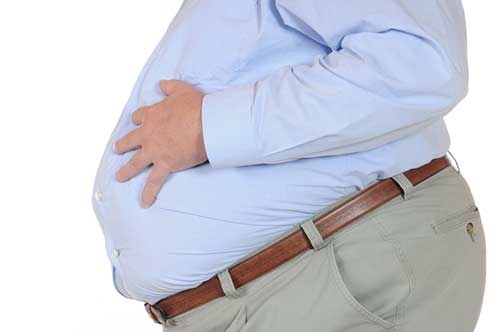

Most adult Americans receive conflicting information about fat and its role in weight loss.
It’s hard to believe that fat is a functional hormone-producing organ and plays a critical role in the endocrine system.
People who are overweight or are seeking to make changes to improve their health.
This article dispels popular myths about fat and provides a foundation of basic facts to help you learn what you need to know about body fat.
Table of Contents
- Body Fat Defined: Essentials And Myths
- Types Of Body Fat And Key Differences
- Body Fat Functions And Measurement Methods
- Health Risks Linked To Excess Body Fat
- Managing Body Fat For Better Wellness
Key Takeaways
| Point | Details |
|---|---|
| Understanding Body Fat | Body fat is a complex metabolic organ essential for energy, hormone regulation, and physiological function, and not merely an excess to be avoided. |
| Types of Body Fat | Different types of fat (white, brown, beige, visceral) serve distinct purposes; particularly, visceral fat is more dangerous due to its health risks. |
| Health Risks | Excess body fat, especially visceral fat, is linked to serious health conditions like heart disease and diabetes; regular monitoring of waist size is crucial. |
| Management Strategies | Effective management of body fat involves a balanced diet rich in healthy fats and regular physical activity, focusing on quality over quantity. |
Body Fat Defined: Essentials and Myths
Body Fat Essay
Adipose tissue is a dynamic endocrine organ that is multifunctional in our bodies.
Despite the common belief, fat is beneficial for the body and serves a lot of vital functions.
A human cannot live without fat. Fat cells can store energy in the form of lipids, generate hormones, and help our bodies to function properly.
It is a good idea to track the amount of body fat. It is important to distinguish between different types of body fat. Contrary to popular belief, fat is not bad for our bodies. Some types of fat are essential for us to stay healthy. For example, monounsaturated and polyunsaturated fats are healthy fats that lower bad cholesterol levels.
Our bodies contain several types of fat. White fat is the most common one and can cause obesity-related diseases. Brown fat, contrary to white one, burns calories and increases the body temperature. The most dangerous type of fat is visceral fat that is found around organs and can lead to type 2 diabetes and heart diseases.
A person has a small amount of fat cells with genes that can be passed on to the person’s children. The number of fat cells depends on a person’s nutrition, physical activity, and environment. Heredity, diet, weight, and level of physical activity affect people’s body type and body fat percentage.
Pro Tip: It is vital to keep body fat percentage and avoid obesity-related diseases in the future. For measuring the amount of fat in the body, it is a good idea to use body composition tests instead of regular weighing.
Types of Body Fat and Key Differences
Body fat is not a homogeneous tissue, but there are several types of fat in humans.
The structure and properties of body fats are extremely complex because they are involved in many metabolic processes.
It is necessary to distinguish between white, brown, and beige fat.
>>> White fat is the most common type because it stores energy supplies and releases hormones responsible for the body’s energy balance regulation.
>>> Brown fat plays a vital role in energy expenditure by generating heat and is abundant in infants. However, the amount of brown fat decreases with age and overweight.
>>> Beige fat is similar to brown fat because it is burnt during physical activity, but it is found in rare amounts in adults.
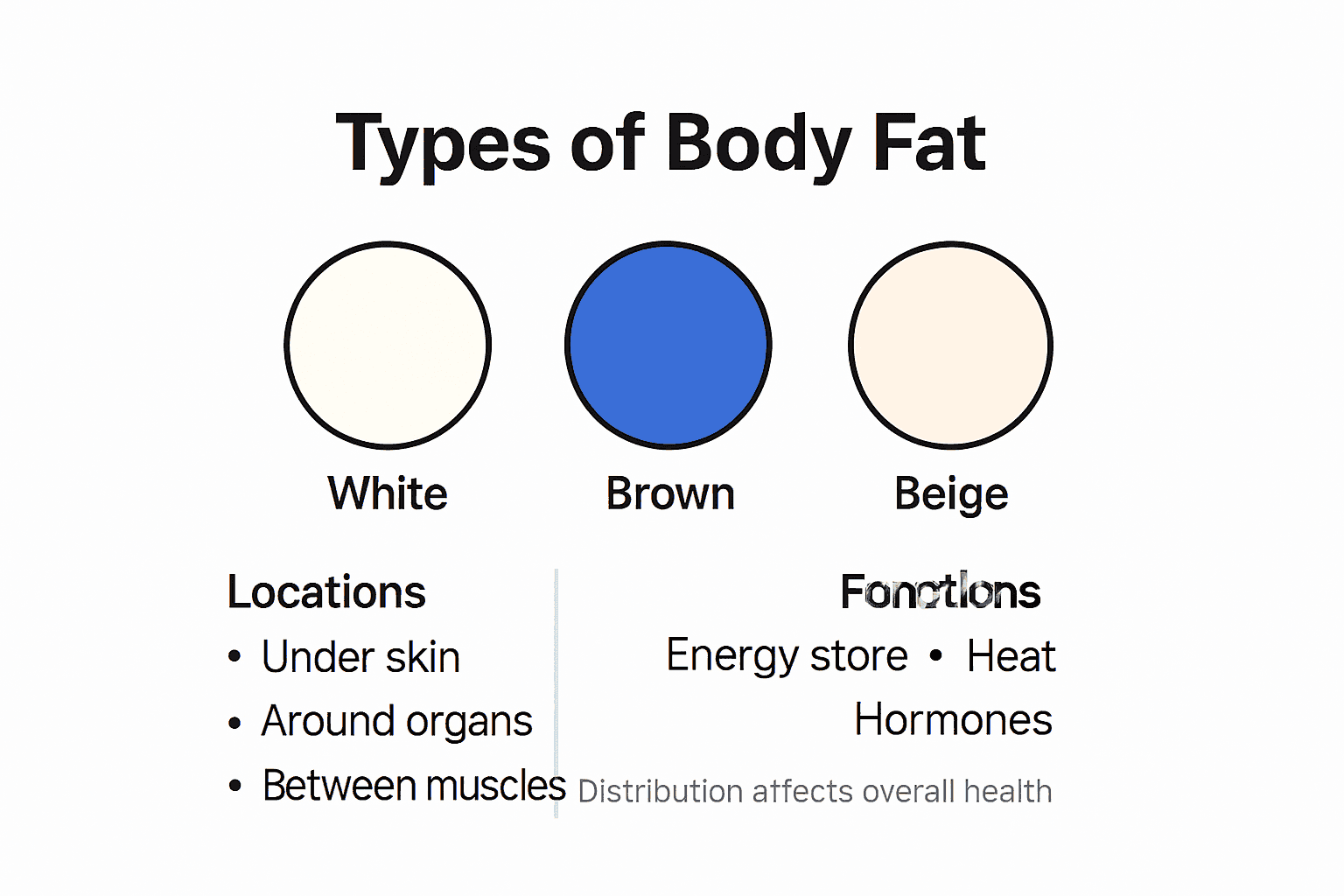
Body fat consists of two types of fat tissues: subcutaneous and visceral fat. The former is a superficial layer below the skin that cushions the body and serves as insulation, and it is relatively harmless.
The latter is a deeper layer of fat that is hidden in the abdominal cavity around the organs, and it is associated with higher risk of stroke, diabetes, heart diseases, and some cancers.
The distribution of body fat is different for everyone. There are two main contributors to the amount of body fat, namely genetic and environmental factors which are related to lifestyle.

Pro tip: Regularly measure your waist circumference and body fat percentage, as these metrics provide more comprehensive health insights than simple weight measurements.
Here’s a quick comparison of the main types of body fat:
| Fat Type | Location | Function | Health Impact |
|---|---|---|---|
| White Fat | Under skin, organs | Stores energy, hormone regulation | Necessary, excess harmful |
| Brown Fat | Neck, shoulders | Generates heat, burns calories | Protective, reduces risk |
| Beige Fat | Mixed areas | Can convert to brown, boosts metabolism | May enhance metabolic health |
| Visceral Fat | Around organs | Protects organs, excessive amounts are risky | Linked to disease risk |
Body Fat Functions and Measurement Methods
Body fat plays a far more complex role than simply storing excess energy. This multifunctional tissue serves critical physiological purposes, acting as an essential component of our metabolic and hormonal systems.
Fat cells produce hormones, insulate the body, cushion delicate organs, and play a critical role in memory and nerve function.
There are several methods to calculate body fat with a high degree of accuracy. BMI is the most common technique that measures the proportion of body fat based on height and weight.
However, it is not the most accurate one, especially for the general population.
The calculation of body fat can also be done by indirect methods such as measuring the thickness of skinfolds or using bioelectrical impedance.
Using the most accurate and sophisticated method is possible, such DXA (Dual Energy X-ray Absorptiometry) scanning, to get a precise picture of body composition.
The body fat percentage can tell a lot about the person’s health, depending on where the fat is stored. For example, fat accumulated around organs is more dangerous than fat on legs, thighs, and hips.
Several factors affect body fat amount and distribution, such as age, genetics, and diet. Being highly active reduces body fat, and being overweight or obese increases it. Monitoring changes in body fat can be an indicator of good or bad health.
Pro tip: Ask your doctor to do a body composition test to have a better understanding of your health than what weight only can tell.
These methods provide different ways to measure body fat and related insights:
| Measurement Method | What It Measures | Accuracy Level | Practical Use |
|---|---|---|---|
| BMI | Height-weight ratio | Low | Basic population screen |
| Skinfold Calipers | Subcutaneous fat thickness | Moderate | Cost-effective, accessible |
| Bioelectrical Impedance | Electrical resistance | Moderate | Home and clinic use |
| DXA Scan | Fat, muscle, bone density | High | Clinical, detailed analysis |
Health Risks Linked to Excess Body Fat
Excess body fat, aside from being aesthetically unpleasant, may pose a serious threat to health and even life. The key to the problem is the distribution of fat on the body, and the areas where fat is accumulated.
The dangerous type of fat is the one that is stored in the abdominal cavity, and it significantly impacts the health of the organism.
The most dangerous effects of overweight and obesity are connected with the work of the cardiovascular system.
It is well known that having excess weight is a risk factor for hypertension, atherosclerosis, and diabetes. In addition, visceral fat is often the cause of high cholesterol levels and insulin resistance.
High cholesterol may lead to artery blockage, which will result in heart attack or stroke. As for diabetes, it is a devastating diagnosis that considerably deteriorates the quality of life and shortens life expectancy.
It is reported that when the waist measurement exceeds 40 inches in men, there is a serious danger to health since it implies unhealthy visceral fat accumulation.
Apart from the effects on the cardiovascular system, body weight bears a negative effect on other systems and organs.
The accumulation of excess fat may cause hormonal imbalance, degenerative diseases, and disorders of the locomotor system.
Pro Tip: It is possible to say that overweight and obesity may be the reason for severe health problems and even death. One of the simplest and quickest ways to determine if a person has excess weight is to measure the circumference of the abdomen. If it proves to be too large, and the person should consult a physician in the nearest time.
Managing Body Fat for Better Wellness
Managing body fat is a complex issue, and the main principle of controlling it is to avoid an excessive amount of calories in the body. However, it is also important to consider the amount of fat in the diet and the overall level of fitness.
First, it is vital to consume the right number of calories in relation to body activity. The calories from fat should contribute to no more than 30% of the daily amount. In addition, people should monitor the amount of fat, and the best option is to replace saturated fats with unsaturated ones.
They help reduce cholesterol levels and are useful for the body. The replacement of animal fats with vegetable ones will have a positive effect on health, and thecalories from fat will be reduced. The main rule for reducing body fat is to choose the right products, paying attention to their caloric content and nutritional value.
Second, physical activity is essential for fat control. It is vital to calculate the number of calories burned during exercise, and it is a good idea to alternate intense workouts with less strenuous ones. In addition, resistance exercises and aerobic activities help to sculpt the body and get rid of fats.
Pro Tip: The most important thing is to determine the strategy for reducing fat according to individual characteristics and abilities. And, perhaps, the most effective way to reduce body fat is not to weigh yourself on a scale but to measure your body’s dimensions, volume of fat and muscle tissue.
Take Control of Your Body Fat for Lasting Health Improvements
Understanding all the various types and risks of body fat can be quite daunting.
But, this article serves well in pointing out the dangers of excess visceral fat and the need to monitor body composition beyond just weight.
If you are ready to stop losing control over your metabolic health, and want to start exploring options on how to truly improve it, it’s time to research your alternatives.
Our website has many resources to help you get started on your journey to a healthier you, such as improving gut flora or even an exciting new method called Cold Exposure – LeanAndFit that may help increase brown and beige fat that can lead to improving your metabolism.
It’s time to start now and become the healthiest version of yourself by checking out our website at LeanAndFit.info and learning all about body composition management.
Or, if you are interested in learning more about how to modulate your gut to manage body weight, visit Gut Modulation – LeanAndFit. We can’t help you if you don’t take the first step!
Frequently Asked Questions:
Q-1. May a person carrying same body weight pose different health risks?
A-1. Yes, as fat tends to accumulate in different body parts, posing different health risks, depending on where it localizes. Specifically, abdominal fat poses significantly higher health risks than fat accumulated on limbs.
Q-2. Why may an individual appear to be slim yet have fat deposits unhealthy for health?
A-2. An individual’s overall body mass, and hence, their body mass index (BMI) do not indicate where fat is stored. Individuals with normal BMI may have disproportionately higher abdominal fat, which poses serious health risks, according to the National Institute of Diabetes and Digestive and Kidney Diseases (NIDDK).
Q-3. Why is the fat found around the abdomen more dangerous than the fat found on other body parts?
A-3. Fat around the abdomen is classified as visceral fat, while the pinchable fat found on other parts of the body is subcutaneous fat. Visceral fat is particularly unhealthy due to its implication in metabolic syndrome.
Q-4. Is it possible for a person to have a normal body weight yet unhealthy body fat?
A-4. Yes, it is possible, because body weight and body weight do not indicate body fat. As far as waist circumference is concerned, a woman with a waist circumference of more than 35 inches and a man with a waist circumference of more than 40 inches are considered to have unhealthy body fat, according to the NIDDK.
Q-5. Why is it unhealthy to attempt to reduce body fat to the lowest possible percentage?
A-5. The fact is that body fat plays a crucial role in proper body function. It cushions organs and serves as an energy reserve. The problem is excess body fat, and not body fat per se.
Q-6. Why could the loss of weight be misleading in terms of healthy weight loss?
A-6. If weight loss consists mainly of muscle mass, then it may not be considered healthy weight loss. The point is that body weight on the scales only reflects an individual’s total weight, including muscle mass, fat, and water.
Therefore, the body mass index (BMI) is only an indicator and does not provide a complete picture. Thus, measuring waist circumference is a more meaningful determinant of health than the scale weight.
Monitoring other health indicators, such as body weight, body mass index (BMI), waist circumference, and physical performance, is important in determining the degree of health.
Q-7. Why could the fat around the waist be dangerous even if one’s BMI does not indicate obesity?
A-7. BMI only indicates an individual’s height and weight relationship and does not indicate whether a person has unhealthy fat distribution.
Thus, determining waist circumference is important since it can help predict the likelihood of developing obesity-related diseases, such as type 2 diabetes. Having excess fat around the waist increases the risks of developing serious health conditions, such as cardiovascular disease and diabetes.
Q-8. Can body fat make a person sick before they realize they have a problem?
A-8. Yes, the body can begin to malfunction before the changes in weight or other physical changes appear. For example, increased abdominal circumference can be a predictor of obesity-related diseases, such as type 2 diabetes.
Q-9. Why can a person with a higher percentage of muscle tissue have a higher BMI value compared to a person with a higher percentage of body fat and have better health indicators?
A-9. BMI is a model that predicts weight status based on a person’s height and weight and does not take body composition into account.
Therefore, a person with a higher percentage of muscle tissue may have a higher BMI value, and hence be considered to be in the overweight/obese category, yet be completely healthy.
Q-10. What is the most important question to ask about one’s body fat?
A-10. The most important question to ask about one’s body fat is where it is located. Body weight and height, hence BMI, and waist circumference are used to assess whether a person is at risk of developing health complications.
Thus, if a person has abnormal levels of several of these indicators, it may be an early predictor of chronic diseases, such as type 2 diabetes.
Recommended
- Body Composition Explained: What Shapes Your Health – LeanAndFit
- Understanding Fat Loss: The Science Behind Shedding Pounds – LeanAndFit
- Understanding Healthy Fats vs Unhealthy Fats for Better Health – LeanAndFit
- Body Mass Index Meaning: Impact on Weight Health – LeanAndFit
- Why Trust LeanAndFit.info?
- For educational purposes only