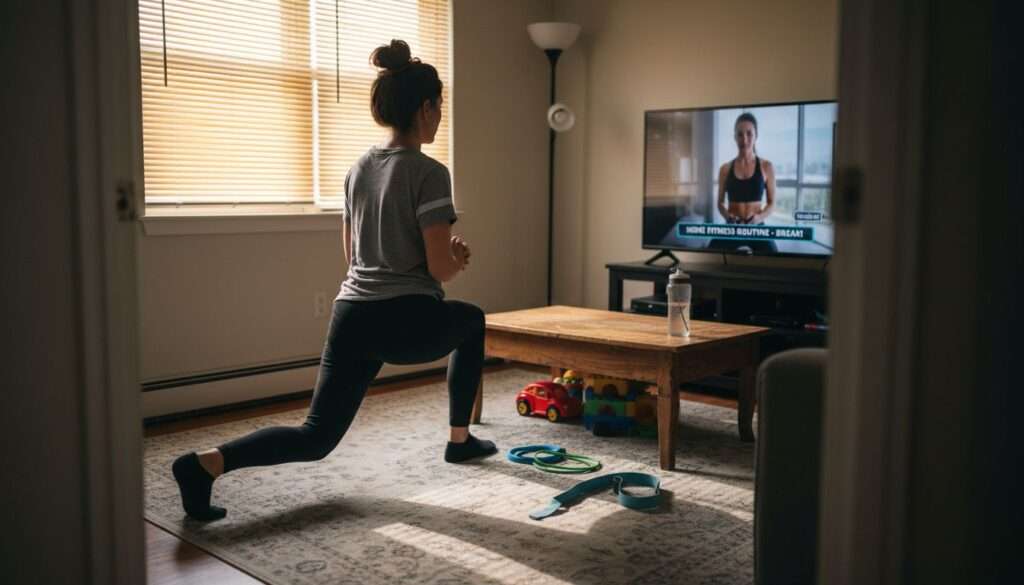
Over half of American adults believe that they do not have the space to exercise at home.
Between being busy and making time, it can sometimes be difficult to get the best use out of our time and energy.
The following steps give a breakdown that allows anyone to create a plan that fits their needs and allows them to make the most out of working out at home.
The idea is to learn and practce effective workout at home tips for safe weight loss.
I believe that any American citizen can make a difference using the following steps.
Table of Contents
- Step 1: Assess Your Space and Equipment Needs
- Step 2: Design a Personalized Workout Plan
- Step 3: Set Clear Fitness and Weight Loss Goals
- Step 4: Implement Workouts With Proper Technique
- Step 5: Monitor Progress and Adjust Routine
Quick Summary
| Key Takeaway | Explanation |
|---|---|
| 1. Assess Available Space Wisely | Evaluate areas in your home for a workout zone and consider equipment needs based on your desired workouts. |
| 2. Create a Personalized Workout Plan | Develop a tailored exercise plan focused on measurable goals that align with your fitness level and lifestyle. |
| 3. Set Clear and Achievable Goals | Formulate specific, measurable, and time-bound fitness objectives to guide your weight loss journey. |
| 4. Focus on Proper Technique | Execute exercises with correct form to prevent injury and maximize effectiveness in your workouts. |
| 5. Regularly Monitor and Adjust Progress | Track your workout results and adapt your routine to overcome plateaus and ensure continuous improvement. |
Step 1: Assess Your Space and Equipment Needs
Starting your home workout routine requires you to design a convenient space that will help you achieve your goals. Before buying equipment, it is critical to draw up a strategic plan about how to make the best use of the square meters.
First, you should think about the available free space in the house or the apartment. According to the Department of Homeland Security, you should start your collection with yoga mats and resistance bands.
The area can be located in a corner of the bedroom or the place where the guest room is situated. It is also possible to use the living room if a suitable place is found there. After you have identified the location, you need to take measurements and examine the conditions (e.g., floor material, window height, and the presence of electricity).
In the next step, you have to decide which type of workout you want to accomplish and allocate a space for it. The Society of British and International Design offers a helpful solution – to separate the zones depending on the type of exercises (cardio, strength training, stretching).
If you have a small area in mind, it is better to choose a multi-functional trainer. Otherwise, you can buy a rowing machine, treadmill, and weights. Dumbbells, bands, and a folding mat are also a great option for people who have little space available.
Pro Tip: A clear space around the equipment is necessary, so leave at least two and a half feet on either side.
Consider your own home gym as you plan your personal space. Creativity and flexibility should be key factors. It does not need to be something that is absolutely perfect only functional and inspirational. In the following section, we will be discussing the selection process of the equipment that is going to complement your new workout space.
Step 2: Design a Personalized Workout Plan
Creating a personalized workout plan is your roadmap to successful weight loss and fitness transformation. This crucial step transforms generic exercise recommendations into a targeted strategy that works specifically for your body and goals.
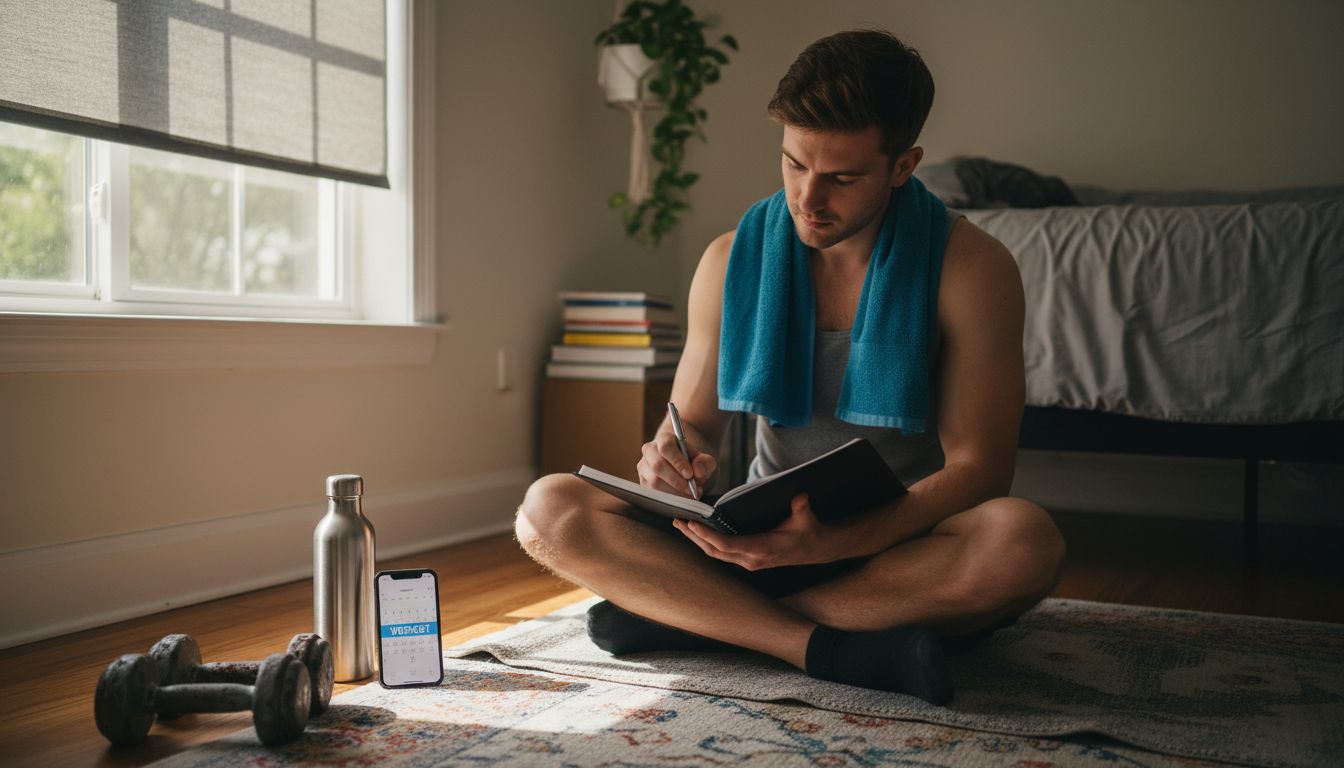
Coursera’s weight loss course emphasizes the importance of designing exercise plans tailored to individual health objectives and lifestyles. Start by assessing your current fitness level honestly.
Consider your age, medical history, available time and physical limitations. The workout that you need is the one that will tax you without overextending your abilities and include both cardiovascular and strength training exercises.
Make sure your goals are precise. For example, it is a better option to set attainable goals such as running for 30 minutes three times a week instead of ‘getting into shape.’
Divide your weight-loss goals into smaller, manageable targets and set them for weeks or months.
Pro Tip: Block the days for your workouts as you would do for an important business meeting to show your commitment to the cause.
Keep in mind that a suitable workout program should also be flexible to your fitness goals and lifestyle. We will now go through the process of determining the types of exercises that will help you achieve your fitness objectives in our next article.
Step 3: Set Clear Fitness and Weight Loss Goals
Setting fitness and weight loss goals helps to translate vague ideas and desires into concrete and specific goals. This process can be extremely motivating and is an essential step toward accomplishing any goal.
The course Weight Loss offered by Coursera will help set realistic and attainable weight loss goals. First of all, it is important to set a specific goal that will be possible to achieve in a certain period of time.
Instead of telling “I want to lose weight,” it is better to say “I want to lose 15 pounds in 4 months.” This can be achieved through regular physical activity, such as exercising for 45 minutes 4 times a week and cutting 500 calories per day.
Next, it is important to set a few sub-goals that will make the process more interesting and track progress. For example, it is possible to lose 3 4 pounds per month, exercise 5 times a week and do 1 mile runs or 20 push-ups without stopping.
Finally, it may be helpful to periodically update and redefine goals because the process of losing weight and getting stronger is ongoing. This means that after achieving one goal, it is possible to set new ones that are more difficult.
A Pro Tip is to write goals down and stick them somewhere visible to see them every day. Remember that goals should be dynamic and change according to progress.
In the next section, it is possible to learn more about choosing the best exercises that match individual goals.
Step 4: Implement Workouts With Proper Technique
Using correct form while doing exercises is necessary for a proper and productive workout. Correct form prevents injuries and helps you get the most out of every set.
The Department of Homeland Security recommends using the floor length mirror to check if your form is correct. You should first learn the basic movements of the exercises from videos or pro trainers
Also, make sure to keep the correct form during the exercises by focusing on the movement of your body, for example, the alignment of your back or knees. When doing strength training, e. g., squats, pushups, it is essential that you strive to use the right muscles and move the right parts of your body.
Always do a warmup before exercising. It will help you prepare your body for a workout. Moreover, when learning new movements, it is crucial to perform them slow and controlled. After you get used to the motions, you can start increasing the pace and resistance.
Record yourself while exercising occasionally to see if your form has improved or, on the contrary, deteriorated. Pay attention to how your body feels during the workout, and note any strange sensations. If something hurts, it probably means that something is wrong.
Remember that quantity has nothing to do with quality. It is better to do a small number of repetitions with perfect form than a large number with a bad one.
By practicing all these tips, you will undoubtedly master the art of proper form during exercises.
But what to do when you feel like you have mastered everything there is to know about proper form?
How to continue making progress?
We will discuss this in the following section.
Step 5: Monitor Progress and Adjust Routine
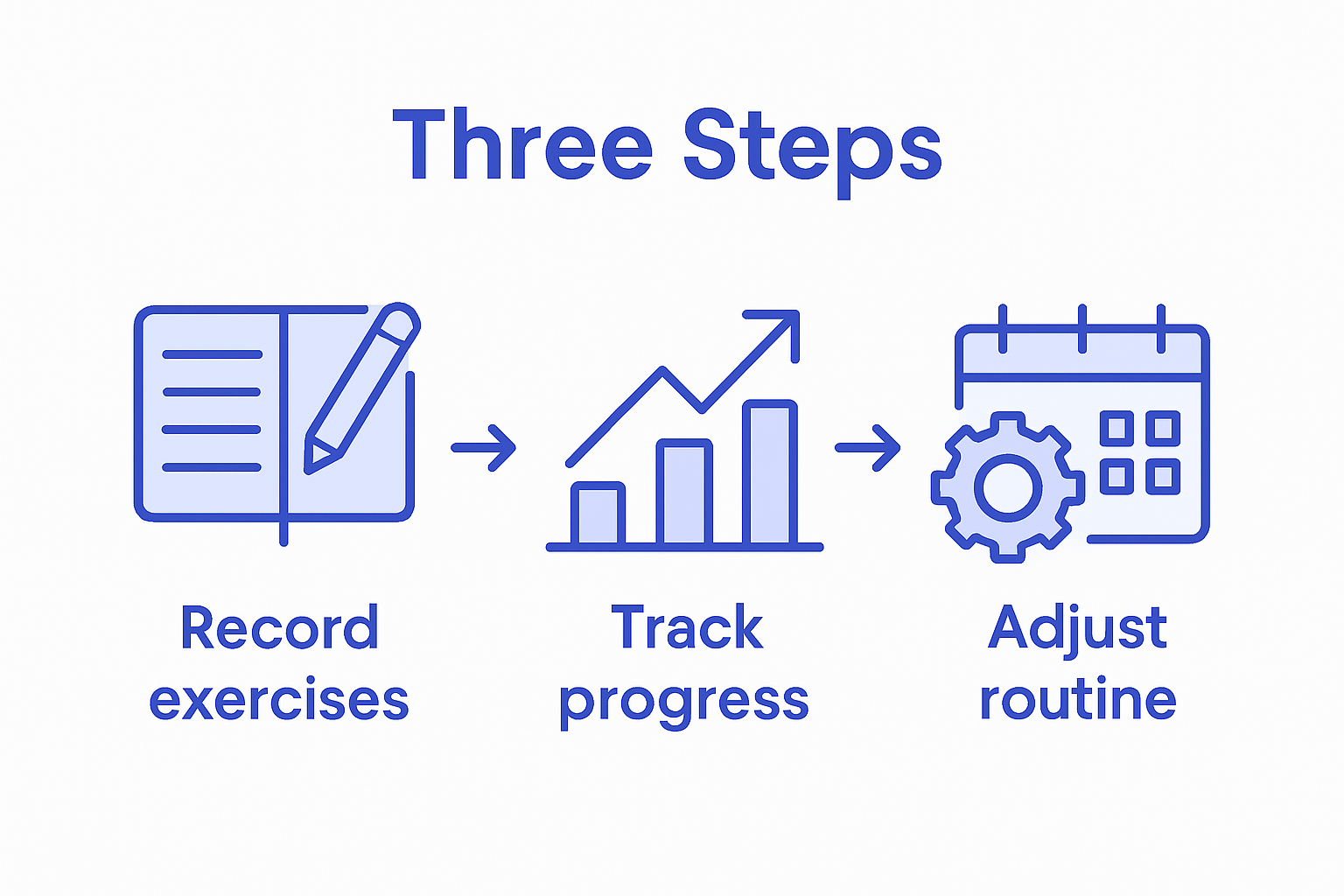
Tracking your fitness journey makes achieving tangible results possible and more motivating. Being able to see how the body reacts to workouts and what changes should be made.
The online course weight loss on Coursera provides great information on how to track and change your workout program to make it more suitable for your current needs. First and foremost, a person needs to set a system of measurements.
Weigh yourself and calculate your body fat percentage, chest, waist, and hip circumference every week. Take photos of your body from different angles every two weeks.
Make sure to write down everything concerning your workout. A good idea is to note what exercises you did, how many sets and reps you made, what weights were added, and how your body felt during the workout.
Every four or six weeks, assess your progress. Looking at the information you collected during your workouts, determine what changes to your program you may need to make. If you noticed that you are not losing weight, go heavier on the weights or do more reps. You can also switch up your exercises and try a different diet.
Remember that your body needs to be challenged constantly, which means that in a few months, you may need to change your program again. It is important to remember that your body is not a machine. It will react differently to the same exercises, diet, and supplements.
Pro tip: Use other measurements instead of weighing yourself to track your progress.
Your motivation and ability to track and adjust your fitness journey are what is going to make you successful in your fitness journey. Next, let us look at some more tips on long term motivation.
Unlock Your Best Home Workout Routine Today
Having trouble creating a proper and safe workout environment in the comfort of your own home or don’t know how to tweak your current routines to shed those unwanted pounds The most common issues include working out with the right equipment learning proper form and having well-defined goals.
With our comprehensive guides on various Exercise Regimens and Bodyweight Exercises you will be able to sidestep the most frequent mistakes and achieve maximum results by staying motivated throughout your fitness journey.
Don’t waste your time waiting for results when you can begin seeing changes today. By visiting our website now you will receive additional useful tips and routines that are easy on the wallet and made specifically for your home and fitness level.
Visit LeanAndFit to learn how to create a proper fitness area in the comfort of your own home while also learning the best resistance exercises and workout regimens for weight loss.
Frequently Asked Questions:
Take a closer look at the answers to the most freequently asked queries on losing weight at home without the need of fancy and expensive equipment:
Q-1: What is an effective home workout for safe weight loss beginners?
A-1: An effective beginner workout combines cardio, strength training, and flexibility.
According to health guidelines in the United States, sedentary people should engage in at least 150 minutes of moderate exercise per week.
Divided into shorter home workouts, this is a manageable number for beginners to adhere to.
Studies show that starting slow reduces injury by over 30%.
Q-2: How can you safely lose weight at home without equipment?
A-2: You can lose weight at home safely by doing bodyweight exercises such as lunges, planks, jumping jacks, and walking.
The success of the program depends on consistency and diet rather than equipment as up to 80% of cases report successful results through these exercises.
Furthermore, millions of Americans are currently using this strategy to lose weight because it is convenient and does not require equipment.
With a consistent workout schedule and a balanced diet, you can steadily lose weight without straining your body.
Q-3: What is the best home workout to lose weight without injury for beginners?
A-3: The best home workouts for beginners are low-impact like walking in place, wall sits, glute bridges, and push-ups.
According to injury statistics, the majority of injuries during workouts result from wrong form or overexertion.
As a beginner, it is important to prioritize proper form in all exercises.
Wall sits and glute bridges are good because they reduce impact while still helping to burn calories; they are also less stressful to joints.
Q-4: What are some daily home workout tips for sustainable and safe fat loss?
A-4: For sustainable and safe fat loss, it is important to find ways to keep the workouts fun, get enough water, and take rests when needed.
It is important to do warming-up exercises for at least 5-10 minutes before exercising; this reduces the risk of injury by up to 50%.
Additionally, the recommended rate for fat loss is between one and two pounds weekly. With that said, you should aim to work out every day, but have at least two rest days in the week.
Q-5: How can you design a safe home workout for weight loss success?
A-5: You can design a safe home workout by ensuring you have scheduled days for working out, alternating muscle groups during workouts, and taking rest days.
Fitness studies show that having a detailed plan increases the rate of success by over 40%.
A good plan should also have at least two rest days to allow muscle recovery and reduce risk of injury.
Q-6: Are the best low-impact home workouts effective for safe weight loss and joint protection?
A-6: Yes, the best low-impact home workouts are effective for safe weight loss and joint protection.
Exercises such as yoga, walking, and bodyweight workouts allow you to burn calories while protecting joints.
According to fitness surveys, up to 40% of injuries during workouts result from high impact activities.
With that said, low-impact workouts are a safer option for weight loss.
Q-7: What are some of the most common home workouts mistakes to avoid?
A-7: Some of the most common home workouts mistakes to avoid are failing to warm up, overworking, and incorrect form during exercises.
The statistics show that up to 60% of beginner exercisers fail due to mistakes during workouts.
When you work out too much on a daily basis, you experience fatigue and injury.
Avoiding these mistakes will ensure that you achieve good results while minimizing the risk of injury.
Recommended
- Full Body Home Workout for Effective Weight Loss Results – LeanAndFit
- Beginner Yoga for Weight Loss: Achieve Results Naturally – LeanAndFit
- Beginner Strength Training: Achieve Results Step by Step – LeanAndFit
- Complete Guide to Weight Loss for Beginners – LeanAndFit
- Why Trust LeanAndFit.info?
- For educational purposes only