
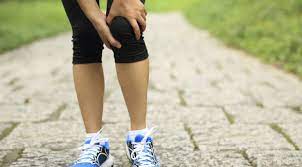
Obesity is a growing global concern, with its impacts reaching far beyond just weight.
One of the lesser-discussed consequences of carrying excess weight is the strain it places on the knees, leading to injuries, chronic pain, and even ligament tears.
The knees, being weight-bearing joints, are particularly vulnerable when extra pounds come into play.
This article by leanandfit.info will explore the hidden connection between knee strain and obesity, and how weight can contribute to various knee injuries, such as anterior ligament tears, medial collateral ligament strains, and more.
Article Index
- How Obesity Affects Your Knees
- Anterior Ligament Tear and Obesity
- Medial Collateral Ligament Tear and Recovery Time
- Posterior Collateral Ligament Tear: The Impact of Extra Weight
- Treatment for ACL Ligament Tear: Is Weight a Factor?
- MCL Strain Recovery: How Obesity Slows Down Healing
- Knee Joint Ligament Tears: Risk Factors in Obesity
- Pulled Ligaments in the Knee: How Weight Exacerbates Injury
- Preventing Knee Strain Through Ergonomics and Weight Management
- Conclusion: How Obesity and Knee Strain Are Inextricably Linked
How Obesity Affects Your Knees
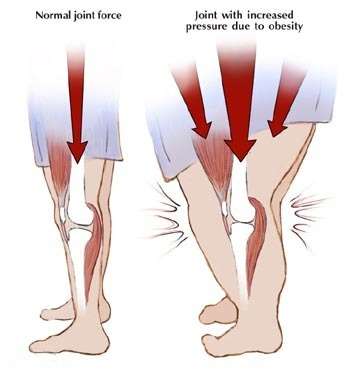
The knees are complex joints that support most of your body’s weight. When you are overweight or obese, the stress on your knees increases exponentially.
According to the Journal of Orthopaedic Research, for every pound of body weight, your knees experience three to four pounds of pressure when walking.
This means that being just 10 pounds overweight can add an extra 30-40 pounds of stress on your knees with each step. Over time, this additional load can lead to knee injuries, including ligament tears and strains.
The excess strain causes faster wear and tear on the cartilage in your knee joint, contributing to osteoarthritis and other degenerative conditions.
Obesity not only speeds up joint deterioration but also increases the likelihood of ligament injuries, making the connection between knee strain and obesity more significant than many realize.
Anterior Ligament Tear and Obesity
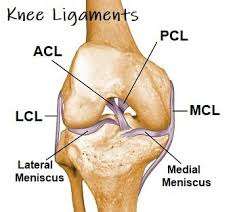
One of the most common knee injuries is an anterior ligament tear, more commonly known as an ACL tear.
The anterior cruciate ligament is crucial for stabilizing your knee, particularly during activities like running, jumping, or sudden changes in direction. Obesity increases the risk of an ACL tear due to the additional stress placed on the knee joint during movement.
A study in the American Journal of Sports Medicine showed that obese individuals are at a higher risk of ACL injuries because the excess weight increases the forces exerted on the ligaments.
When these ligaments are overstressed, they can tear, leading to significant pain and instability in the knee.
Medial Collateral Ligament Tear and Recovery Time
The medial collateral ligament (MCL) runs along the inside of your knee, providing stability. An MCL tear often occurs due to direct blows to the knee, but obesity can increase the risk even without such impact.
When you carry extra weight, the MCL has to work harder to keep the knee stable, which can lead to overuse injuries and strains.
Recovery time for a medial collateral ligament tear can vary based on the severity of the injury, but research from the Journal of Orthopaedics and Traumatology shows that recovery times are generally longer in obese individuals due to the additional stress the knee continues to endure even during the healing process.
For many, MCL strain recovery is delayed by excess weight, leading to prolonged pain and instability.
Posterior Collateral Ligament Tear: The Impact of Extra Weight
The posterior collateral ligament (PCL) is located at the back of the knee and is responsible for preventing the tibia (shinbone) from moving backward.
A PCL ligament tear is less common than an ACL injury but can be just as debilitating. Obesity puts undue stress on the PCL because the ligament has to support a larger load, particularly when walking downhill or climbing stairs.
A posterior collateral ligament tear can result from overexertion caused by excess weight, as the body struggles to maintain balance and stability.
Recovery from a PCL injury often involves physical therapy and weight management, as reducing body weight can alleviate the pressure on the injured ligament and promote faster healing.
Treatment for ACL Ligament Tear: Is Weight a Factor?
Treatment for an ACL (anterior cruciate ligament) tear typically involves surgery followed by a structured rehabilitation program. However, obesity can significantly complicate both the surgical procedure and the recovery process, leading to additional risks and challenges.
Studies published in the British Journal of Sports Medicine have found that obese patients undergoing ACL reconstruction surgery face a higher risk of complications, including infections, poor wound healing, and graft failure.
Excess weight puts increased stress on the knee joint, which can impair the healing process and lead to a longer recovery period compared to individuals with a healthy body weight.
Post-surgical rehabilitation is a crucial component of ACL tear treatment. A well-designed rehabilitation program focuses on restoring strength, flexibility, and stability to the knee while gradually increasing physical activity.
However, obesity can make rehabilitation exercises more difficult due to reduced mobility, joint pain, and the added strain on the healing knee.
Weight management plays a vital role in successful rehabilitation. Losing excess weight can help decrease the load on the knee joint, making movement easier and reducing the risk of reinjury.
Research suggests that even a modest weight loss of 5–10% of body weight can significantly improve knee function and reduce pain.
In addition to physical therapy, patients are often advised to adopt a healthy diet and engage in low-impact strength training exercises, such as swimming or cycling, to aid weight loss without putting excessive pressure on the knee.
Ultimately, addressing obesity as part of ACL tear treatment can lead to better surgical outcomes, faster recovery, and a lower likelihood of future knee problems.
Orthopedic specialists often recommend a multidisciplinary approach, including guidance from nutritionists and physical therapists, to optimize recovery and long-term knee health.
MCL Strain Recovery: How Obesity Slows Down Healing?
As mentioned earlier, recovery from an MCL strain can be prolonged by obesity. The additional weight continuously strains the healing ligament, causing more pain and discomfort.
According to the Journal of Rehabilitation Research and Development, weight loss can significantly speed up the recovery process for ligament strains and tears by reducing the mechanical load on the joint.
Furthermore, individuals who are overweight are often less mobile during recovery, leading to muscle atrophy and joint stiffness.
This combination makes MCL strain recovery more challenging for those who are obese.
Knee Joint Ligament Tears: Risk Factors in Obesity
Knee joint ligament tears, including ACL, MCL, and PCL injuries, are all more common in individuals who are obese.
The excess weight puts additional strain on the ligaments, making them more susceptible to injury, even during low-impact activities like walking or standing up from a seated position.
A study in the Journal of Clinical Orthopaedics showed that overweight individuals were more likely to experience ligament tears than their normal-weight counterparts, particularly in high-impact sports or physical activities.
Reducing weight can significantly decrease the risk of ligament tears by lowering the stress placed on the knee joints.
Pulled Ligaments in the Knee: How Weight Exacerbates Injury?
A pulled ligament in the knee refers to the overstretching or slight tearing of one of the ligaments that support the knee.
While this injury can happen to anyone, it is more likely in individuals who are obese due to the continuous strain on the ligaments from carrying extra weight.
A lateral meniscus strain, for example, is often caused by twisting or overloading the knee joint. Obesity increases the likelihood of this injury because the meniscus has to support more weight, making it more vulnerable to strain or tearing.
The same is true for all other ligaments in the knee, which are less resilient when constantly overburdened by excess body weight.
Preventing Knee Strain Through Ergonomics and Weight Management
Preventing knee strain in obese individuals involves a combination of weight management and proper body mechanics.
One effective way to reduce knee strain is by adopting the ergonomic way of sitting at a desk. Sitting for prolonged periods can exacerbate knee pain, especially if you are overweight.
Using a chair that supports proper alignment and taking frequent breaks to stand and stretch can help.
Weight management, including regular exercise (such as squats) and a healthy diet (such as weekly diet breaks for recovery), is another critical component of preventing knee strain.
Losing weight reduces the pressure on your knees, making them less vulnerable to ligament injuries. Exercise can also strengthen the muscles around the knee, providing better support for the joint.
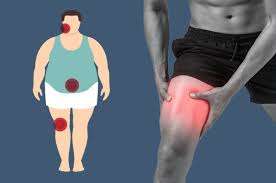
FAQ: Knee Strain and Obesity:
Q-1. How does obesity cause knee strain and joint pain in adults in the USA?
Obesity places excessive mechanical load on the knee joints, leading to strain and pain over time. In the United States, where over 42% of adults live with obesity, this issue is widespread.
Biomechanical studies show that every extra pound of body weight adds approximately 4–6 pounds of pressure on the knees during activities like walking or climbing stairs.
This increased load accelerates joint wear and tear, contributing to chronic discomfort. Additionally, obesity triggers low-grade inflammation, which further worsens joint pain and stiffness.
Q-2. What is the link between obesity and knee osteoarthritis risk in the USA?
Obesity is one of the strongest risk factors for knee osteoarthritis. Research indicates that individuals with obesity are 4 to 5 times more likely to develop knee osteoarthritis compared to those with a healthy weight.
In the U.S., osteoarthritis affects over 32 million adults, with a large proportion linked to excess body weight.
The combination of mechanical stress and inflammation damages cartilage, leading to progressive joint degeneration and reduced mobility.
Q-3. Does excess weight increase pressure on knee joints when walking?
Yes, excess weight significantly increases pressure on knee joints during movement.
For example, gaining just 10 pounds can add 40–60 pounds of force on the knees with each step.
Considering that the average American takes about 3,000–4,000 steps per day, this added stress accumulates quickly. Over time, this repetitive strain contributes to joint pain, cartilage breakdown, and a higher risk of injury.
Q-4. How much weight loss can reduce knee pain and strain?
Weight loss has a direct and measurable impact on reducing knee pain. Studies show that losing just 10% of body weight can reduce knee pain by approximately 25% to 30%.
Even modest weight loss improves joint function and decreases inflammation.
In the U.S., many clinical programs emphasize gradual weight reduction because it not only alleviates pain but also improves overall mobility and quality of life.
Q-5. What is the risk of knee injury and strain in obese individuals in the USA?
Obese individuals face a significantly higher risk of knee injuries, including ligament damage and meniscus tears.
Data suggests that overweight and obesity contribute to nearly 25% of new knee pain cases in the United States.
The added weight alters movement patterns and increases joint instability, making injuries more likely during daily activities or exercise.
Q-6. Why does obesity lead to chronic knee pain and inflammation?
Obesity contributes to chronic knee pain through both mechanical and metabolic pathways. Fat tissue produces inflammatory chemicals that increase joint inflammation.
In the U.S., chronic inflammation linked to obesity is a major contributor to musculoskeletal disorders.
This means that even without excessive physical activity, individuals with obesity may experience persistent knee pain due to internal inflammatory processes.
Q-7. How does BMI affect knee joint stress and cartilage damage?
Body Mass Index (BMI) is directly related to knee joint stress. Higher BMI levels are associated with increased cartilage breakdown and faster progression of joint damage.
Individuals with a BMI over 30 are at significantly higher risk of joint degeneration. In the U.S., where obesity rates exceed 40%, elevated BMI is a key factor driving the rise in knee-related health issues.
Q-8. Can losing weight improve knee strain and mobility outcomes?
Yes, losing weight significantly improves knee strain and mobility. Research shows that individuals who lose weight experience up to 50% improvement in joint function and mobility.
Reduced body weight decreases mechanical stress and inflammation, allowing the joints to function more efficiently.
Many Americans report better walking ability, reduced pain, and increased activity levels after weight loss.
Q-9. What are the statistics on knee pain prevalence in obese adults in the USA?
Knee pain is highly prevalent among obese adults in the United States.
Studies indicate that nearly 1 in 3 obese individuals report chronic knee pain.
Additionally, obesity increases the likelihood of developing mobility limitations by over 60%.
These statistics highlight the strong connection between excess weight and joint health, making it a major public health concern.
Q-10. What are the best ways to reduce knee strain caused by obesity naturally?
The most effective ways to reduce knee strain naturally include gradual weight loss, low-impact exercise, and muscle strengthening.
Activities like walking, swimming, and cycling are widely recommended in the U.S. because they minimize joint stress while improving fitness.
Strengthening the muscles around the knee can reduce joint load by up to 20%, providing additional support.
Combining these strategies with a balanced diet can significantly reduce pain and improve long-term joint health.
Expert Tip of the Day:
Knee strain and obesity are closely linked, with excess weight placing significant stress on the joints and increasing the risk of chronic pain and osteoarthritis.
In the United States, this issue affects millions due to high obesity rates and sedentary lifestyles.
The good news is that even modest weight loss can lead to meaningful improvements in knee health, reducing pain, enhancing mobility, and preventing further damage.
By adopting sustainable lifestyle changes such as balanced nutrition, regular low-impact exercise, and strength training, individuals can effectively manage knee strain and improve their overall quality of life.
Takeaway
In conclusion, the connection between knee strain and obesity is clear.
Carrying extra weight places significant stress on the knee joints, increasing the risk of ligament tears, strains, and chronic pain.
Obesity not only contributes to the development of knee injuries but also slows down the recovery process, making it harder to heal from ligament tears such as anterior ligament tears, medial collateral ligament tears, and posterior collateral ligament tears.
Preventing knee strain requires a multifaceted approach that includes weight management, proper exercise, and the adoption of ergonomic practices in daily activities.
While weight loss can seem daunting, even modest reductions in body weight by consuming healthy weight loss smoothies, can lead to substantial improvements in knee health and a lower risk of injury.
If you are struggling with knee pain or injury and are overweight, addressing your weight is a crucial step in your recovery.
By maintaining a healthy weight and following ergonomic principles, you can protect your knees and improve your overall quality of life.