Most American adults battling obesity overlook sleep as a real driver of weight loss.
While diet and exercise grab the attention, healthy sleep is a fundamental key that transforms metabolism, curbs cravings, and stabilizes hunger hormones.
Insufficient sleep can spike hunger and slow metabolism, increasing weight gain risk by up to 38 percent.
This article reveals how optimizing sleep patterns and routines unlocks deeper metabolic health—giving you practical tools to support your weight loss journey.
Table of Contents
- What Healthy Sleep Really Means
- Sleep’s Impact on Hunger and Metabolism
- Sleep Patterns and Weight Gain Risks
- How Sleep Affects Emotional Eating
- Making Sleep a Weight Loss Priority
Key Takeaways
| Point | Details |
|---|---|
| Adequate Sleep Duration | Aim for 7-9 hours of sleep to support hormonal balance and metabolic health. |
| Consistent Sleep Patterns | Establish a regular sleep schedule to align with circadian rhythms and reduce weight gain risks. |
| Impact on Emotional Eating | Improve sleep quality to lower stress and reduce cravings for unhealthy foods during emotional moments. |
| Sleep Environment | Optimize your bedroom for darkness, quiet, and comfort to promote restorative sleep beneficial for weight loss. |
What Healthy Sleep Really Means?
Healthy sleep is far more complex than simply closing your eyes and resting for several hours.
It represents an intricate biological process where your brain and body undergo critical restoration and maintenance.
Scientists recognize sleep as a vital, altered state of consciousness that goes well beyond mere unconsciousness.
Quality sleep involves multiple dimensions that contribute to overall wellness. These include consistent sleep duration (7-9 hours for most adults), uninterrupted sleep cycles, and proper sleep architecture – the structured progression through different stages of lighter and deeper rest.
During these stages, your body performs essential functions like memory consolidation, hormone regulation, cellular repair, and metabolic processing.
The neurological and physiological impacts of healthy sleep are profound. Your brain actively sorts memories, strengthens neural connections, and clears metabolic waste during rest.
Simultaneously, your immune system gets recharged, inflammation markers are reduced, and critical hormones that regulate hunger and metabolism are balanced.
Poor sleep disrupts these intricate processes, potentially leading to increased appetite, reduced insulin sensitivity, and higher risks of weight gain.
Pro tip: Track your sleep duration and quality using a simple journal or smartphone app to identify patterns and potential improvements in your rest routine.
Here is a summary of how healthy sleep supports metabolic wellness:
| Sleep Dimension | Main Benefit | Health Impact |
|---|---|---|
| Consistent duration (7-9h) | Supports full sleep cycles | Better hormone regulation |
| Uninterrupted sleep | Enables restorative stages | Stronger immune function |
| Proper sleep timing | Aligns with circadian rhythm | Healthier metabolism |
| Quality pre-bed routine | Promotes deeper sleep | Reduced inflammation |
Sleep’s Impact on Hunger and Metabolism
The intricate relationship between sleep and metabolism reveals a complex biochemical dance that directly influences weight management.
Sleep deprivation significantly alters how our body processes and stores fat, creating a cascade of metabolic disruptions that can sabotage weight loss efforts.
Two critical hormones – ghrelin and leptin – play central roles in this metabolic symphony.
When sleep is insufficient, ghrelin (the hunger hormone) increases while leptin (the fullness hormone) decreases, creating a perfect storm for overeating.
This hormonal imbalance means that sleep-deprived individuals experience more intense food cravings, particularly for high-calorie, carbohydrate-rich foods.
The result is a biochemical environment that promotes weight gain and makes maintaining a healthy diet exponentially more challenging.
Metabolic changes during sleep deprivation extend beyond hormone regulation. Research indicates that poor sleep raises insulin levels, accelerates lipid clearance from the blood, and fundamentally alters how the body processes and stores energy.
These metabolic shifts can slow down your resting metabolic rate, making weight loss more difficult and increasing the risk of obesity and related metabolic disorders.
Essentially, inadequate sleep transforms your body’s metabolic machinery from an efficient fat-burning system to a fat-storage mechanism.
Pro tip: Establish a consistent sleep schedule and aim for 7-9 hours of uninterrupted rest to help reset your metabolic hormones and support your weight loss goals.
Sleep Patterns and Weight Gain Risks
The timing of sleep is just as crucial as its duration when it comes to weight management.
Going to sleep late at night dramatically increases obesity risks, with studies showing a 20-38% higher chance of weight gain and increased abdominal fat for individuals who consistently hit the pillow after midnight.
Circadian rhythms play a pivotal role in metabolic processes, and disrupting these natural cycles can trigger a cascade of physiological changes that promote weight gain.
When sleep patterns are irregular, the body experiences elevated stress hormone levels, particularly cortisol, which not only increases appetite but also encourages fat storage around the abdomen.
This metabolic disruption means that even individuals maintaining a consistent diet can experience weight gain simply due to poor sleep timing and quality.
Not just bedtime, but the timing of meals in relation to sleep also significantly impacts weight management.
Late-night eating fundamentally alters metabolic processes, increasing hunger hormones and reducing the body’s ability to burn calories efficiently.
Research demonstrates that consuming meals close to bedtime can change fat cell behavior, making weight loss more challenging and increasing the risk of obesity.
The body’s metabolic efficiency is highest during daylight hours, and eating outside these natural windows can create metabolic confusion that leads to increased fat storage.
This comparison highlights effects of adequate vs. poor sleep on weight and metabolism:
| Aspect | Adequate Sleep | Poor Sleep |
|---|---|---|
| Hunger Hormones | Balanced ghrelin/leptin | Increased appetite |
| Fat Storage | Reduced tendencies | Encouraged, especially abdominal |
| Metabolic Rate | Stable or improved | Slower, promotes weight gain |
| Food Choices | Healthier selection | More cravings, high-carb foods |
Pro tip: Aim to establish a consistent sleep schedule with a bedtime before 11 PM and avoid eating meals within three hours of going to sleep to support your metabolic health and weight loss goals.
How Sleep Affects Emotional Eating?
Emotional eating is a complex psychological response deeply intertwined with sleep quality and stress management.
Research reveals that sleep deprivation significantly alters brain reward pathways and stress hormone responses, creating a perfect storm for impulsive and unhealthy food choices during moments of emotional vulnerability.
When sleep is insufficient, the brain’s ability to regulate emotions becomes compromised, making individuals more susceptible to using food as a coping mechanism.
Chronic sleep loss elevates cortisol levels, which not only increases stress but also triggers intense cravings for high-calorie, comfort foods.
This hormonal disruption transforms emotional eating from an occasional indulgence into a persistent pattern of seeking temporary emotional relief through nutrition, ultimately undermining weight loss efforts and metabolic health.

The neurological connection between sleep and emotional eating extends beyond simple hormone regulation.
Sleep deprivation impairs the prefrontal cortex – the brain region responsible for impulse control and rational decision-making – making individuals more likely to surrender to emotional eating triggers.
Without adequate rest, the brain struggles to differentiate between genuine hunger and emotional distress, leading to a cycle of consuming food as a misguided form of self-soothing.
This neurobiological vulnerability explains why tired, stressed individuals are significantly more prone to reaching for unhealthy snacks during emotionally challenging moments.
Pro tip: Implement a consistent sleep routine and develop alternative stress-management techniques like deep breathing or journaling to interrupt the emotional eating cycle before it begins.
Making Sleep a Weight Loss Priority
Weight loss success is not just about diet and exercise, but fundamentally about understanding and prioritizing consistent, high-quality sleep habits that support metabolic health.
Treating sleep as a critical component of your weight management strategy transforms it from an afterthought to a powerful wellness tool.
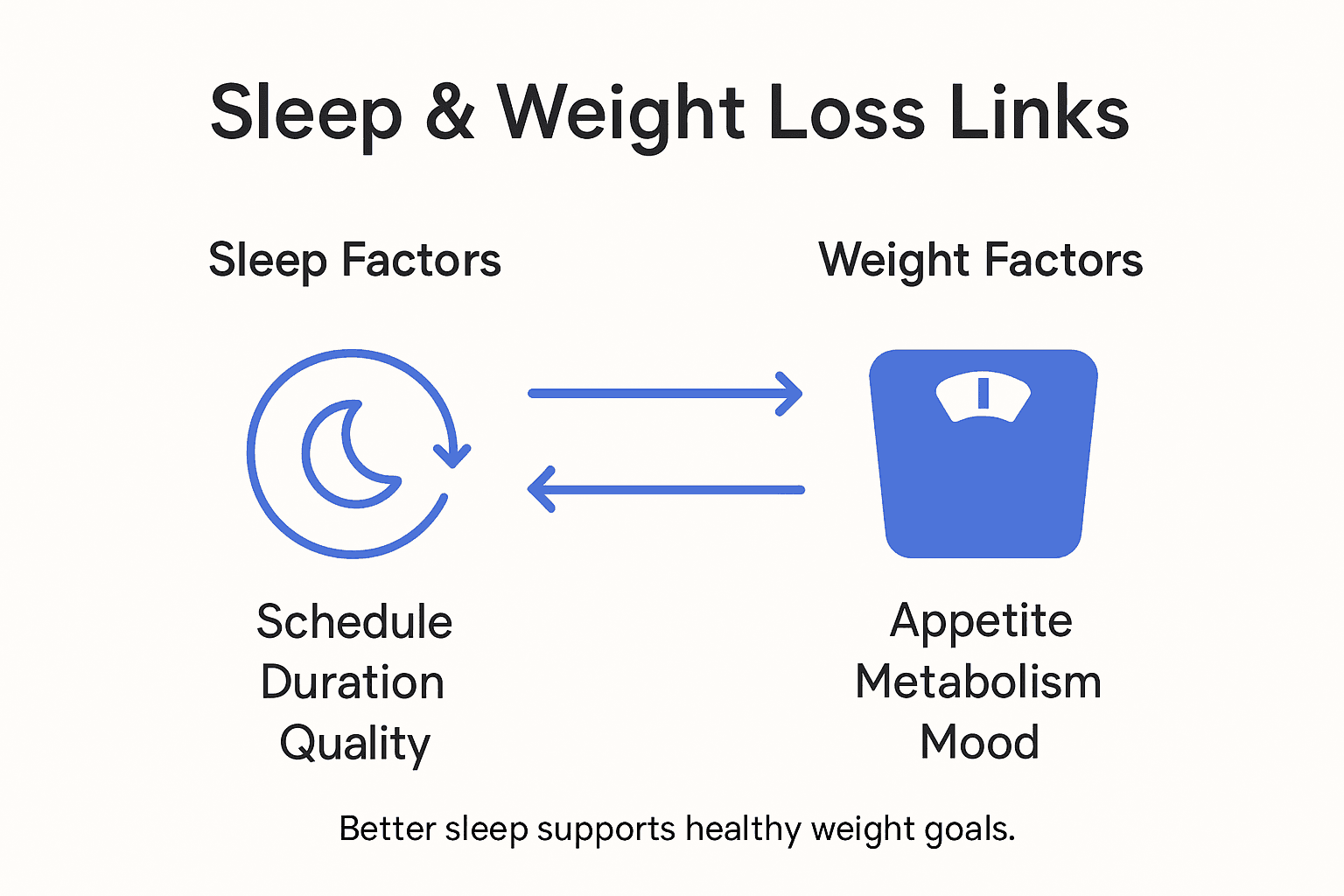
Creating a sleep-conducive environment requires intentional design and commitment.
This means establishing a consistent bedtime routine, even on weekends, and treating sleep with the same discipline you apply to nutrition and workout plans.
Practical steps include establishing a fixed sleep schedule, creating a relaxing pre-sleep ritual, minimizing electronic device usage before bedtime, and optimizing your bedroom’s temperature, lighting, and noise levels to promote deeper, more restorative rest.
The physiological benefits of prioritizing sleep extend far beyond simple rest.
Consistent, quality sleep helps regulate critical metabolic hormones like ghrelin and leptin, which directly influence hunger signals and energy expenditure.
When you consistently get adequate sleep, your body becomes more efficient at processing nutrients, managing stress, and maintaining a healthy weight.
By viewing sleep as an active process of metabolic restoration rather than passive downtime, you can reframe your approach to weight loss and overall health.
Pro tip: Set a nightly alarm not just to wake up, but to signal the start of your wind-down routine, creating a consistent sleep schedule that supports your weight loss goals.
Unlock Your Weight Loss Potential by Mastering Sleep
The article highlights how poor sleep disrupts hormones like ghrelin and leptin, slows metabolism, and triggers emotional eating that can all sabotage your weight loss journey.
If you are struggling with inconsistent sleep schedules or sleep deprivation, it is time to take control of your sleep habits.
Understanding and managing your sleep patterns is essential to support healthy metabolism and curb cravings.

Discover expert strategies and practical tips on Sleep Management – LeanAndFit to improve your rest quality and align it with your weight loss goals. Don’t let poor sleep hold you back from reaching your ideal health.
Visit LeanAndFit.info now to access trusted resources and start transforming your sleep tonight for lasting wellness.
Frequently Asked Questions
Q-1: How does sleep affect weight loss?
A-1: Quality sleep is essential for weight loss as it regulates hormones like ghrelin and leptin, impacting hunger and metabolism. Insufficient sleep can lead to increased cravings and reduced metabolic efficiency, hindering weight loss efforts.
Q-2: What is the recommended sleep duration for weight loss?
A-2: Most adults should aim for 7-9 hours of uninterrupted sleep each night to support metabolic health and facilitate effective weight loss practices.
Q-3: How does poor sleep influence appetite?
A-3: Poor sleep increases the hunger hormone ghrelin and decreases the fullness hormone leptin, causing more intense cravings for high-calorie foods and potentially leading to overeating.
Q-4: What steps can I take to improve my sleep quality for weight loss?
A-4: To enhance sleep quality, establish a consistent sleep schedule, create a relaxing pre-sleep routine, minimize screen time before bed, and optimize your sleep environment by adjusting temperature, lighting, and noise levels.
Recommended
- How Improving Sleep Duration Supports Weight Loss in Obesity? – LeanAndFit
- How Sleep and Weight Loss Are Connected: Science-Backed Facts – LeanAndFit
- How Consistent Sleep Schedules Regulate Appetite in Obese Individuals? – LeanAndFit
- Rol del sueño en el peso: impacto hormonal y hábitos – LeanAndFit
- Why Trust LeanAndFit.info?
- For educational purposes only