

If you are wondering why obesity rates are so high in McAllen Texas (Hidalgo County) then, you are not alone.
There are many factors that contribute to the problem of why is the obesity rate so high in this community, such as poverty, accessible food, exercise, cultural beliefs about food, education, access to health care resources, genetic causes, and childhood habits, among others.
Over half of the population in McAllen Texas(Hidalgo County) may be obese by 2030 if the current trends are not reversed, this represents a more than 55%.
The situation regarding obesity in this community can only be resolved if people are aware of the statistics and reasons why it is a problem.
That is why you came looking for this information and why you should continue reading this article. So why is the obesity rate so high in McAllen Texas(Hidalgo County) ? Please continue reading the next paragraphs to find out.
Well, this article from leanandfit.info really gets into the details, using lots of data to explain what’s going on. It also looks at what might happen in the future and answers some questions that people in the community are asking.
Article Index
- Obesity Prevalence Statistics and Growth Trends in McAllen
- Poverty and Income Inequality Impact on Obesity
- Diet, Food Environment, and Caloric Intake Patterns
- Physical Inactivity and Infrastructure Limitations
- Education Levels, Health Literacy, and Awareness
- Healthcare Access and Preventive Care Gaps
- Hispanic Demographics, Genetics, and Metabolic Risk
- Childhood Obesity Rates and Early-Life Habits
- Psychological Stress, Work Patterns, and Lifestyle
- Future Obesity Predictions for McAllen and Hidalgo County
- FAQ Section: Top 10 Questions McAllen Residents Ask
- Conclusion
Obesity Prevalence Statistics and Growth Trends in McAllen
McAllen is among the cities with the highest obesity rate in the USA.
Almost half of the population of this city is obese, and one third is overweight. Hence, approximately three quarters of the local adult population are obese or overweight.
In other words, only a quarter of the adults in McAllen are within the healthy weight range.
In Hidalgo county, the obesity rate is between 42 and 48%, which is significantly higher than the national average of 34%
In Hidalgo county, obesity is increasing at an alarming rate. For example, per statistics, the number of obese people increased by over 50% during the last 15 years.
In the early 2000s, the number of obese people in the county was between 28 and 30%, and now it is over 45%.
Therefore, there is a significant concern about the local authorities and people about this issue.
The recent significant jump in the obesity rate is associated with the fact that now almost half of the population of South Texas is obese, compared to only a fifth of the population at the turn of the century.
It is also believed that the tendency will only continue to grow in the future.
Health prediction experts believe that already by 2030, the obesity rate in South Texas will be between 52 and 58%.
In other words, more than half of all residents will be obese.
The cost of healthcare in general is also growing, since the increase in the number of obese people leads to an increase in chronic diseases such as diabetes, coronary artery disease, and hypertension.
For example, in Hidalgo County, the amount of money spent on healthcare has increased by more than 35% in just a decade.
Hence, the problem of obesity in McAllen needs to be addressed immediately, since it is becoming one of the most serious problems of the area.
Poverty and Income Inequality Impact on Obesity
Being economically disadvantaged significantly increases the likelihood of an individual being obese. For instance, a large proportion of the population in the Hidalgo County, Texas area, is considered poor.
Specifically, 29-30% of residents live below the poverty level, which is almost double the national average of 12-13% (Census Bureau, 2019).
Wealthier individuals are more likely to buy healthy food because they have greater access to resources such as time and money.
The latter can choose to eat highly processed foods high in calories, sugar, saturated fats, and carbohydrates.
Indeed, research shows that the connection between income and obesity is quite strong, with approximately 60% of poor people being obese compared to 30-35% of those with higher incomes.
As a result, there is a significantly higher prevalence of obesity among residents living below the poverty level.
In addition to a lack of healthy food options, poor individuals face a range of additional barriers to maintaining a healthy lifestyle, including less access to recreational facilities and preventive healthcare services.
In addition, it is estimated that almost 37% of households in Hidalgo County live with the constant stress of being unable to afford basic necessities.
Financial stress is a major contributor to obesity since stress causes hormonal imbalances in the body, notably by increasing levels of cortisol.
The latter causes weight gain, especially around the abdominal area, which is associated with an increased risk of chronic diseases such as diabetes.
Unless steps are taken to address these factors, the rate of obesity in Hidalgo County is likely to rise significantly within the next 10 years.
Specifically, if current trends continue, between 10 and 15% of residents in the county may become obese, with the majority coming from economically disadvantaged families.
Diet, Food Environment, and Caloric Intake Patterns
Diet in McAllen leads to obesity in the population.
The food environment quality of the county is lower than the national level, which means that fewer people have access to inexpensive, healthy food.
Some of the neighborhoods were found to rely on fast food and convenience stores.
A large number of processed foods and sweetened drinks lead to obesity rates as high as 50%, compared to 28% among people with healthier diets.
Approximately 35-40% of people do not meet the daily recommendations for fruits and vegetables, increasing obesity risk.
Furthermore, the portion sizes in the United States are too large. They contribute to obesity due to excess calorie intake.
An average adult in high-obesity areas consumes 300-500 more calories per day, which translates to 10-20 pounds of weight gain per year.
If the current tendencies persist, the researchers predict another 8-12% rise in obesity by 2035.
Physical Inactivity and Infrastructure Limitations
Living in McAllen and not exercising is a major problem.
Approximately 33% of adults do not get regular physical activity, which is even higher than the national average of roughly 25%.
People who do not get as much exercise have an obesity rate over 40-45%
while those who exercise have an obesity rate of only 25%
Only 64% of people in McAllen have a safe place to exercise within easy access, compared to the national average of 80%
Car culture tends to promote physical inactivity, since many people in McAllen are choosing to drive over biking or walking.
A sedentary lifestyle causes people to consume more calories than they expend.
For example, sedentary adults burn 300-600 fewer calories per day than adults who are physically active, which causes weight gain.
By 2030, physical inactivity is likely to increase obesity rates by 5-10% nationwide.
Education Levels, Health Literacy, and Awareness
Education is a leading determinant of obesity risk.
Compared to national averages (87%), the rates of completed high school among adults in Hidalgo County only account for 63–65%.
A lesser level of education negatively affects health literacy across populations
Adults with low educational attainment are 1.5–2 times more likely to be obese than their college-educated counterparts
The association between education and obesity is explained by inadequate knowledge about calories and basic nutrition
Health literacy influences health-related behaviors and choices, and those with limited understanding of nutrition are more likely to consume processed foods and sugar-sweetened beverages.
Health literacy also impacts pro-health behaviors, such as eating patterns, physical activity, and preventive screenings.
Projections show that obesity rates among low-educated populations can be 10–15% higher than current levels if not addressed through enhanced education and awareness.
Healthcare Access and Preventive Care Gaps
Healthcare access in McAllen and Hidalgo County remains a major barrier to managing obesity effectively.
The county only has 54 primary care providers per 100,000 people as compared to the national average of 110 per 100,000 people.
This lack of access to care decreases the ability of residents to get recommended check-ups, nutrition counseling, and preventative care that are needed to detect weight issues.
It is estimated that 27-30 percent of adults in Hidalgo County suffer from diabetes, as compared to the national average of 10-12 percent.
This is an indication of the lack of preventative care that is being provided in the county. The lack of healthcare resources leads to gaps in services that are needed to counsel patients and screen them for obesity, as well as refer them to specialists that can help them deal with nutrition and physical fitness.
Research indicates that the prevalence of obesity is 10-15 percent higher in areas that do not have access to healthcare resources as compared to areas that do.
The lack of insurance and financial resources leads many people to not get regular care, and only seek treatment when health problems become serious.
The number of obesity related cases are estimated to rise by 20-25 percent by 2035 if healthcare access and community health and wellness initiatives are not improved.
Hispanic Demographics, Genetics, and Metabolic Risk
Since McAllen is located in Hidalgo County, which is characterized by a large prevailing proportion of the Hispanic population (91–92%), it is essential to explore the existing patterns of obesity among Hispanics and the existing genetic peculiarities accounting for this issue.
For one thing, based on the conducted research, it is possible to conclude that the occurrence of obesity among the Hispanic population in the Rio Grande Valley of Texas is higher in comparison to the mean values across the whole country.
This theory is supported by the consideration of several factors influencing the described phenomenon, such as genetic disposition, molecular mechanisms, and social settings.
First of all, it was found that in South Texas, the obesity rate accounts for 48–52% among Hispanic adults, which is significantly higher in comparison to the national obesity rate (34–36%).
As a result, it is possible to state that the chance for an average adult Hispanic from South Texas to be obese is 40–50% higher than for an average adult from the national population.
To begin with, there is genetic susceptibility accounting for Hispanic people being more likely to gain weight and have a lower degree of control over their weight.
For instance, it was found that being Hispanic increases the chance to develop diabetes by 30–40% due to a higher likelihood of encountering insulin resistance, impaired glucose metabolism, and more efficient storage of fat.
It is noteworthy that the prevalence of diabetes in Hidalgo County is among the highest in the country, with about 27–30% of Hispanics being diabetic patients.
Moreover, social determinants such as a diet, socio-economic status, and a lack of physical activity may aggravate the outlined problem.
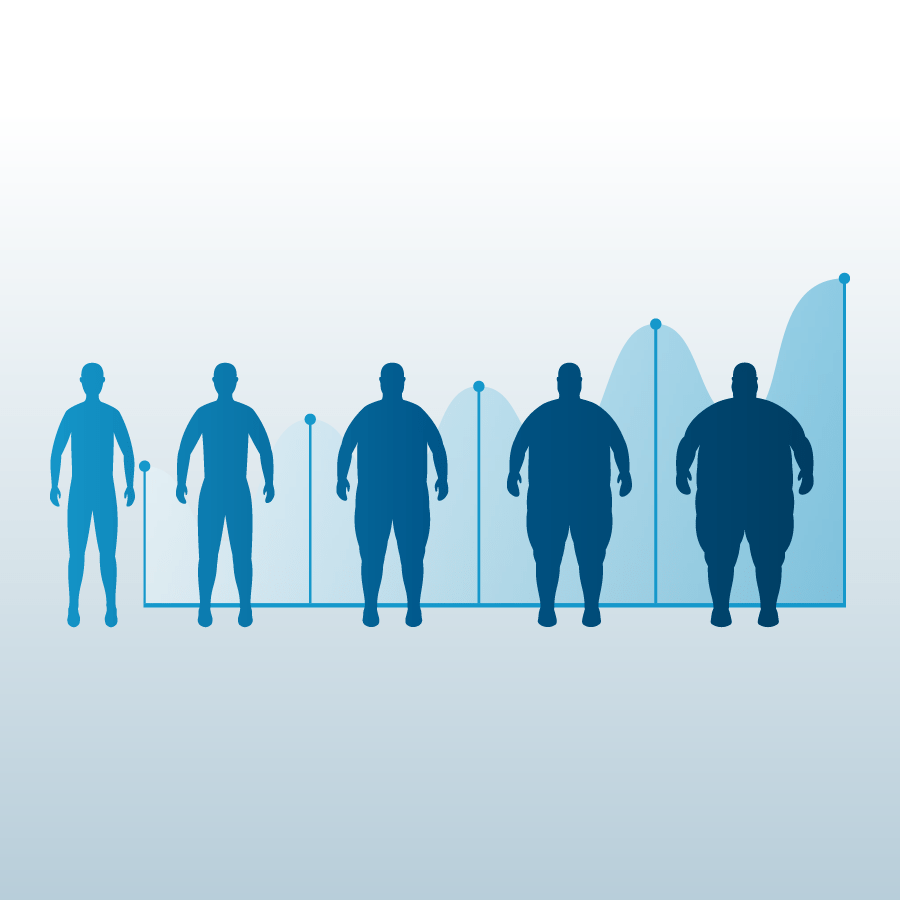
As a result of the research analysis, it is possible to suggest that in 2030, the obesity rate among adult Hispanics will reach 56%, and it will increase to over 60% in 2035, which will have adverse effects on the local population.
Childhood Obesity Rates and Early-Life Habits
Childhood obesity is a serious health epidemic in McAllen and Hidalgo County and is growing at an alarming rate.
The percentage of obese children in our local community is significantly higher than the national average. This issue needs to be addressed as it may lead to lifelong health consequences for these kids.
There is an alarming rise in childhood obesity in Texas over the past several years, with rates well above the national average of 19-20%.
Recent studies have shown that 22-25% of children in Texas are obese, which is well above the national rate of 19-20%.
This is of great concern as the increase in obesity is a growing menace to the health of America’s children, especially at such a young age.
Local children obesity stats McAllen Texas is even higher, being 28-30% in some school districts
This is an astonishing number as it means for every 100 kids, 28-30 are already obese and at grave risk for lifelong health problems.
Furthermore, children that are obese have a 70-80% chance to become obese as adults.
They will be at much higher risk for secondary health conditions such as diabetes, hypertension, and heart disease, which can affect all of the children’s vital organs and impair their function.
It can be devastating if obese children do not have the opportunity to be healthy adults, free from the burden of obesity-related diseases.
There is also a substantial risk for children who are obese to become severely obese as adults due to a disrupted metabolic system.
Children that are sedentary and participate in less physical activity are at especially high risk.
There are multiple factors influencing the rise in obesity among children, such as prolonged periods of screen time resulting in decreased physical activity levels and the consumption of unhealthy amounts of sugar from soda and juice.
All of these factors put children at risk for lifelong obesity and the resulting adverse health outcomes.
Children who participate in more than 3 hours of screen time per day are 4 times more likely to become obese.
There is an alarming projection for the future of childhood obesity in Hidalgo County.
With current statistics pointing toward an increase of 12-18% from our current rate of childhood obesity, it is easy to imagine the scale of the health disaster we will be facing by the year 2030 if this trend continues unchecked.
This would create a large cohort of unhealthy adults who will be predisposed to lifelong health problems due to obesity.
Psychological Stress, Work Patterns, and Lifestyle
Chronic stressors are among the significant factors that have contributed to the major rise in obesity cases in McAllen and Hidalgo county.
The problem affects the metabolic rates of many people as well as their general lifestyle.
One of the most common stress-related obesity causes that have been affecting a large proportion of the Hidalgo County Texas adults is financial and work-related stress.
Stress leads to a sudden increase in cortisol levels, thus disrupting the normal functioning of the metabolism and creating the conditions necessary for obesity to develop.
Studies indicate that chronically stressed adults are at least 30-45% more likely to develop obesity than those rarely subjected to stress.
Hidalgo county residents have been noted to have one of the highest percentages of stress levels in the nation with about 38-42% of the population frequently facing financial challenges or mental health problems.
This is even higher than the national percentage which stands at about 26% for the US as a whole.
Besides financial stress, the county has also been dealing with long working hours and an inactive lifestyle.
Approximately a third of the adult population engages in sedentary occupations that do not allow them to meet the recommended numbers of calories burnt per day.
Moreover, about 46% of the adults report working more than 40 hours a week, thus leaving them with little time to engage in exercise or spend on preparing healthy meals.
Chronic sleep disorders also contribute to the high obesity rates since about 34-37% of adults report getting less than six hours of sleep on average per day.
This increases the risk of obesity by up to 55% due to the high levels of cortisol in the body as a result of sleep deprivation.
If the current trends of stress and an inactive lifestyle continue, the rates of obesity in Hidalgo county are likely to rise by at least 10-12% by 2035, thus increasing the public health burden.
There is a need to reduce the levels of stress in the county to help reduce the number of obese residents.
Future Obesity Predictions for McAllen and Hidalgo County
In the nearest future, by 2030, the number of obese adults in McAllen and Hidalgo County is dramatically increasing.
It is projected that 55-58 percent of the population will be obese, which represents over half of all adults. This is a serious and alarming issue for the region that will have severe consequences for the local population’s health and wellbeing.
A significant increase of people with obesity by 10% within the next decade is projected.
Currently, there are 45-48% of obese citizens, and this number is projected to rise substantially. Moreover, adding the number of overweight adults to the number of obese ones will show an astonishing result of 80% of all people in the county.
Thus, it is important to note that obesity is a serious and alarming problem within the whole Hidalgo county area that is mainly inhabited by Hispanics. By 2035, the number of obese Hispanics is projected to increase to 60%, resulting in six out of ten people being obese.
The fact that the whole county is a Hispanic community is also an important point to consider. As it is known, Hispanics suffer from higher obesity rates, which is already a crucial problem. Therefore, the situation in the county is a serious health issue that requires serious attention.
Moreover, childhood obesity is also a severe problem leading to alarming consequences. The number of obese children is rising at an astonishing rate of 12-15%.
This issue will have a lasting effect on the future adult population of Hidalgo, as it is projected that obese children will become obese adults. Thus, the increase in the number of obese adults will lead to a high incidence of obesity-related diseases like diabetes.
The occurrence of such diseases among adults is projected to raise to 30-35%. Consequently, healthcare spending will increase, and the adult population’s average life expectancy will decrease.
FAQs on Rising Obesity in McAllen City
A quick look at he Top 10 Questions McAllen Residents Ask:
Q-1: Why is McAllen considered the most obese city in America?
A-1: McAllen is labeled as the most obese city in America because there is a very high number of people who are overweight or obese compared to the rest of the country.
In McAllen, the problem of extreme overweight is exceptionally high.
Specifically, in this city, 45% of adults are obese, 31% are overweight, and the total number of overweight people reaches 76%. Poverty, lack of healthy food, exercise, and a specific diet are some of the factors that contribute to this issue.
People in this city also have limited access to health care and face financial difficulties, which makes them more likely to be obese.
These factors combined with time contribute to the development of obesity among many people and long-term retention of this problem in this city.
Q-2: What percent of the population of McAllen is obese?
A-2: In this city, 45% of all adults are obese compared to 34% of the national average.
This means that almost half of the population of McAllen has a body mass index (BMI) above 30.
Adding the number of overweight people, which is 31%, we get that 76% of the population of McAllen is overweight or obese. This significantly raises the risk of developing many diseases, such as diabetes, cardiovascular diseases, and hypertension.
The high percentage of obese people affects many aspects of the life of this city, for example, the high cost of health care, the quality of working life, and the quality of life in general.
Q-3: Will obesity increase in McAllen?
A-3: The situation with obesity in McAllen will only get worse in the next ten years if no steps are taken to stop it.
According to experts, the rate of obesity in this city will rise to 55 – 58% in 2030. The reason for this is the high cost of food, a lack of exercise, and the poor state of health care.
The number of obese children is also increasing, which means that the rate of obesity among adults will also rise.
If no steps are taken to reduce the rate of obesity in this city, then many people will continue to be overweight for a long time.
Q-4: Why does poverty increase obesity risk?
A-4: Poverty increases the risk of obesity since poor people do not have regular access to healthy food and exercise.
Healthy food in this region is available to people with a good income, while poor people are forced to eat calorie-rich foods. In addition, poor people are exposed to higher stress levels, which increases cortisol levels in the body, which in turn affects the increased amount of fat storage.
Moreover, poor people have less time to prepare healthy meals and exercise, since they have to work more than people who have a regular source of income.
Q-5: Does diet play a major role in the rate of obesity?
A-5: Diet plays a major role in the rate of obesity, as many people in this city consume a high-calorie diet with a lot of sugar.
People in this region also eat a lot of fast food and have a small amount of healthy food, such as fruits and vegetables. The way people eat, the size of a portion, and the caloric content of food are some of the reasons why the rate of obesity in this city is so high.
The diet of the people of McAllen and the way of eating directly affect the weight of each person, so diet is one of the main reasons why the rate of overweight and obesity in this place is so high among both children and adults.
Q-6: Does physical inactivity increase the risk of obesity?
A-6: People in this city are forced to sit a lot since most of them work in a sedentary job.
This leads to a decrease in the number of calories burned, which increases the weight of a person since the number of calories burned is less than the number of calories consumed. Lack of physical activity and a sedentary lifestyle over time increases the risk of obesity, especially in urban populations.
Q-7: Is childhood obesity a problem in McAllen?
A-7: Childhood obesity is a serious problem in McAllen, as many children in this city are overweight or obese.
In addition, the situation with childhood obesity in this city is heading toward negative trends since many children do not get enough exercise and eat unhealthy food.
Childhood obesity is a major risk factor for adult obesity, which is also a problem in this region. Childhood obesity is associated with many health problems, such as type 2 diabetes, hypertension, and other diseases.
The combination of poor health and lack of exercise is one of the reasons why the rate of overweight and obesity in this region is so high.
Q-8: Can obesity be reversed?
A-8: Childhood obesity is a major problem in this city. In some schools, the rate of overweight and obese children reaches 28-30%, which is much higher than the national average of 20%.
Many factors contribute to childhood obesity, such as the consumption of sweetened drinks, fast food, the absence of sports, and a sedentary lifestyle.
If a child is obese, then there is a very high probability that he will also be obese when he grows up. Specifically, there is a 70-80% chance that a child who is obese will also be obese when he reaches adulthood.
This significantly increases the risk of developing many diseases, such as type 2 diabetes and cardiovascular diseases.
Q-9: Does genetics play a role?
A-9: Genes play an important role in the development of obesity in this city since they affect the way each person burns energy.
Genes affect how much fat is stored in adipose tissue, how much insulin is needed for the body, and where fat is stored. Genes that affect the amount of energy expenditure play the biggest role in the development of obesity in this region.
However, the way people live has a more significant effect on obesity than genes do.
People in McAllen have a high-calorie diet, a sedentary lifestyle, eat a lot of fast food, and prefer sweet drinks to water, which all contribute to weight gain.
All these factors increase the likelihood that a person will be overweight or obese, regardless of their genetic predispositions.
In this city, there is a severe problem with overweight and obesity since almost half of the adult population and a quarter of the children are obese or overweight. The reasons for this are the lack of sports and a healthy diet, such as fruits and vegetables.
The main causes of overweight and obesity in this region are environmental and lifestyle factors, such as a high-calorie diet, fast food, and a sedentary lifestyle.
Q-10: What is the future outlook for McAllen obesity rates?
A-10: The future outlook for obesity rates in McAllen is severe since the current rates are already very high.
Now, 45% of all adults in this city are obese, and 30% of children are overweight or obese.
Thus, it is possible to conclude that the situation with obesity in this city is critical and requires immediate measures to reduce the rates. If no steps are taken to reduce the rates of obesity in this region, then in ten years, 55 – 58% of the population of McAllen will be obese.
In addition, the rate of childhood obesity in this city will increase by 12-15%, which will lead to a significant increase in the rates of overweight and obesity among the adult population. This will lead to the development of many diseases, such as diabetes, cardiovascular diseases, and many others.
Key Takeaway
The main sources of obesity in McAllen are poverty, an unhealthy diet, lack of physical activity, low levels of education, inadequate access to health care, and cultural influences.
At the moment, 45% of all adults are classified as obese, and almost 30% of children are overweight or obese, with the number of overweight or obese adults expected to rise to 55-58% by 2030.
In addition, the rate of overweight or obese Hispanics is expected to surpass 60% by 2035.
It is essential to address the issue of obesity in McAllen by educating people on healthy eating habits, improving access to health care and sports, promoting a healthier lifestyle, and reducing economic disparities.
Without significant efforts to reduce the number of obese people, obesity will continue to undermine the health status, working capacity, and overall well-being of the population in McAllen for a long time.
Recommended:
- https://leanandfit.info/why-are-obesity-rates-so-high-in-edinburg-hidalgo-county-texas/
- https://leanandfit.info/how-to-prevent-and-manage-obesity-in-edinburg-hidalgo-county-texas/
- https://leanandfit.info/why-obesity-rates-are-so-high-in-mission-texas-hidalgo-county/
- https://leanandfit.info/how-to-reduce-obesity-rates-in-mission-hidalgo-county-texas/
- https://leanandfit.info/how-to-manage-and-control-obesity-in-mcallen-texas/
- Why trust leanandfit.info?
- For educational purposes only
- https://myrgv.com/local-news/2025/03/21/mcallen-once-again-tops-list-for-most-obese-overweight-cities-in-the-us/
- https://www.mdpi.com/2673-4168/5/3/50