
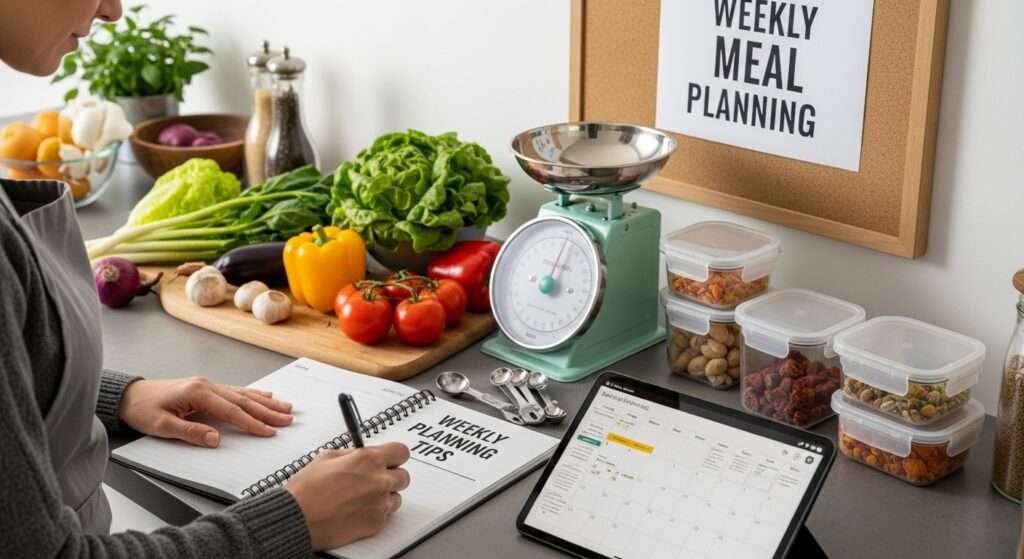
Trying to lose weight often feels confusing with so much advice flying around.
But check this out.
Keeping a simple food journal for just one week can reveal surprising patterns that totally change your strategy. Most folks think they need fancy diets or endless gym sessions, but the real transformation starts with writing down what you actually eat.
That one small habit can spark the biggest breakthrough.
Table of Contents
- Step 1: Assess Your Current Eating Habits
- Step 2: Set Clear Health Goals And Objectives
- Step 3: Create A Balanced Meal Template
- Step 4: Develop A Weekly Shopping List
- Step 5: Prep And Cook Your Meals In Advance
- Step 6: Monitor Progress And Adjust As Needed
Quick Summary
| Key Point | Explanation |
|---|---|
| 1. Maintain a food journal | Track everything you consume for one week to understand your eating habits without immediate judgment. |
| 2. Set SMART health goals | Define Specific, Measurable, Achievable, Relevant, and Time-bound goals to create a clear action plan for weight loss. |
| 3. Create a balanced meal template | Design a meal structure that includes lean proteins, complex carbs, and non-starchy vegetables to ensure nutritional balance. |
| 4. Organize a weekly shopping list | Develop a detailed shopping list based on your meal template to prevent impulsive purchases and support your weight loss. |
| 5. Regularly monitor progress | Evaluate your success weekly using various metrics like body measurements and energy levels to adjust your plan as necessary. |
Step 1: Assess Your Current Eating Habits
Successful weight loss begins with a clear understanding of your current dietary landscape. This initial step is crucial because you cannot create an effective meal plan without first knowing exactly what, when, and how you currently eat.
By taking a comprehensive snapshot of your existing eating habits, you establish a baseline that will help you make strategic, targeted improvements.
Start by maintaining a detailed food journal for one full week. This isn’t about judgment or immediate change, but honest observation.
Carry a small notebook or use a smartphone app to record every single thing you consume, including snacks, drinks, and even those mindless bites while cooking.
Document not just the food items, but also time of consumption, portion sizes, and your emotional state when eating.
Were you stressed? Bored? Genuinely hungry?
Once you have a complete week’s record, review your journal with a critical yet compassionate eye. Look for patterns such as frequent late-night snacking, consistent high sugar intake, or meals skipped during busy workdays.
Pay attention to nutrient balance and recognize areas where your current diet might be falling short. Learn more about mindful eating practices to help you analyze your food journal more effectively.
Consider taking additional measurements that complement your food journal. Weigh yourself, measure key body circumferences like waist and hips, and note your current energy levels.
Below is a checklist summarizing key actions to follow when assessing your current eating habits for weight loss meal planning.
| Action Step | What to Track | Purpose |
|---|---|---|
| Record all food intake | Meals, snacks, drinks | Gain a complete view of daily nutrition |
| Note time of consumption | Breakfast, lunch, dinner, snacks | Spot timing patterns like skipped meals or late eating |
| Track portion sizes | Estimate or measure servings | Identify areas of over- or under-eating |
| Log emotional state | Mood/feelings during meals | Uncover triggers for mindless or emotional eating |
| Identify nutrient balance | Protein, carbs, fats, veggies | Detect dietary gaps or excesses |
| Take physical measurements | Weight, waist/hip circumference | Establish baseline for progress tracking |
| Assess energy levels | Daily energy and fatigue | Connect diet patterns with well-being and productivity |
Remember, this assessment is not about self-criticism but self-understanding. Your goal is to create a realistic, sustainable pathway to healthier eating. By meticulously documenting your current habits, you’re already taking the first powerful step towards transformative dietary change.
Step 2: Set Clear Health Goals and Objectives
Transforming your eating habits requires more than good intentions.
You need specific, measurable objectives that transform abstract desires into concrete action plans. This step is about crafting goals that are challenging yet achievable, providing a roadmap for your weight loss journey.
Start by establishing both short term and long term health objectives. Short term goals might include losing 5 pounds in two months or reducing processed food intake to twice weekly.
Long term goals could involve reaching a target weight, improving overall metabolic health, or sustaining consistent energy levels. Learn how goal setting can motivate your weight loss journey for deeper insights into effective strategy development.
When designing these goals, apply the SMART framework: Specific, Measurable, Achievable, Relevant, and Time-bound. Instead of saying “I want to lose weight,” specify “I aim to lose 15 pounds in four months by reducing daily calorie intake and increasing physical activity.”
This approach transforms vague aspirations into actionable targets.
Consider creating a visual representation of your goals. Create a vision board or use a dedicated journal to track progress, documenting not just numerical metrics but also how you feel.
Incorporate non-scale victories like increased energy, better sleep quality, or improved clothing fit. These broader indicators of success can maintain motivation during challenging periods.
Remember that goals are not rigid contracts but flexible guidelines.
As you progress, you will gain insights about your body and metabolism. Be prepared to adjust your objectives thoughtfully, celebrating small wins and learning from temporary setbacks. Your commitment to continuous improvement matters more than perfect execution.
Step 3: Create a Balanced Meal Template
Building a balanced meal template is your strategic blueprint for consistent nutrition that supports weight loss and overall health. This step transforms your understanding of food from random choices to intentional fuel for your body. The goal is creating a flexible yet structured approach that makes healthy eating automatic and enjoyable.
Visual plate composition becomes your primary strategy.
Learn how to build a balanced plate with whole foods and design meals that maximize nutrition while supporting weight loss.
Imagine your plate divided into three key sections: lean proteins occupying one quarter, complex carbohydrates another quarter, and non-starchy vegetables filling half the plate.
This proportion ensures you receive essential nutrients while maintaining a calorie deficit.
Protein should be your foundational macronutrient, selected from lean sources like chicken breast, fish, tofu, or legumes. These proteins support muscle maintenance during weight loss and provide sustained energy.
Complex carbohydrates like quinoa, sweet potatoes, or brown rice offer necessary fiber and slow-releasing energy. Non-starchy vegetables such as spinach, broccoli, and bell peppers add volume, micronutrients, and essential fiber without significant caloric impact.
Develop a template with 4-5 protein options, 3-4 complex carbohydrate sources, and a diverse range of vegetables.
Here is a quick-reference table of basic balanced meal template options you can use to create variety throughout your week while supporting nutritional goals.
| Template Component | Options Mentioned | Purpose |
|---|---|---|
| Lean Proteins | Chicken breast, fish, tofu, legumes | Build/maintain muscle, sustained energy |
| Complex Carbohydrates | Quinoa, sweet potatoes, brown rice | Fiber, slow-release energy |
| Non-Starchy Vegetables | Spinach, broccoli, bell peppers | Micronutrients, fiber, meal volume |
| Preparation Strategy | Weekly protein, carb, veg matrix | Easy mix & match, prevents monotony |
| Plate Composition | 1/4 protein, 1/4 complex carbs, 1/2 veggies | Supports calorie deficit and fullness |
Step 4: Develop a Weekly Shopping List
Your weekly shopping list is the critical bridge between meal planning and actual nutrition. It transforms your balanced meal template from theoretical concept into practical reality.
Precision and intentionality are key when crafting a shopping list that supports your weight loss objectives and prevents impulsive, potentially derailing food purchases.
Learn strategic meal preparation techniques for weight loss to complement your shopping approach. Begin by reviewing your balanced meal template and translating each component into specific ingredients.
Organize your list strategically by grocery store sections: produce first, then proteins, followed by pantry staples. This systematic approach minimizes wandering and reduces exposure to tempting processed foods.
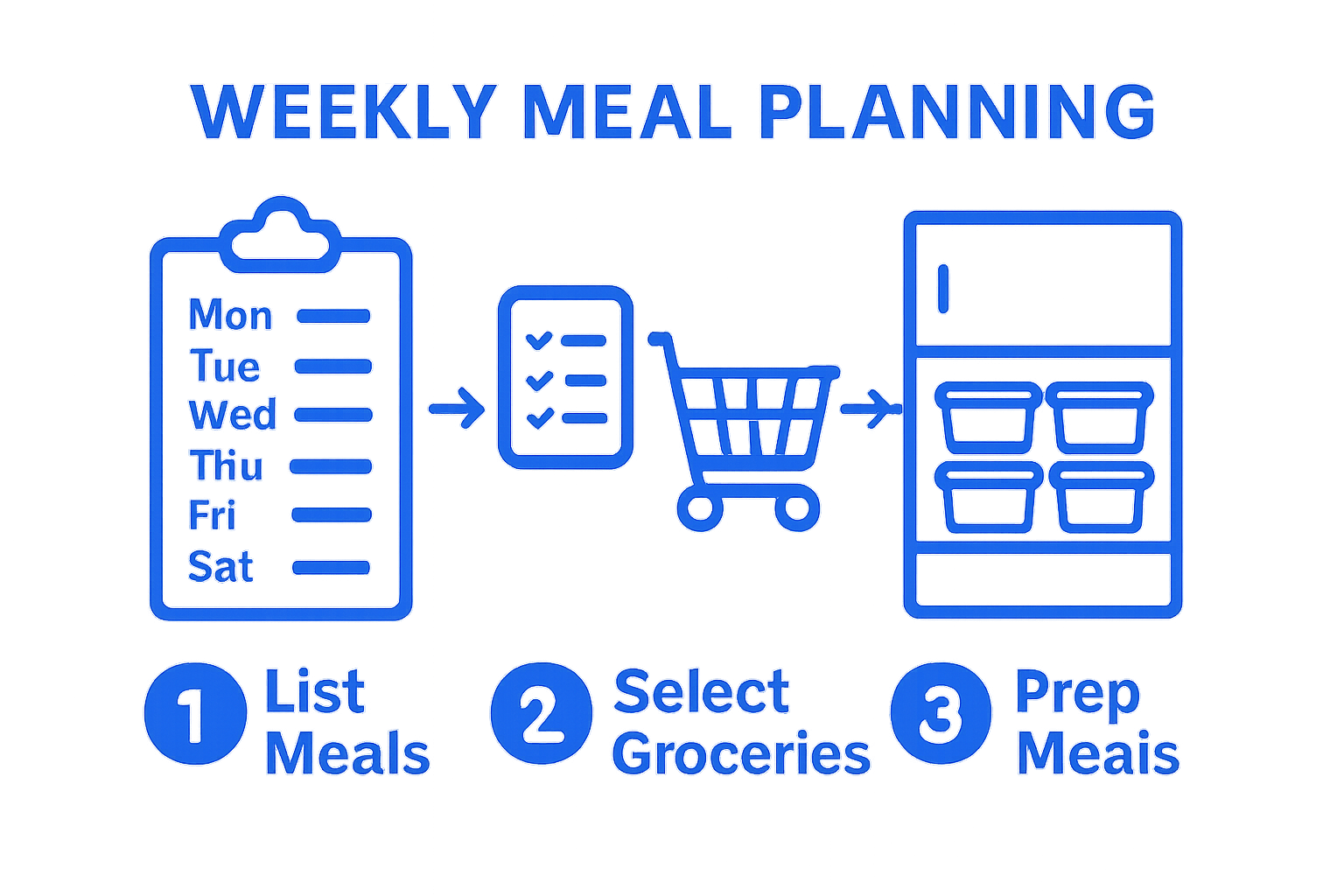
Portion control starts in the shopping cart. Select ingredients in quantities that match your weekly meal plan precisely.
For proteins, consider purchasing slightly less than your exact calculation to prevent overconsumption.
Choose frozen vegetables and proteins as backup options that maintain nutritional integrity while extending shelf life. Prioritize whole food ingredients over pre-packaged meals, which often contain hidden sugars and excess sodium.
Integrate a personal accountability mechanism into your shopping routine. Take a photo of your list before shopping and another of your actual purchases. This visual documentation helps you stay honest about your nutrition commitments.
Consider using a dedicated notes app or digital grocery list that allows you to track spending and nutritional content simultaneously.
By treating your shopping list as a strategic planning document rather than a casual checklist, you transform grocery shopping from a mundane task into a powerful weight loss tool.
Step 5: Prep and Cook Your Meals in Advance
Meal prepping transforms your weight loss strategy from theoretical to practical, creating a fortress of nutritional defense against impulsive eating.
Strategic food preparation is about more than saving time it’s about maintaining control over your nutrition when daily stress might otherwise derail your goals.
Explore easy meal prep ideas for weight loss success to expand your cooking repertoire. Dedicate a specific day and time block for meal preparation typically 2-3 hours on a weekend when you can focus without interruption.
Start by batch cooking proteins like chicken breasts, turkey, or tofu that can be portioned and stored easily. Roast or steam large batches of vegetables simultaneously, creating a diverse mix of textures and flavors that prevent meal monotony.
Invest in quality storage containers that are microwave safe, freezer friendly, and portioned appropriately.
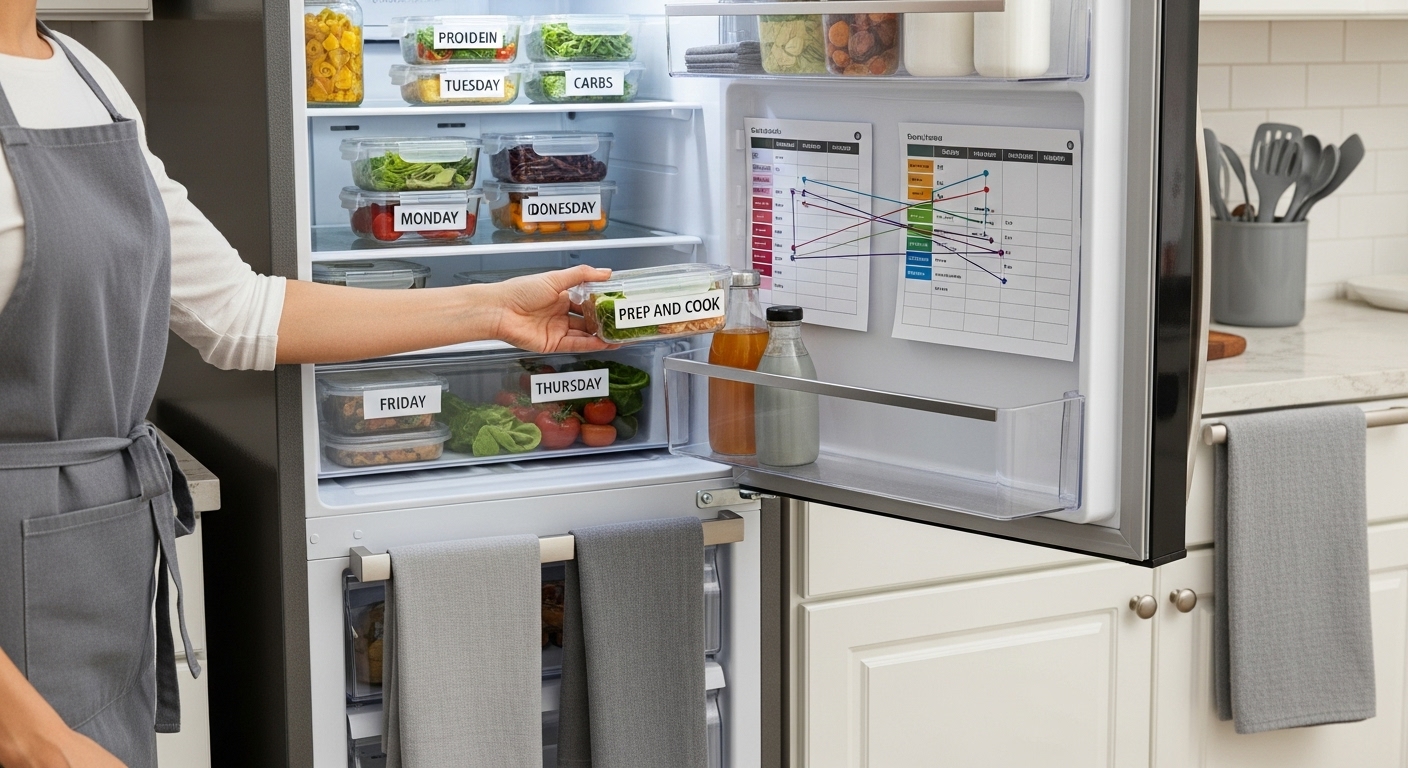
Glass containers with segmented compartments work best, allowing you to separate proteins, carbohydrates, and vegetables while keeping portions controlled. Label each container with the meal contents and preparation date to track freshness.
Consider preparing multiple variations of similar base ingredients to create culinary variety without extensive additional cooking. For instance, roasted chicken can become a salad topping, a wrap filling, or a standalone protein with different seasonings.
Establish a rotating cooking system where you prepare proteins, grains, and vegetables in bulk but mix and match their combinations throughout the week. This approach prevents flavor fatigue and maintains meal excitement.
Your verification of success is simple: a refrigerator stocked with portioned, nutritionally balanced meals that eliminate daily cooking decisions and reduce the likelihood of unhealthy spontaneous food choices.
Step 6: Monitor Progress and Adjust as Needed
Successful weight loss is not a linear journey but a dynamic process requiring continuous assessment and strategic modifications.
Tracking your progress becomes the compass that guides your nutritional strategy, helping you understand what works and what needs refinement. This step transforms raw data into actionable insights that propel you toward your health objectives.
Discover consistent methods for tracking fitness progress to complement your meal planning approach. Establish a comprehensive tracking system that goes beyond just weight measurements.
Utilize multiple metrics including body measurements, progress photos, energy levels, sleep quality, and how your clothing fits. Consider investing in a digital tracking app or maintaining a dedicated journal where you can record these multifaceted indicators of progress.
Weekly evaluation becomes your strategic checkpoint. Schedule a consistent time each week typically Sunday evening or Monday morning to review your past week’s performance.
Analyze not just numerical data but also your emotional and physical experiences. Did certain meal preparations make you feel more energetic?
Were there moments when your meal plan felt challenging?
Reflect on these nuances and use them to make incremental adjustments. If you notice consistent energy dips, you might need to recalibrate your macronutrient ratios.
If portion sizes feel too restrictive, consider slight modifications that maintain your caloric goals while improving satiety.
Remember that flexibility is your greatest ally. Perfection is not the goal adaptation is.
Your verification of success is not a rigid number on a scale but a holistic sense of improving health, increasing energy, and developing sustainable nutrition habits that feel natural and empowering.
Take Control of Your Weight Loss Journey With Simple Meal Planning
Struggling to stick with meal plans, feeling overwhelmed by endless choices, or getting derailed by last-minute food decisions?
You are not alone.
The path to weight loss is often blocked by confusion around what to eat and how to prepare meals in a way that actually fits into your busy life. That is why building a weekly meal planning routine is so powerful.
By following proven steps like tracking your current eating habits, setting realistic goals, and prepping your meals in advance, you give yourself structure and more freedom to focus on progress.
Dive deeper into effective strategies and real success stories on our dedicated Meal Planning – LeanAndFit section.
Discover how others have turned simple planning into lasting results and find tools to help you stay on track week after week.
Ready for your next small win?
Visit leanandfit.info today and find step-by-step guides, mindful eating methods, and personalized resources. Make your meal planning breakthrough now and finally take charge of your health goals with confidence.
For more on conscious and mindful eating habits, check the resources in Conscious Eating – LeanAndFit and start experiencing the transformation today.
Frequently Asked Questions:
Weekly meal planning is one of the most underrated tools for sustainable weight loss. Instead of deciding what to eat in the moment (when cravings win), planning ahead gives your brain structure, clarity, and control.
It reduces stress, prevents overeating, and helps you stay consistent without feeling restricted.
Below are unique, real-life focused questions designed to solve the actual struggles people face with weekly meal planning for weight loss success.
Q-1: Why do most people fail at weekly meal planning even when they start with good intentions?
A-1: Most people fail because they plan meals like a “perfect system” instead of a flexible lifestyle.
They create rigid menus that don’t match real-life unpredictability—busy days, cravings, social events, or fatigue.
When one meal breaks the plan, they abandon the entire week.
Successful planning is not about perfection; it is about building a structure that survives imperfections. A flexible plan always wins over a strict one.
Q-2: How can weekly meal planning reduce food cravings without using willpower?
A-2: Cravings often come from decision fatigue and random eating patterns. When meals are pre-decided, your brain doesn’t constantly ask, “What should I eat next?” This reduces mental pressure and emotional eating triggers.
A structured plan also balances protein, fiber, and healthy fats across the week, which stabilizes blood sugar. Stable blood sugar = fewer cravings. So the system itself reduces dependence on willpower.
Q-3: Why does repeating meals in weekly planning actually improve weight loss results?
A-3: Repetition removes confusion and speeds up decision-making. When you eat similar healthy meals across the week, your body adapts to consistent calorie intake and digestion patterns.
This reduces overeating caused by novelty eating (trying different foods every day). It also makes grocery shopping easier and prevents waste. In weight loss, consistency beats variety—repetition creates discipline without mental exhaustion.
Q-4: Can weekly meal planning work even if I don’t like cooking every day?
A-4: Yes, and this is where most people get it wrong. Weekly meal planning is not about cooking daily—it’s about batch strategy. You can cook 2–3 base meals and rotate them.
Foods like rice, dal, grilled vegetables, eggs, and lean proteins can be reused creatively.
The goal is not gourmet cooking but nutritional consistency. Even minimal cooking, when planned, can deliver strong weight loss results.
Q-5: Why does hunger feel more controlled when meals are planned in advance?
A-5: When meals are planned, your body and brain enter a predictable rhythm.
The hunger hormone ghrelin stabilizes when eating patterns are consistent. Unplanned eating, on the other hand, creates irregular hunger spikes.
Planned meals also prevent extreme hunger situations, which often lead to overeating. Simply knowing your next meal reduces anxiety-driven hunger and improves portion control naturally.
Q-6: How can someone design a weekly meal plan that survives busy and unpredictable days?
A-6: The secret is building “backup meals.” Instead of planning only ideal meals, include emergency options like boiled eggs, fruits, yogurt, roasted chana, or simple sandwiches.
These prevent you from breaking your plan when life gets busy. Also, keep meals modular—meaning ingredients can be swapped easily. A flexible structure is far more effective than a fixed rigid menu.
Q-7: Why does grocery shopping change completely when you start weekly meal planning for weight loss?
A-7: Without planning, grocery shopping is emotional—you buy what looks appealing. With planning, it becomes functional—you buy what supports your meals.
This reduces impulse buying of processed foods.
It also ensures better portion control because ingredients are already aligned with your meals. Over time, this shift alone can significantly reduce calorie intake without any dieting pressure.
Q-8: Can weekly meal planning still include cheat meals without ruining weight loss progress?
A-8: Yes, and this is important for long-term success. A sustainable plan includes controlled flexibility. Instead of “cheat meals,” think of them as “planned flexibility meals.”
When you know when and how indulgence fits into your week, it reduces guilt and prevents binge eating.
The key is balance, not restriction. One flexible meal in a structured week does not break progress—it actually improves adherence.
Q-9: What is the simplest weekly meal planning method that guarantees weight loss consistency?
A-9: The simplest method is the “repeat and rotate system.”
Choose 3–4 breakfast options, 3 lunch options, and 3 dinner options. Repeat them across the week in different combinations.
Add one flexible meal and one snack structure daily.
Keep groceries aligned to these meals only.
This removes decision fatigue, reduces cravings, and ensures calorie control without tracking every detail. Simplicity is what makes it sustainable.
Recommended
- 10 Easy Meal Prep Ideas for Weight Loss Success – LeanAndFit
- How to Meal Prep for Weight Loss: Healthy Eating Made Easy – LeanAndFit
- Master Balanced Meal Planning for Optimal Health and Weight Loss – LeanAndFit
- Meal Prep for Weight Loss: Simple Strategies and Recipes – LeanAndFit
- Why Trust LeanAndFit.info?
- For educational purposes only
- How to Start Eating Healthy: A Simple Step-by-Step Guide – naturessoulshop
- 7 Healthy Snack Alternatives You Need to Try – Spaceman