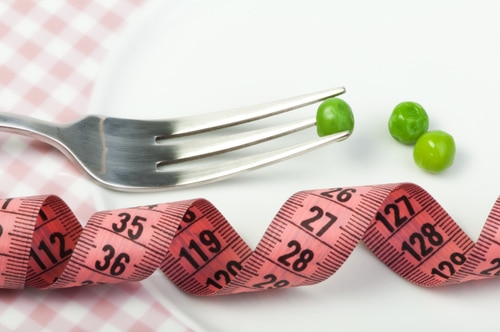

The idea of going on a smoothie diet to lose weight may sound too good to be true. Starting a smoothie diet can cause more questions than answers.
To many American adults who are trying to be healthy, blended beverages seem to be the easiest way to lose weight but can cause issues if the wrong ingredients are used incorrectly.
The ingredients used to make a smoothie determine if the smoothie will be a healthy and well rounded meal or just a source of sugar.
This article will show how to make a well rounded smoothie to aid in weight loss and answer everyday misassumptions that can lead to failure on the road to a healthier lifestyle.
Table of Contents
- Smoothie Diet Basics And Common Misconceptions
- Types Of Smoothie Diet Plans Explained
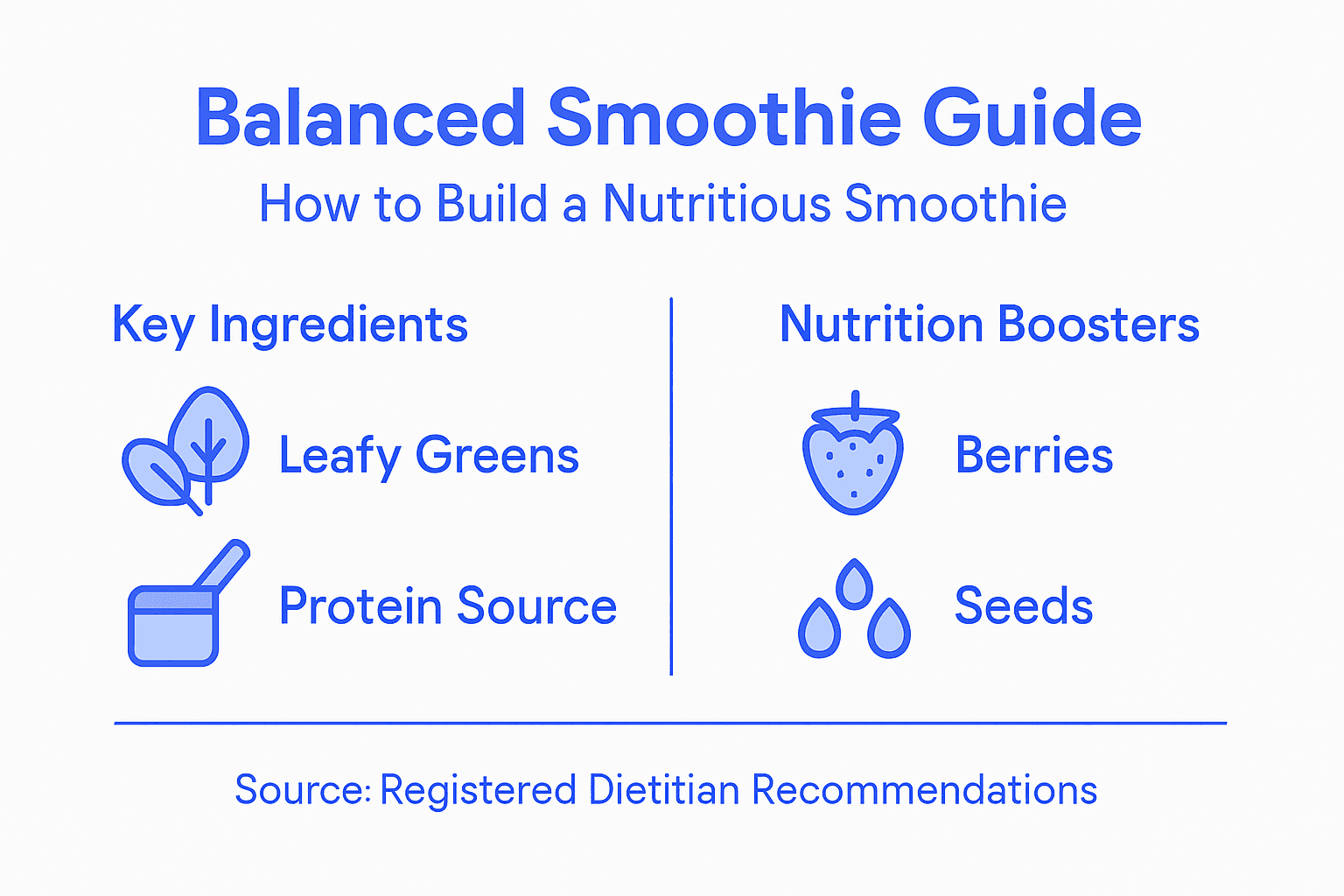
- Key Ingredients And Nutritional Benefits
- How Smoothie Diet Supports Weight Loss
- Potential Risks And Mistakes To Avoid
Key Takeaways
| Point | Details |
|---|---|
| Smoothie Nutritional Balance | A well-balanced smoothie should include fruits, vegetables, protein sources, and healthy fats to enhance satiety and prevent hunger spikes. |
| Mind the Sugar Content | Be wary of high sugar levels from fruits and added sweeteners, as they can undermine weight loss efforts. |
| Focus on Fiber and Protein | Incorporating adequate fiber and protein is crucial for fullness, helping to keep hunger at bay and maintain energy levels. |
| Avoid Complex Recipes | Stick to simple, sustainable smoothie recipes to ensure consistency and prevent fatigue from an overly complicated diet plan. |
Smoothie Diet Basics and Common Misconceptions
Before you start blending any fruits and veggies, let me enlighten you on what a smoothie diet is, and what it isn’t.
A smoothie diet is a specific type of weight loss, where you substitute one or more meals with shakes made of blended fruits and vegetables, protein products, and liquids.
Seems simple enough, right? Wrong.
Not all smoothies make you slim, and one wrong choice of ingredients, and you’ll be gaining weight instead of losing.
The nutritional value of what you’re blending depends on what you put into the blender.
To get a good ratio of healthy food without packing on the calories you need to be mindful of what you’re putting into your drink.
For example, Fruits add sweetness and fiber, veggies add fiber, and you can add protein with greek yogurt, whey protein, or other protein products
to fill you up so you don’t feel hungry. The fiber from the fruits and vegetables is very important too. It’s what keeps you full for a longer period of time. Without fiber, your smoothie turns into a dessert and won’t keep you satisfied for more than an hour.
Now that we’ve discussed what a proper smoothie is, let’s delve into the misconceptions about the smoothie diet.
I’m talking about the myth that all the calories in a liquid don’t count. They do count and they affect your metabolism.
Because smoothies are in liquid form, your body processes them faster than solid food. Which means that even though your smoothie might keep you full for a few hours, it’s still going to affect your metabolism and give you extra calories by the end of the day. Another widely believed myth is that natural sugars don’t contribute to weight gain.
The same way your body handles table sugar, it also handles natural sugars. Which means that if you consume more than 10% of your calories count in sugar, whether it’s from a banana or sugar cubes, you are at risk of obesity, heart disease, and diabetes.
Natural sugars and sweets in smoothies can sabotage your diet, if you’re not careful.
The myth about blending is that it unlocks the nutrition.
It doesn’t.
When you blend up your veggies, you’re destroying the fiber, and decreasing the amount of fiber in your smoothie. Which makes it less filling that it would otherwise be if you ate the same amount of vegetables. Which brings me to my next point…
A smoothie can be a part of a healthy balanced diet, as long as you’re using healthy ingredients, the proper portions, and you’re aware that smoothies can affect your daily caloric intake.
Pro tip: Weigh your ingredients, and count your calories for the first week. It’ll show you how much your smoothies are affecting your day.
Another pro tip: Drink your smoothie with a meal, or right after. Especially if it’s low in fiber, because otherwise, you’ll feel hungry again after an hour, and you’ll be tempted to overeat.
A smoothie diet is perfectly fine as long as you’re aware of what you’re doing, and what you’re putting into your body.
Types of Smoothie Diet Plans Explained
Smoothie diets are available in a variety of types and variations. Understanding the different approaches and purposes of diets that incorporate smoothies can help in choosing the one that will be the most comfortable to you.
Depending on the person’s preferences and the goals that they have, multiple diet types can be considered. Some of them are more rigid and imply replacing all meals with smoothies, some are more relaxed and only recommend replacing one or two meals per day with the drinks.
Having insight into the different existing types will help in finding an appropriate balance between dieting and comfort, thereby helping in avoiding failures due to unjustified dietary restrictions.
There is often no particular requirement for the types of food that are eaten while being on a smoothie diet, beyond eating fruits and drinking fluids. However, in most cases, the diets that involve replacing one or more meals with a smoothie are centered around having a more filling and nutritious drink.
This design choice helps in avoiding overeating and uncomfortable hunger pains due to a lack of calorific intake. Thus, if you choose the meal replacement type of the smoothie diet, make sure to include enough protein, healthy fats, and fibers in the ingredients.
Having these components will make the smoothies more filling, allowing you to maintain an appropriate calorie intake throughout the day.
Usually, one or two meals are easier to replace with smoothies, as most people tend to skip breakfast or a snack due to time pressure or social isolation. However, depending on a person’s lifestyle and daily planner, any other meal can be chosen.
The supplemental smoothie plan is similar to the meal replacement one, although it calls for adding snacks and supplements in the from of smoothies between meals. This option is great for those who do not want to face the challenge of skipping entire meals but still want to lose weight.
The green smoothie-centered diet does not prescribe to have a particular meal plan, only to include more plants and vegetables in the regular diet. This is done by adding leafy greens to the smoothies or having them as a snack.
A protein-enriched smoothie diet is recommended for those who wish to keep their protein intake high, which helps in preventing excessive muscle loss and discomfort.
The choice of the smoothie diet type is purely individual and should be based on the personal preferences of the person. One can pick a more restrictive option and replace all meals with the shakes or have one or two meals replaced per day.
It is also possible to follow the supplemental method, which allows for adding smoothies between meals. Some people may struggle with a green smoothie diet as leafy vegetables have a very strong flavor, which is why the ones who have a taste for them will be more comfortable on this type of the diet.
Here’s a quick comparison of common smoothie diet plan types:
| Plan Type | Main Purpose | Typical Ingredients | Who Benefits Most |
|---|---|---|---|
| Meal Replacement | Substitute 1-2 meals | Balanced with protein, fats, fiber | People seeking structured weight loss |
| Supplemental | Add to regular meals | Moderate fruit, greens, lighter protein | Those needing energy boosts, not drastic cut |
| Green Smoothie | Increase veggie intake | Leafy greens, low-sugar fruits | Vegetable lovers, micronutrient focus |
| Protein-Enhanced | Support muscle, satiety | Greek yogurt, protein powders, nut butters | Active individuals, muscle maintenance |
Pro tip: Start with a single smoothie replacement meal per day for two weeks before expanding the plan. This allows your body to adjust and helps you identify which smoothie formula keeps you satisfied longest, preventing the common mistake of adding too many smoothies too quickly.
Key Ingredients and Nutritional Benefits
What you throw into the blender determines whether you get an instrument to fight fat or a means to fatten yourself.
The best ingredients for a smoothie are grouped into several categories. Knowing what each group can contribute to the smoothie is important in order to choose the products consciously, not by chance, when you have a chance to toss in whatever is on hand.
The base of any healthy smoothie is green vegetables or leafy greens. They are full of nutrients without adding many calories.
For example, a whole bunch of raw spinach will add only around seven calories to your smoothie, but it will give you plenty of vitamins and minerals, including vitamin A, C, K, and folate, iron and magnesium that are good for your body, and antioxidants that help in reducing inflammation in the body.
Dark green vegetables such as kale and Swiss chard are also great additions to your smoothie that will not tax your taste buds. Contrary to common belief, greens do not mean bitterness. Most often, they will taste better when mixed with sweet fruits.
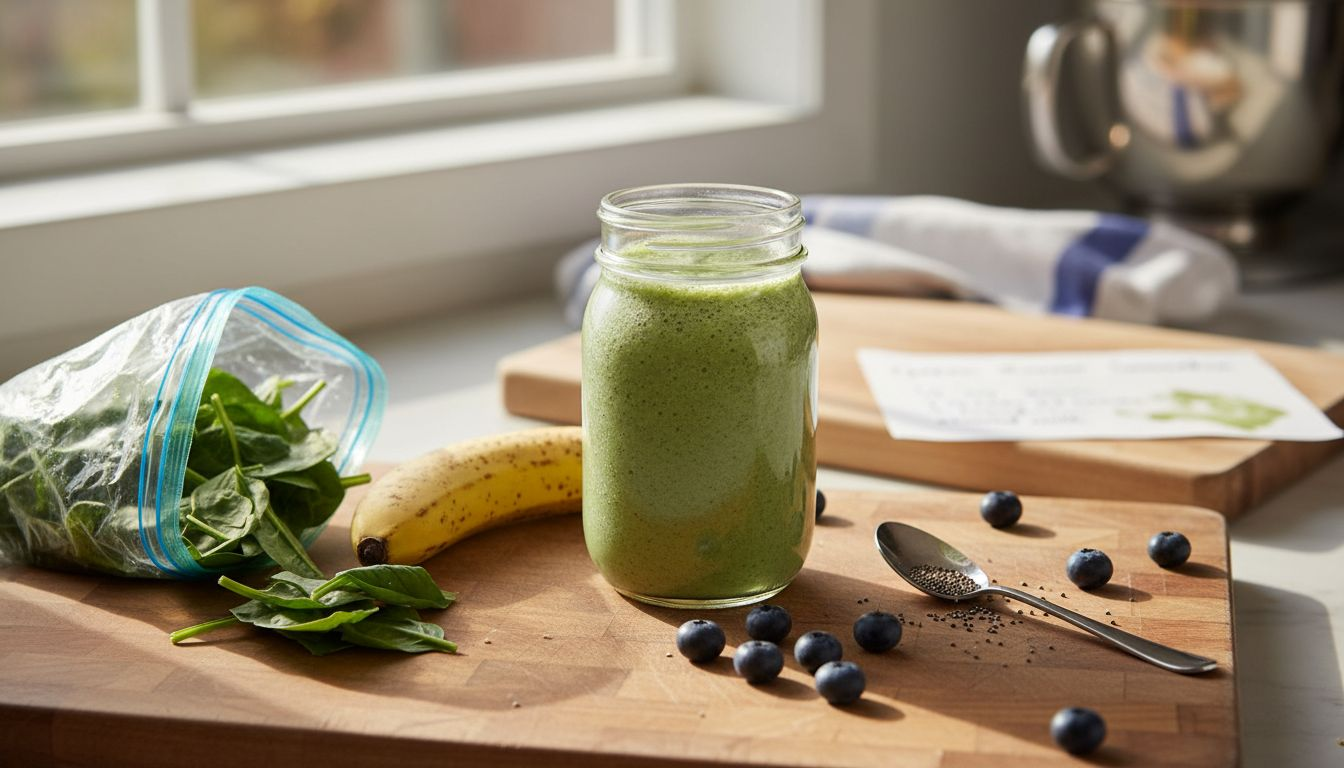
Protein sources are the most common mistake in regards to weight loss smoothies, as you will feel famished straight after consuming a low protein beverage.
Greek yoghurt provides around 20 grams of protein per serving with added creaminess while still providing probiotics for a healthy gut. Protein powders are perfectly acceptable when preparing your weight loss smoothie, just make sure you are buying a high-quality brand, and do not overlook the value in using whole food sources over powder.
Healthy fats found in nut butters, avocados or seeds are extremely filling and essential for optimal health.
Just 1 tablespoon of almond butter provides 95 calories and is extremely filling, so it is a must when preparing your smoothie. The fats help your body absorb fat soluble vitamins such as vitamin E and beta-carotene from your fruits and vegetables included in your smoothie.
Fruits are necessary for any weight loss smoothie, but you need to be careful about portion sizes.
Berries are a particularly good choice as they are extremely filling and full of fibre and nutrients, compared to calorie dense tropical fruits such as mango or pineapple, which should be limited. Bananas provide potassium, creaminess and have a reasonable amount of calories while nutrient dense foods such as seeds or flaxseeds will add fibre, omega-3s and will keep you full.
The liquid that you use is also important, as water will keep the number of calories very low, while milk will add protein and calcium to your smoothie, but unsweetened almond or oat milk will provide a creaminess texture without the calories.
Avoid juices completely when making your smoothie, as they tend to be high in sugar and will increase your blood sugar rapidly without the fibre that comes from whole fruits.
Here’s an example of a balanced weight loss smoothie: 1 cup of spinach, 1/2 frozen banana, 3/4 cup of Greek yoghurt, 1 tablespoon almond butter, a handful of blueberries, 1 tablespoon of ground flaxseed, and 1 cup of unsweetened almond milk.
This provides around 280 calories, 18 grams of protein, 8 grams of fibre and is extremely filling and will keep you satisfied for around 3-4 hours. The key is to have a good balance of all food groups in order to avoid cravings and unnecessary snacking due to low energy levels after consuming the smoothie.
Pro tip: Make your smoothie bags in your freezer. Toss in your portioned frozen fruit, greens, and seeds in individual bags. Throw in your blender with your protein source and liquid base when you’re ready to make the smoothie. No more deciding what to put in your smoothie every morning!
How Smoothie Diet Supports Weight Loss?
The science of losing weight is simple: you have to burn more calories than you consume. A smoothie diet helps you do this because it’s easier to track your calories and know that you’re getting the right nutrients if you make your own shakes.
Once the ingredients have been prepared, you can whip up a nutritious smoothie in no time
The best part is you’ll feel full after drinking it, thanks to the good fiber and protein. You’ll stay full for hours instead of having to eat a snack every two hours. It all boils down to whether or not you want to stick to your diet, because if your smoothie isn’t filling you up it won’t be long before you give up.
It’s important to note that fiber plays a huge role in determining how filling your smoothie is. Juices don’t have it, but most fruits and vegetables do
Fiber aids in healthy digestion and helps prevent spikes and drops in blood sugar – the latter of which can leave you feeling famished and weak.
Having steady energy throughout the day is key in staying full for longer, especially considering drops in blood sugar can trick your brain into thinking it’s time to eat when it really isn’t. That’s why it’s so important to load up on fiber in your smoothie! With eight to ten grams of fiber, your metabolism will keep going and going and going…
Protein also helps you feel fuller for longer, mainly due to its ability to slow down digestion. Your smoothie will stay in your stomach longer, which means it’ll take longer to reach your brain and tell it that you’re full
Now, you probably want to know how many calories you’re allowed to consume each day. Well, you’re in luck! The number of calories in commercially purchased smoothies can range anywhere between four hundred to eight hundred!
The nice thing about a weight loss smoothie is that it can be just as filling, if not more so, than a commercial one for about half the calories (250-350). Multiply this by the number of days in a year and you could save yourself anywhere between 55,000 and 182,500 calories!
For perspective, that’s between 16 and 52 pounds! In addition to this, smoothies help you retain muscle mass, which is something that low protein diets can’t say.
Muscle is burned as fuel during periods of starvation, which is exactly what your body is put through during a starvation diet. Fortunately, smoothies can counteract this by providing the necessary macronutrients to turn fat into energy. Healthy smoothies can serve as full meals, so you’ll be getting all of the essential nutrients your body needs without extra calories. This is important because it helps to maintain the lean muscle you’re trying so hard to keep
Another major benefit of smoothies is that they can be downright delicious.
You can make them as sweet or savory as you’d like simply by adding in different fruits, nut butter, nut milk, or vanilla extract. It’s all about presentation. They say that people eat healthier if they enjoy the food they’re eating, which is something smoothies excel at. Nobody wants to diet, but if you’re drinking a tasty smoothie for breakfast you’ll be much more likely to stick to your diet plan and go to the gym.
There’s no denying that convenience plays a huge role when it comes to eating healthy, which is where smoothies shine through once again. Preparation is easy, especially if you portion out your smoothie bags and store them in the freezer for later.
Simply add your liquid and protein to the bag, shake it up, and pour out your healthy snack. The versatility of smoothies is what makes them so great. Whether you’re making a quick breakfast, or a post-gym snack, you can make it in under five minutes.
Pro Tip: The best way to eat a smoothie is slowly, using a spoon or drinking it over the course of five to ten minutes rather than all at once This way your body can register when it’s full and you’ll eat less for the same volume. You don’t want to feel stuffed after drinking your smoothie, because it’ll just ruin your appetite for the rest of the day.
Potential Risks and Mistakes to Avoid
Not all smoothie diets fail because the concept is flawed. They fail because people make predictable mistakes that sabotage their results. Understanding these pitfalls before you start prevents wasted weeks chasing a diet that never had a chance.
The most common mistake is treating smoothies like health halos. You see a smoothie marketed as healthy and assume it supports weight loss without checking the actual nutrition facts. Commercial smoothies often contain 500 to 900 calories and 60 to 80 grams of sugar. That’s equivalent to eating three donuts in liquid form.
Your body absorbs these calories quickly without the satiety benefit of whole food, making it incredibly easy to exceed your daily calorie target and gain weight despite thinking you’re being healthy.
The second major mistake involves insufficient protein or healthy fats. A smoothie made from fruit, yogurt, and milk might taste great but leave you ravenous within an hour if protein and fat aren’t adequately proportioned.
This triggers the dangerous cycle of hunger leading to snacking, which obliterates your calorie deficit.
Using smoothies as meal replacements without adequate calories or nutrient balance may also cause energy crashes and nutritional deficiencies that make you feel depleted and more likely to abandon the diet. You need minimum 15 to 20 grams of protein and 5 to 10 grams of healthy fat per smoothie to avoid this trap.
Another critical error is relying exclusively on fruit. Fruit provides vitamins and fiber but contains significant natural sugars that spike blood glucose rapidly. A smoothie made from banana, mango, pineapple, and orange juice can easily contain 60 grams of sugar.
You need vegetables to balance this. Spinach, kale, and zucchini add nutrients and volume with minimal sugar impact.
Ingredient preparation matters more than most people realize. Certain ingredient combinations and preparation methods reduce nutritional benefits, meaning your smoothie might look nutritious but deliver less benefit than expected.
Over-blending, extreme temperatures, or combining ingredients with conflicting properties can degrade antioxidants and beneficial compounds.
Keep blending time minimal, use frozen fruit instead of ice to maintain nutrient density, and avoid excessive heat from high-powered blenders running too long. Additionally, many people make the mistake of consuming smoothies too quickly.
Gulping down a smoothie in 30 seconds prevents your brain from receiving fullness signals that develop over 15 to 20 minutes. This leads to consuming another smoothie or additional calories you didn’t actually need.
The final critical mistake involves unsustainability. People create elaborate smoothie plans with expensive superfood powders, exotic fruits, and complicated recipes.
Within two weeks, the complexity and cost become overwhelming. A sustainable smoothie diet uses basic, affordable ingredients you can find anywhere.
Frozen berries, spinach, Greek yogurt, milk, and oats cost far less than goji berries, acai, and specialized supplements, yet deliver comparable results.
Below is a summary of critical mistakes to avoid on a smoothie diet:
| Mistake | Why It Harms Results | Smarter Alternative |
|---|---|---|
| Excess sugars | Leads to calorie surplus, hunger spikes | Use berries, add greens |
| Too little protein | Increases hunger, muscle loss | Include 18-25g protein per drink |
| Overcomplicated recipes | Reduces diet sustainability | Stick with simple, repeatable combos |
| Skipping healthy fats | Shorter satiety, more snacking | Add nut butters, seeds or avocado |
| Drinking too quickly | Fullness signals delayed | Sip slowly for best results |
Pro tip: Before starting your smoothie diet, make sure you note down how many calories, protein grams and fiber grams each of your smoothies has. Keep on record a few numbers of your daily intake for a week to make sure that your smoothies don’t add up to a surplus of calories that may hamper your weight loss efforts.
Frequently Asked Questions:
Q-1: Does the smoothie diet work?
A-1: The smoothie diet is effective in the short-term for weight loss as it helps create a calorie deficit.
According to the Centers for Disease Control and Prevention , 42% of American adults are obese, and the search for an easy way to lose weight is increasing. However, it is vital to note that diets consisting of only liquid have poor long-term results.
Q-2: What is a smoothie diet for beginners?
A-2: For a beginner, the best option is to substitute one meal with a smoothie and continue to eat healthier food for the rest of the day.
It is essential to make gradual changes to one’s diet because according to the National Institutes of Health , the chances of success are higher when making small adjustments.
Q-3: What are the health benefits of a smoothie diet?
A-3: The smoothie diet encourages people to eat more healthy foods such as fruits and vegetables, which are high in fiber and antioxidants.
They also help one adhere to a calorie-restricted diet, which is needed for weight loss.
Q-4: Can you substitute meals with shakes to lose weight?
A-4: Meal substitution with shakes can help with losing weight, but it is essential not to go overboard.
According to clinical trials conducted by the National Institutes of Health , substituting one or two meals per day with nutrient-dense smoothies can help one lose approximately 5-10% of their body weight within 12 weeks. However, it is not advisable to substitute all meals.
Q-5: What are some healthy ingredients to include in a weight loss smoothie?
A-5: Healthy ingredients to include in a weight loss smoothie are Greek yogurt, protein powder, spinach, berries, chia seeds, and oats.
Protein and fiber keep a person feeling full for a more extended period, reducing the possibility of overeating.
Q-6: How many smoothies should I have a day to lose weight?
A-6: One or two smoothies per day is an appropriate amount as having more may lead to a less varied diet and unnecessary calorie intake.
Q-7: Smoothie diet or regular diet? Which is the best option?
A-7: Following a regular healthy diet is the best option for long-term weight loss.
Although smoothies can help a person lose weight, they should not be the cornerstone of one’s nutrition. According to the Harvard Medical School , whole foods are more filling than those found in smoothies.
Q-8: Are high-protein smoothies an appropriate weight loss choice?
A-8: High-protein smoothies are an excellent option for those looking to lose weight as protein keeps a person satisfied.
According to research done by the National Institutes of Health , protein has thermogenic properties that increase a person’s metabolic rate, helping them burn more calories.
Q-9: Are fruit smoothies bad for weight loss?
A-9: As long as one limits the amount of natural sugars found in fruits, they are an appropriate component of a weight loss smoothie.
It is essential to add protein to one’s smoothies to keep them feeling full.
Q-10: What are the advantages and disadvantages of a smoothie diet?
A-10: Advantages Disadvantages
- Easy preparation Less filling
- Contains healthy ingredients May have excessive amounts of natural sugars
- May lead to a calorie deficit May result in nutritional deficiencies
Q-11: How does a smoothie diet affect metabolism?
A-11: A smoothie diet, that creates a calorie deficit, may aid in weight loss without negatively affecting one’s metabolism.
However, to lose weight, one may have to go on a very low-calorie diet, which can slow the metabolic rate.
Q-12: Can a smoothie diet lead to nutritional deficiencies?
A-12: Yes, if one relies only on smoothies for their daily calorie intake, they may develop nutritional deficiencies. According to the Academy of Nutrition and Dietetics , a varied diet is essential for healthy weight loss.
Q-13: Is there a scientific basis for using a smoothie diet for weight loss purposes?
A-13: Yes, there is a scientific basis for using a smoothie diet for weight loss purposes. According to clinical trials done by the National Institutes of Health , a calorie-restricted smoothie diet can help one lose 5-10% of their body weight.
However, it is necessary to note that long-term adherence to this kind of diet is challenging.
Q-14: How can I make low-calorie and filling smoothies?
A-14: Here are some tips for making low-calorie and filling smoothies:
- Add dairy or dairy alternatives for protein: 20-30 grams of protein per smoothie is appropriate.
- Use fiber-rich foods to keep feeling full for longer.
- Limit the amount of high-sugar fruits.
- Use water or unsweetened milk.
Q-15: Can a smoothie diet reduce belly fat and contribute to better health?
A-15: Yes, a smoothie diet can reduce belly fat if it results in a calorie deficit. According to the Centers for Disease Control and Prevention, losing 5-10% of one’s body weight can improve blood pressure and reduce the risk of chronic conditions such as type 2 diabetes.
Free Tip of the day:
The smoothie diet is an appropriate way of losing weight as it enables a person to adhere to a calorie-restricted diet, which is essential in weight loss and creates a feeling of fullness which reduces the possibilities of overeating.
However, it is crucial to understand that the success of this diet depends solely on how well a person can follow it. Given the prevalence of obesity in the U.S., as stated by the Centers of Disease Control and Prevention, there is no doubt that this diet will be a helpful tool in addressing this issue.
However, it is not a sustainable option. A better option would be to make healthier choices about the types of food one eats and use smoothies as a complementary source of nutrition in one’s diet.
This way, a person will be able to create the calorie deficit needed to jump-start the weight loss process and have a healthy balanced diet at the same time.
Recommended:
- How I Do a Smoothie Diet for Weight Loss? – LeanAndFit
- Green Smoothie Diet Plan for Weight Loss: Revolutionary Solution or Overhyped Trend? – LeanAndFit
- 10 Delicious Weight Loss Smoothie Recipes for Healthy Results – LeanAndFit
- Top Healthy Smoothie Recipes for Weight Loss and Wellness – LeanAndFit
- Best Foods to Eat for Healthy Hair: A Comprehensive Guide | MyHair
- Why Trust Us?
- For educational purposes only