
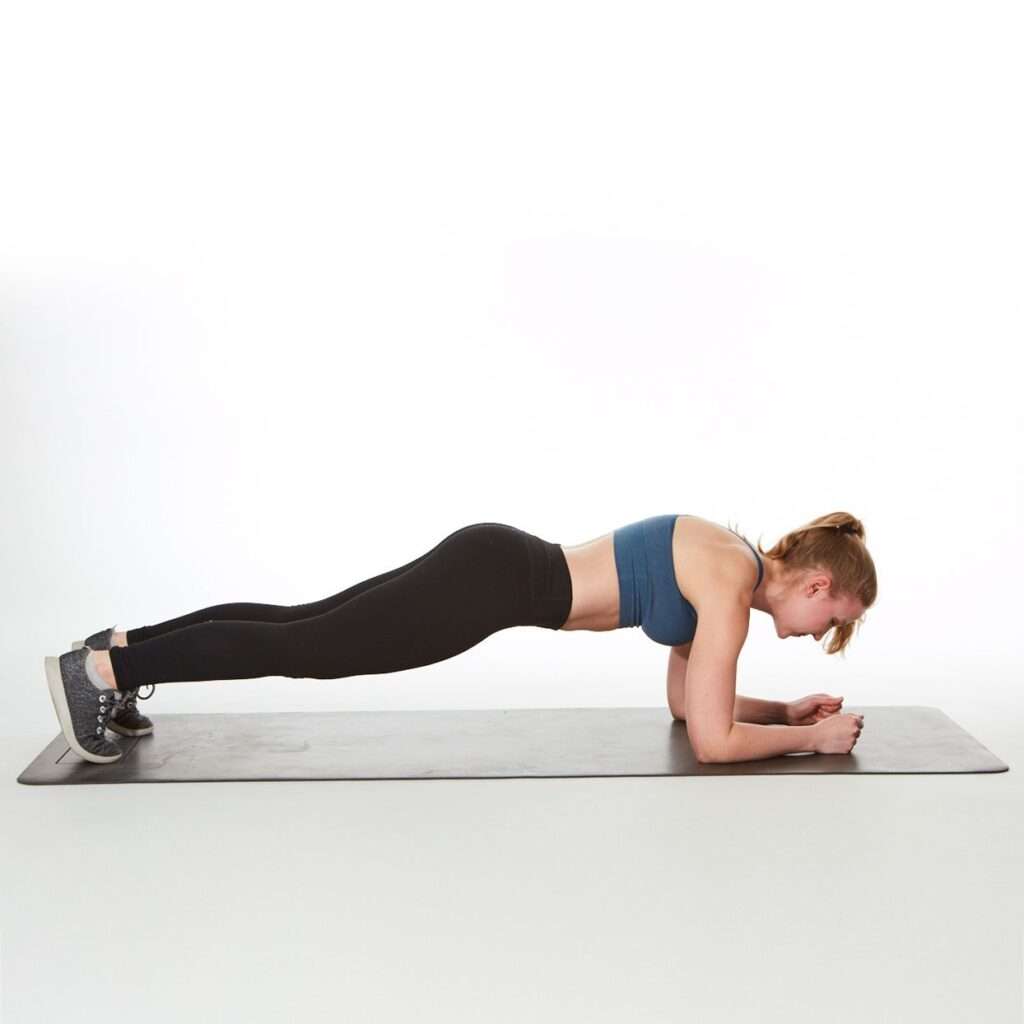
Planks, one of the simplest yet most effective exercises, have gained immense popularity for their dual benefits: improving core stability and aiding in fat loss.
This article by leanandfit.info delves into the mechanics of planks, their role in strengthening the core, and how they contribute to overall fat reduction.
Backed by scientific evidence and real-life examples, this comprehensive analysis will explore how planks improve core stability and aid in fat loss.
Table of Contents:
- Introduction to Core Stability and Fat Loss
- The Science Behind Plank Exercises
- How Planks Improve Core Stability
- 3.1. Engaging Multiple Muscle Groups
- 3.2. Enhancing Postural Strength
- Planks and Their Role in Fat Loss
- 4.1. Increasing Caloric Burn Through Isometric Training
- 4.2. Boosting Metabolic Rate
- Real-Life Transformations Through Planking
- 5.1. Sarah’s Improved Posture and Core Strength
- 5.2. John’s Weight Loss Journey
- Scientific Evidence Supporting Plank Benefits
- FAQs
- Conclusion
The Dual Power of Core Stability and Fat Loss
Core stability is the foundation of efficient movement, ensuring that muscles surrounding the spine, pelvis, and hips work in harmony to maintain balance, posture, and protect against injuries.
A strong core acts like a stabilizing anchor, essential for everything from walking to lifting. Meanwhile, fat loss relies on creating a caloric deficit, boosting metabolism, and engaging large muscle groups.
Planks serve as a bridge between these two goals. By holding an isometric position, they recruit the rectus abdominis, obliques, transverse abdominis, and supporting muscles like the glutes and shoulders.
This multi-muscle engagement burns calories while enhancing core stability.
Consider Emma, a 32-year-old yoga enthusiast, who added planks to her routine to strengthen her core and lose weight.
Over three months, she noticed improved balance during poses like Warrior III and a trimmer waistline. Planks became her go-to exercise, proving their efficiency in targeting dual fitness goals.
The Science Behind Plank Exercises
Planks may appear simple, but they deliver profound benefits through isometric contraction, where muscles engage without changing length.
This static hold engages the core muscles—particularly the transverse abdominis and obliques—while also activating the shoulders, back, glutes, and legs for support.
The result is a full-body workout that improves muscle endurance, stabilizes the spine, and enhances overall strength.
Unlike traditional crunches, which primarily target the superficial rectus abdominis, planks penetrate deeper into the core musculature.
The transverse abdominis, often called the body’s “corset,” plays a pivotal role in spinal stabilization, making planks an essential exercise for functional fitness.
A study published in the Journal of Strength and Conditioning Research (McGill, 2010) demonstrated that planks surpass crunches in activating the transverse abdominis and obliques.
This deeper muscle engagement not only boosts core stability but also aids in improving posture, reducing the risk of back pain, and enhancing athletic performance.
How Planks Improve Core Stability?
Here is how planks help you:
Engaging Multiple Muscle Groups:
Planks are the “Swiss Army knife” of core exercises, targeting multiple muscle groups at once. They don’t just focus on the six-pack muscles (rectus abdominis) but also strengthen the obliques and the deeper transverse abdominis.
Simultaneously, planks activate stabilizing muscles in the shoulders, lower back, and hips to maintain a steady position. Think of your body as a bridge: every muscle is a cable holding it taut.
This full-spectrum engagement builds not just strength but also muscular endurance, setting the stage for improved athletic performance and injury prevention.
A study in the Journal of Strength and Conditioning Research (Escamilla et al., 2010) confirmed that planks are among the most effective exercises for activating both superficial and deep core muscles.
Enhancing Postural Strength:
Planks are a game-changer for posture. By strengthening the core, they provide a solid foundation for the spine and pelvis, countering the effects of slouching over desks or scrolling on smartphones.
A sturdy core improves spinal alignment, reducing the risk of back pain and mobility issues.
Research published in Clinical Biomechanics (Anderson & Behm, 2005) highlighted the effectiveness of static core exercises, like planks, in enhancing postural control and alleviating spinal instability.
In short, planking is like hitting the “reset” button on your posture—keeping you upright and aligned, even in the face of gravity’s persistent pull.
Planks and Their Role in Fat Loss
Here is how planks help you shed those extra pounds off your belly in a jiffy:
Increasing Caloric Burn Through Isometric Training:
Despite being a static exercise, planks demand considerable effort from multiple muscle groups, particularly the core, shoulders, glutes, and quads.
This engagement makes planks an effective calorie-burning exercise. The sustained isometric contraction in a standard plank position forces the body to expend energy, even without movement.
Variations such as side planks, plank jacks, and high-to-low planks intensify the effort by introducing dynamic elements, increasing caloric expenditure. Planks increase muscle hypertrophy and aid in fat loss.
A study published in Medicine & Science in Sports & Exercise (2014) highlighted the effectiveness of isometric exercises, like planks, in enhancing fat loss by engaging large muscle groups and promoting sustained muscular activation.
This mechanism ensures not only short-term caloric burn but also long-term metabolic benefits when incorporated regularly into a fitness routine.
Boosting Metabolic Rate:
Planks are not just about burning calories during the workout; they also contribute to an increased resting metabolic rate (RMR) by building lean muscle mass.
Muscles are metabolically active tissues that require energy for maintenance, even at rest.
Regular plank training enhances muscle growth in the core and other stabilizing regions, leading to a higher RMR.
A study published in Obesity Reviews (Hunter et al., 2008) demonstrated that an increase in muscle mass through core-focused exercises correlates directly with improved metabolic efficiency.
By boosting the RMR, planks help the body burn more calories throughout the day, aiding in fat loss and overall metabolic health.
This dual benefit makes planks a time-efficient and powerful exercise for long-term fat management.
Real-Life Transformations Through Planking
A quick look at these two examples:
Sarah’s Improved Posture and Core Strength:
Sarah, a 30-year-old graphic designer, spent most of her workday seated at her desk, often hunched over her computer.
This sedentary lifestyle led to poor posture, characterized by rounded shoulders and a weak core, which eventually resulted in chronic lower back pain.
Determined to address these issues, Sarah incorporated planks into her daily routine as part of a broader fitness plan.
Initially, she started with 20-second holds and gradually increased the duration as her strength improved. By engaging her core, shoulder stabilizers, and glutes during planks, Sarah developed better muscular endurance and spinal stability.
Within three months, she noticed a significant reduction in back pain and found it easier to sit upright for extended periods without discomfort.
Moreover, her improved posture enhanced her overall confidence and energy levels, illustrating the transformative power of core-strengthening exercises.
John’s Weight Loss Journey:
John, a 40-year-old teacher, struggled to maintain an active lifestyle due to his demanding schedule.
Seeking a simple yet effective way to lose weight, he began incorporating planks and their variations—such as side planks and plank jacks—into his fitness regimen.
These exercises not only engaged his core but also activated multiple muscle groups, increasing his overall caloric burn.
Over six months, John experienced remarkable progress.
He lost 20 pounds, reduced his waist circumference, and developed noticeable muscle definition, particularly in his abdominal region.
Additionally, the metabolic benefits of planking boosted his energy levels, making him feel more active throughout the day.
John’s journey highlights how integrating planks into a workout routine can serve as an effective tool for weight loss and improved physical health.
Scientific Evidence Supporting Plank Benefits
- McGill, 2010 (Journal of Strength and Conditioning Research): This study highlighted the superior activation of core muscles during planks compared to traditional crunches, emphasizing their role in core stability.
- Anderson & Behm, 2005 (Clinical Biomechanics): Found that planks improve spinal stability and postural control, reducing the risk of back pain.
- Hunter et al., 2008 (Obesity Reviews): Demonstrated how increased muscle mass from core exercises like planks enhances resting metabolic rate, contributing to fat loss.
- Medicine & Science in Sports & Exercise, 2014: Reported that isometric exercises such as planks increase caloric burn by engaging large muscle groups for sustained periods.
Freequently Asked Questions (FAQs):
This FAQ is all about understanding how simple plank exercises can do much more than just “work your abs.”
We’ll explore how planks quietly build deep core strength and support fat loss over time.
If you’ve ever wondered whether holding a static position can really change your body, this will answer it.
Q-1: Why do planks feel harder than they actually look?
A-1: Planks look simple because there is no visible movement, but your entire body is under tension. Multiple muscle groups—core, shoulders, glutes, and even legs—are working together to stabilize you. That full-body engagement is what makes planks feel intense despite being still.
Q-2: Can planks really help with fat loss if they don’t involve movement?
A-2: Yes, indirectly. Planks increase muscle activation and improve overall strength, which boosts your metabolism over time. While they don’t burn as many calories as cardio, they contribute to a stronger body that burns more energy throughout the day.
Q-3: What makes planks different from crunches for core stability?
A-3: Crunches target specific muscles, mainly the rectus abdominis. Planks, on the other hand, train your entire core system, including deeper stabilizing muscles. This makes them more functional for real-life movements and long-term strength.
Q-4: Why do beginners shake while doing planks?
A-4: That shaking is your muscles struggling to maintain stability. It’s actually a good sign—it means your muscles are being challenged and are adapting. Over time, the shaking reduces as your strength improves.
Q-5: Can planks reduce belly fat specifically?
A-5: Planks alone won’t spot-reduce fat from your belly. However, they strengthen your core and improve posture, which can make your midsection look tighter. Combined with proper diet and overall activity, they support fat loss.
Q-6: How does breathing affect plank performance?
A-6: Many people hold their breath during planks, which makes the exercise harder. Controlled breathing helps maintain stability and endurance. It also keeps your muscles supplied with oxygen, allowing you to hold the position longer.
Q-7: Is holding a plank longer always better?
A-7: Not necessarily. Quality matters more than duration. A shorter plank with proper form is far more effective than a long plank with poor posture. Focus on alignment rather than just time.
Q-8: How do planks improve posture in daily life?
A-8: Planks strengthen the muscles that support your spine. This helps you stand and sit more upright, reducing strain on your back and shoulders. Over time, better posture becomes natural.
Q-9: Why do some people feel planks more in their arms than their core?
A-9: This usually happens when form is off. If your shoulders are taking over, your core isn’t fully engaged. Adjusting your alignment and tightening your abdominal muscles can shift the focus back to your core.
Q-10: Can planks help with lower back pain?
A-10: Yes, when done correctly. Strong core muscles support the lower back and reduce pressure on it. However, improper form can worsen discomfort, so it’s important to maintain a neutral spine.
Q-11: What role do glutes play during a plank?
A-11: Your glutes help stabilize your hips and prevent sagging. Engaging them properly keeps your body in a straight line and enhances the effectiveness of the exercise.
Q-12: Are dynamic planks better than static planks for fat loss?
A-12: Dynamic planks, which involve movement, can burn more calories and add variety. Static planks are excellent for building endurance and stability. A mix of both can give you the best results.
Q-13: How often should someone do planks for visible results?
A-13: Consistency matters more than frequency alone. Doing planks 3–5 times a week with proper form and progression can lead to noticeable improvements in strength and tone over time.
Q-14: Why do planks feel easier some days and harder on others?
A-14: Your energy levels, sleep, hydration, and even stress can affect performance. On low-energy days, your muscles fatigue faster, making planks feel more challenging.
Q-15: Can planks be enough as a standalone exercise for fitness?
A-15: Planks are powerful, but they shouldn’t be your only exercise. They work best as part of a balanced routine that includes cardio, strength training, and flexibility work for overall fitness and fat loss.
Conclusion
Planks are a versatile and effective exercise for improving core stability and aiding fat loss.
By engaging multiple muscle groups, boosting metabolic rate, and promoting postural strength, they provide a holistic approach to fitness. Simply couple planks with calorie control and the final results shall be simply fantastic.
Whether integrated into a beginner’s routine or used as part of advanced training, planks offer measurable benefits supported by science.
For anyone seeking a time-efficient, low-impact way to improve overall fitness, planks are a proven solution.
Recommended:
- https://www.menshealth.com/uk/fitness/a758929/this-is-how-long-you-should-be-holding-the-plank/
- https://leanandfit.info/easy-home-workouts-weight-loss/
- https://leanandfit.info/core-strengthening-exercises-essential-tips/
- https://leanandfit.info/how-deadlifts-build-core-strength-for-a-lean-physique/
- For educational purposes only
- Why Trust LeanAndFit.info?