

The push-up is one of the most accessible exercises to do to build upper body strength. It requires minimal equipment and can easily be done from home. There are also many variations to make it suitable for all levels
Can push-ups build muscle?
Yes, if you are pushing through sufficient resistance and training intensity then push-ups can be used to help build muscle in your upper body. Results will depend on your initial strength, how well you perform the exercise, how much you train, diet and recovery.
You do not need to do advanced variations or hundreds of reps each day. It is more beneficial to keep things simple, consistent and gradually increase intensity.
This guide will show you how push-ups work, how to design a practical workout, variations to try and how to progress as you get stronger.
Table of Contents
- Can Push-Ups Build Muscle?
- Which Muscles Do Push-Ups Work?
- How Push-Ups Support Muscle Growth
- A Practical Push-Up Workout Plan
- How to Progress When Push-Ups Become Easier
- Push-Up Variations for Different Fitness Levels
- How to Perform Push-Ups With Good Form
- Nutrition and Recovery for Muscle Growth
- Common Push-Up Training Mistakes
- Frequently Asked Questions
- Bottom Line
- References
Can Push-Ups Build Muscle?
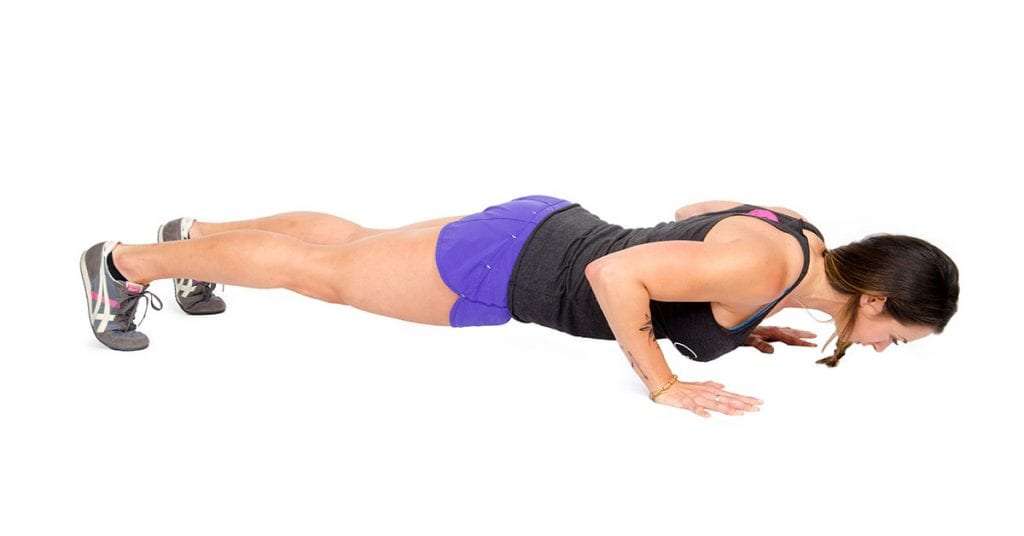
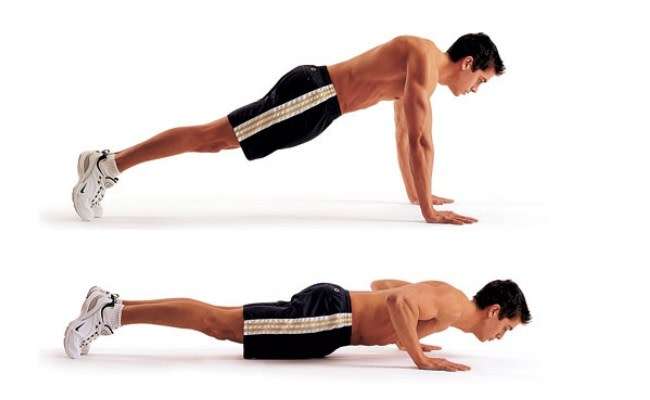
Push-ups are a resistance based exercise that uses your own body weight to train the muscles involved in pushing.
An appropriate intensity and regular training can help improve upper body strength and potentially build up muscles such as the pectorals and triceps.
A randomized trial looking at the effects of push up training over 8 weeks compared to low weight bench press exercises was carried out on 18 young men. The results showed that both groups had improvements in strength and increased muscle thickness (Journal of Exercise Science & Fitness).
A further study showed that progressive callisthenic push up training helped to improve upper body strength in moderately trained men over 4 weeks (Journal of Strength and Conditioning Research).
Whilst these studies demonstrate that push-ups can be a useful way to build muscle, they were specific to certain individuals and training regimens.
Research links:
- Low-Load Bench Press and Push-Up Induce Similar Muscle Hypertrophy and Strength Gain
- Effect of Progressive Calisthenic Push-Up Training on Muscle Strength and Thickness
Frequently Asked Questions
Will doing push -ups increase my chest muscle?
Yes. Push-ups challenge the chest muscles, and research has found increases in pectoral muscle thickness under certain training conditions. Results depend on the training program, exercise difficulty, recovery, and individual factors.
How many push ups do I need to do to build muscle?
This will vary person to person. It is best to start with a variation that you can control the repetitions with, then do a reasonable number of sets. Progressively increase the difficulty as your strength increases.
Should I do push-ups everyday?
This can vary. Many people will find 2-3 sessions a week a good place to start. Your ideal training frequency depends on your experience, schedule, overall workload, and how well you recover.
Are knee push-ups effective?
Yes. They can help beginners to build up their strength and get used to doing push-ups. Once you are confident you can progress to a harder variation such as incline or standard push-ups.
Are wide push-ups or diamond push-ups better for building muscle?
It depends. Depending on your hand position different muscles will be activated and joints challenged. However this will depend on the overall stimulus of your training. Choose a variation that you feel comfortable with and can control.
Can I build muscle with push-ups only?
Yes. Using bodyweight resistance can be enough to increase your strength and build muscle especially if you are a beginner or doing the right level of difficulty. As you get stronger you may need to increase the difficulty.
Can push ups burn belly fat?
Push-ups will burn energy and can help you live an active lifestyle. However they will not specifically target belly fat. This will depend on your overall energy balance, diet, activity levels, sleep and individual factors.
Bottom Line
Push-ups are a great way to increase upper body strength and build muscle without you having to pay for a gym membership or any expensive equipment. Choosing an appropriate push-up variation, using good technique, and progressing gradually can help you improve upper-body strength over time.
Start off with a small number of sets and track your progress. Once you become comfortable with your current workload, gradually increase the difficulty.
Many people will find that building a sustainable routine will help them more than trying to do too much too fast.
References
- Kikuchi N, Nakazato K. Low-Load Bench Press and Push-Up Induce Similar Muscle Hypertrophy and Strength Gain. Journal of Exercise Science & Fitness. 2017.
- Kotarsky CJ, Christensen BK, Miller JS, Hackney KJ. Effect of Progressive Calisthenic Push-Up Training on Muscle Strength and Thickness. Journal of Strength and Conditioning Research. 2018.
- Cogley RM, Archambault TA, Fibeger JF, et al. Comparison of Muscle Activation Using Various Hand Positions During the Push-Up Exercise. Journal of Strength and Conditioning Research. 2005.
- Currier BS, D’Souza AC, Singh MAF, et al. Resistance Training Prescription for Muscle Function, Hypertrophy, and Physical Performance in Healthy Adults: An Overview of Reviews. Medicine & Science in Sports & Exercise. 2026.
- Harvard Health Publishing. Rise of the Push-Up: A Classic Exercise Can Motivate You to Get Stronger.
Why Trust LeanAndFit.info?
LeanAndFit.info aims to provide accessible, evidence-informed information about exercise, nutrition, and weight management. Our content draws on research and reputable health sources, with an emphasis on practical advice and clear explanations of research limitations.
Read our Why Trust Us policy.
Medical Disclaimer
This article is for general educational purposes only. It is not a substitute for individualized medical advice, diagnosis, or treatment. Exercise needs and abilities vary between individuals. If you have an injury, a medical condition, or persistent pain during exercise, consult a qualified healthcare professional before making changes to your training routine.
Read our Medical Fitness Disclaimer.