
Fat is often unfairly demonized in the context of American nutrition. There are certain fats, however, that are far from being harmful for the human body.
What are those good fats for weight loss?
The right amount of monounsaturated and polyunsaturated fats may help you lose weight and improve your overall health state.
Understanding what types of fat are beneficial and what detrimental effects unhealthy fats may cause will help you get to a new level in terms of health awareness and achieve your goals of weight loss in a shorter time period.
This article aims to review the necessary information on the topic and provide you with a decent understanding of the fats and their impact on your body.
Table of Contents
- Defining Good Fats And Common Myths
- Types Of Healthy Fats For Weight Loss
- How Good Fats Support Weight Loss
- Best Food Sources Of Good Fats
- Mistakes To Avoid When Eating Fats
Key Takeaways
| Point | Details |
|---|---|
| Good Fats are Beneficial | Unsaturated fats, including monounsaturated and polyunsaturated fats, support weight management and overall health. |
| Myths About Dietary Fat | Contrary to popular belief, not all fats contribute to weight gain; healthy fats can enhance metabolic functions. |
| Portion Control is Key | Even healthy fats are calorie-dense, so it’s essential to consume them in moderation to avoid weight gain. |
| Quality Over Quantity | Focus on high-quality fat sources and diversify fat intake to improve overall nutritional balance. |
Defining Good Fats and Common Myths
Understanding good fats can help you learn how to eat healthy foods correctly so that they could bring health benefits and desirable changes in your body mass.
The fat in your diet is not as dreadful as one could think.
Dietary fats are essential in a well-balanced diet and can help one lose weight while improving metabolic processes.
So what are good fats?
These are unsaturated fat found in semi-liquid or liquid form and are healthy for the human body.
There are two types of unsaturated fat, namely monounsaturated fat and polyunsaturated fat. Some unsaturated fats include omega-3 acids.
- Monounsaturated fat can be found mainly in olive oil, avocado, nut, and seeds.
- As for polyunsaturated fat, one can find it in sunflower oil, corn oil, or a fatty fish diet.
Contrary to popular belief, fat is not bad for everyone. On the contrary, it is necessary for normal functioning, growth, and development.
The function of fat is to supply energy, participate in the synthesis of hormones, regulate appetite, and increase the body’s resistance to infections.
Therefore, the key to the health benefits of fat lies in the choice of fat. Moreover, this choice should be accompanied by moderation.
There are some essential myths about the relationship between the fat in our diet and body weight.
The main reasons why people get wrong about fat in their diet are as follows:
1. Substances found in most fat tissue are dangerous for humans
2. Dietary fat leads to increased blood sugar levels
3. Eating fat makes you fat
4. Low-fat diets are good and safe for everyone
The truth is that unsaturated fat, such as monounsaturated or polyunsaturated, when used in moderation, has no dangerous effects on the human body. On the contrary, it can, with the right balance, help reduce weight and improve the work of many organs and systems.
Therefore, it is necessary to get rid of the myths and old beliefs about fat and give preference to quality rather than quantity when spending fat.

Which fats should you avoid?
Trans fats and saturated fats.
These are bad fats which are commonly found in junk and fried foods and animal products. Having too much of them can lead to high cholesterol levels.
Here’s a quick comparison of common types of dietary fat and their health impacts:
| Fat Type | Typical Sources | Health Impact | Best For |
|---|---|---|---|
| Monounsaturated | Olive oil, avocados, nuts | Lowers bad cholesterol | Heart health, satiety |
| Polyunsaturated | Fatty fish, seeds, vegetable oils | Reduces inflammation | Brain, metabolic health |
| Saturated | Butter, fatty meats, cheese | May raise cholesterol | Limited intake advised |
| Trans | Processed snacks, fried foods | Increases disease risk | Avoid entirely |
Pro tip: Replace saturated and trans fats with small amounts of healthy unsaturated fats to support your weight loss journey and improve metabolic health.
Types of Healthy Fats for Weight Loss
The main types of dietary fats and how to eat them for weight loss
There are 4 types of fat in food, and each type is characterized by its own structure and features of influence on the human body
However, a balanced diet should contain not all types of fats, but those that are beneficial in terms of weight loss. In particular, a person needs to consume monounsaturated, polyunsaturated, omega-3, and medium-chain fats.
These four types of dietary fat help reduce body weight, saturate cells with beneficial elements, and protect against bad cholesterol. At the same time, fats are measured in calories, so they are needed in moderation.
Despite popular beliefs, the types of fat that are good for the human body are not subject to the same restrictions. Nevertheless, fats that are beneficial are sometimes confused with harmful ones, and they should not be confused.
For weight loss, the four types of fat that are good for the human body are:
- Monounsaturated
- Polyunsaturated
- Omega-3
- Medium-chain
The beneficial effects of healthy fats during weight loss include reducing the level of hunger, accelerating the metabolic processes of the body, creating a feeling of fullness, and saturating hormonal metabolism with vitamins.
To lose weight, a person should eat healthy but balanced amounts of calories. Good fats are needed for growth, protection, recovery.
When you remove fat from the diet, an insufficient amount of calorie turnover is observed, which can be detrimental to health.
Therefore, to achieve a good balance of calories without accumulating fats, a person needs fat from food without an additional burden on the gastrointestinal tract.
The main types of fats that are beneficial for the body and that should be given preference are unsaturated ones.
To receive unsaturated fat, it is necessary to use:
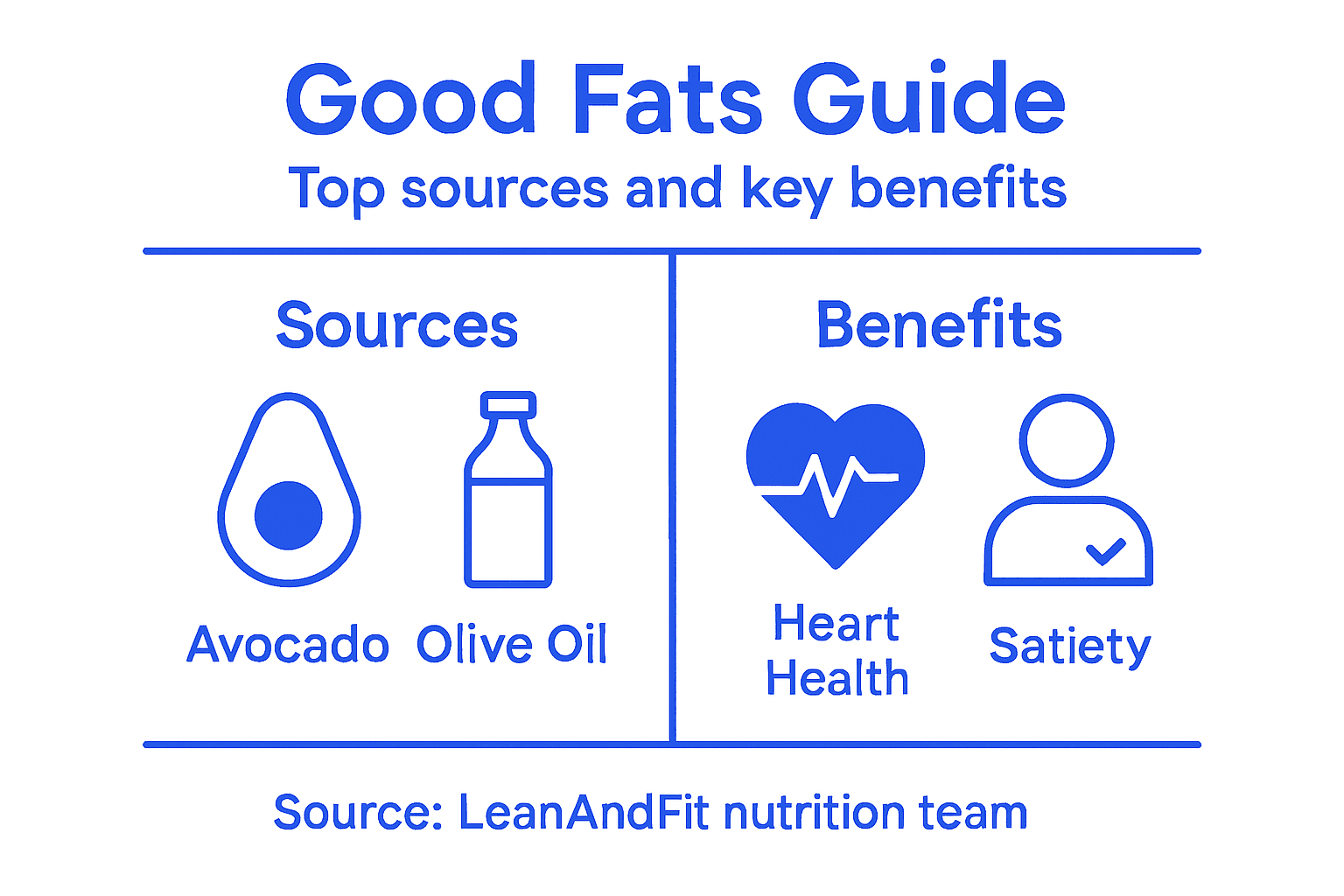
- Avocados,
- olive oil,
- peanut
- chia seeds
- walnuts
- fish oil,
- and coconut milk.
Fats that are good for the body should be used in food with a developed system of fractional nutrition (5-7 meals a day).
How Good Fats Support Weight Loss?
Healthy fats may be considered as an absolutely vital element in a weight loss program, as it helps to lose weight in a better and more effective way.
Despite the widespread belief, eating the right amount of fats can give you a significant boost in your weight loss efforts by accelerating your metabolism.
There are several mechanisms explaining why good fats help you lose weight:
1. Healthy fats help you feel full and prevent hunger pains.
2. They improve your metabolism and help your body to burn more kilocalories.
3. Good fats take care of your body by reducing inflammation and helping to maintain normal insulin levels.
The health benefits of fats directly impact your body and influence its work in a positive way. Hormones produced in response to the introduction of bad fats into the body will differ from the ones produced when you eat foods rich in healthy fats.
A balanced diet which includes the right types of fat will improve the function of your body and assist in reducing your weight. In addition, eating unsaturated fats and omega-3 acids can improve your digestion, eliminate unwanted inflammation and improve the functioning of your muscles and nerves.
A diet high in bad fats can affect your body negatively by increasing the harmful effects of the bad cholesterol. Healthy fats help you feel full for a longer time, as they reduce the feeling of hunger. Eating the right types of fat can decrease the calorie intake by reducing the number of consumed kilocalories per day.
Thus, to optimize your diet and lose weight faster, choose the healthy fats contained in whole foods and measure your daily calorie intake. Remember that a balanced diet should contain only 20-35% of calories from fat.
Best Food Sources of Good Fats
Discovering new sources of healthy fats is essential for everyone who wants to maintain an appropriate weight and improve their nutrition. After all, fats are beneficial, nutritious, and help get rid of excess kilograms.
The most common foods that contain healthy fats are:
• fatty fish – salmon, mackerel, sardines;
• nuts – almonds, walnuts, macadamia;
• seeds – chia, flaxseeds, pumpkin;
• plant oils – olive, avocado, coconut oil;
• whole foods – avocados, olives, dark chocolate;
It is important to note that different foods contain different nutrients, so it is worth getting to know the beneficial qualities of each. For example, while fatty fish is rich in omega-3, nuts and seeds are often high in protein. At the same time, plant oils improve heart function and lower cholesterol.
To ensure the best possible quality of the benefits of fats, it is important to choose the right products. Interestingly, animal fats are not on this list because they are generally not recommended for consumption.
A balanced composition of beneficial fats coming from whole foods is much more advantageous for the body than processing fats. Therefore, different foods from the above list should be included in the daily diet.
The more varied the fats, the better for the body. So, for optimum benefits, it is recommended to include at least 2 or 3 types of high-fat foods in your daily menu.
Mistakes to Avoid When Eating Fats
Nutrition guidelines about fat consumption can be hard to understand. People tend to make many mistakes when trying to lose weight that involve fats.
Mistakes people make when consuming fats are:
- Having bad fats in the diet
- Getting too much fat
- Not measuring hidden fats
- Having an unbalanced diet of fats
- Reaching for carbohydrates instead of fats.
The biggest mistakes people make when consuming fats can be grouped into the following categories:
- Too much saturated fat,
- No trans fats,
- High amount of calories,
- Poorly balanced diet.
Most people have little understanding of the role of fat in the diet. Many people think about fats only in terms of calories. A common mistake is not understanding how different fats affect the body.
Smart Tip: The key to losing weight through fat consumption is knowing which fats to consume and which to avoid. In some cases, fats may actually help with weight loss.
Review this summary of mistakes to avoid for optimal results:
| Mistake Made | Consequence | How to Fix |
|---|---|---|
| Overeating healthy fats | Weight gain | Practice portion control |
| Ignoring hidden fats | Higher calorie intake | Check labels carefully |
| Replacing with carbs | Blood sugar instability | Choose unsaturated fats |
| Focusing on one type | Nutrient imbalance | Vary sources regularly |
Pro tip: Read nutrition labels carefully and aim to replace saturated and trans fats with unsaturated alternatives, focusing on whole food sources for optimal metabolic health.
Unlock the Power of Good Fats to Reach Your Weight Loss Goals
Struggling to choose the right fats and try to lose weight can be quite a challenge.
The information provided in this article can help you make the right choices and get the most out of your healthy fats, because it provides you with an insight on monounsaturated and polyunsaturated fats that help boost your metabolism, normalize your hunger levels and regulate your hormone function.
If you want to learn how to get the most out of your healthy fats without overeating and getting all the harmful cholesterol that comes with unhealthy ones, meal planning is essential.
Learn more at Meal Planning – LeanAndFit .
By making the right food choices, backed by knowledge from the Protein Intake – LeanAndFit article, you can maximize your chances of a successful weight loss, full bodied and healthy.
Don’t make the same mistakes as others and learn why diet breaks can be extremely beneficial for your body at Diet Breaks – LeanAndFit .
Visit us at LeanAndFit , and arm yourself with knowledge that will bring you one step closer to a healthier lifestyle.
Frequently Asked Questions
Q-1: If fats are said to contain a lot of calories, why do they not lead to weight gain?
A-1: Despite containing high calories, fats are good sources of nutrition that help satisfy the appetite.
When good fats are added to the diet, it reduces the chance of overeating and overeating leads to weight gain.
The main reason is that they create the feeling of fullness and reduce the chances of developing health issues.
Hence, the right amount of fats in the diet is necessary and does not contribute to weight gain.
Q-2: What are good fats for in our daily diet?
A-2: Good fats are found in most food sources and are essential for the body.
The unsaturated fats that are present in avocados, oils, nuts, and fish are very essential for the human body.
Almonds and olive oil are some examples of food that contribute to a healthy diet and lifestyle.
They help improve the overall feeling of the person after eating and reduce the possibility of weight gain.
Q-3: Why do good fats reduce the possibility of cravings as compared to low-fat foods?
A-3: Compared to low-fat foods, fats have more significant roles in an individual’s body.
In the above problem, it can be seen that good fats help control the appetite and reduce craving for food.
This is because they prevent abrupt changes in blood sugar levels.
When the levels of sugar in the blood change fast, a person experiences hunger even when they have eaten.
Therefore, good fats contribute to feeling satisfied, reducing cravings and prevent weight gain.
Q-4: Can we improve our metabolic rate by consuming good fats?
A-4: Yes, good fats can help improve the metabolic rate of an individual.
They control the hormone function in the body and the proper production of hormones.
The improved hormone production ensures that all other body systems are operating at full capacity.
Having good fats can also improve the activity level in a person due to the required energy that is obtained.
Therefore, the metabolism will improve when the appetite is well controlled.
Q-5: How can we add good fats to our diets without adding too many calories?
A-5: We can add good fats to our diet in different ways.
Good fats should not be consumed in excess, and they can also be used as supplements to the daily meals.
Examples include using a teaspoon of olive oil when cooking or eating a serving of avocado.
This way, the fats that are consumed will not be the primary source of calories in the meals.
Q-6: Are all natural fats good for the human body?
A-6: All natural fats are good but in case they are consumed more than the required measure, they can cause weight gain and other health complications.
The above paragraph shows different sources of fats that are good in the human body.
Therefore, to ensure healthy weight management, only the right quantities of natural fats should be consumed.
Q-7: What is the best way to reduce weight by adding good fats in the diet?
A-7: The best way to reduce weight by adding good fats in the diet is by avoiding excess consumption and making sure that all other essential food items such as; fruits and vegetables are consumed in appropriate proportions.
When good fats are adequately used in the human diet, the chances of weight gain reduce.
From the paragraph, it is clear that good fats have several benefits to the human body, and therefore they are healthy to consume as long as they are not consumed in excess.
Recommended
- Understanding Healthy Fats Examples for Better Health – LeanAndFit
- Understanding Healthy Fats vs Unhealthy Fats for Better Health – LeanAndFit
- 8 Best Protein Sources for Healthy Weight Loss Success – LeanAndFit
- 7 Best Protein Sources for Healthy Weight Loss Success – LeanAndFit
- Understanding Fish Oil for Hair Loss: What It Is and How It Works | MyHair
- For educational purposes only
- Why Trust LeanAndFit.info?