Over 60 percent of people who start working out at home quit within the first month.
Creating a space that makes exercise easy and satisfying is often the missing link for long-term weight loss and fitness success.
With the right setup and a smart plan, your living room or spare corner can become the foundation for real progress without expensive equipment or fancy gym memberships.
Table of Contents
- Step 1: Set Up Your Home Exercise Space
- Step 2: Gather Essential Equipment and Resources
- Step 3: Perform Dynamic Warm-Up Exercises
- Step 4: Follow a Full Body Workout Circuit
- Step 5: Track Progress and Adjust Your Routine
Quick Summary
| Key Point | Explanation |
|---|---|
| 1. Create a dedicated workout space. | Select a quiet, well-lit area at home to set up your motivating exercise zone. |
| 2. Invest in versatile equipment. | Choose budget-friendly essentials like resistance bands and adjustable dumbbells to maximize your home workouts. |
| 3. Always perform a dynamic warm-up. | Start with light movements to prepare your muscles and reduce the risk of injury before your main workout. |
| 4. Design a full body workout circuit. | Incorporate multiple exercises that engage various muscle groups, focusing on a mix of upper and lower body movements. |
| 5. Track your fitness progress consistently. | Maintain a workout journal to monitor performance and adapt your routine based on observed changes over time. |
Step 1: Set Up Your Home Exercise Space
Creating a dedicated workout area in your home is the foundation for a successful fitness journey.
You’ll transform an underutilized space into a motivating and functional exercise zone that supports your weight loss goals.
According to Blue Cross VT, selecting the right location is crucial. Look for a corner or room that’s out of the primary household traffic pattern.
Ideal spots include a spare bedroom, basement corner, or an unused area of your living room. Ensure the space has natural lighting and enough room to move freely without bumping into furniture.
Pay attention to floor support and surface quality. Harvard Health recommends considering rubber flooring or exercise mats to protect your floor and provide cushioning during workouts. This is especially important if you’ll be using free weights or doing high-impact exercises.
A few key recommendations for setting up your space:
- Choose an area with good ventilation
- Install a wall mirror to help monitor your form
- Keep essential equipment like dumbbells, resistance bands, and a yoga mat nearby
- Ensure the space is well-lit and feels inviting
By thoughtfully designing your home exercise area, you’ll create an environment that motivates and supports your fitness goals. Your next step is selecting the right equipment for your full body workout.
Step 2: Gather Essential Equipment and Resources
Building a home workout arsenal doesn’t require breaking the bank.
You’ll strategically select versatile equipment that supports your full body weight loss goals while maximizing your limited space and budget.
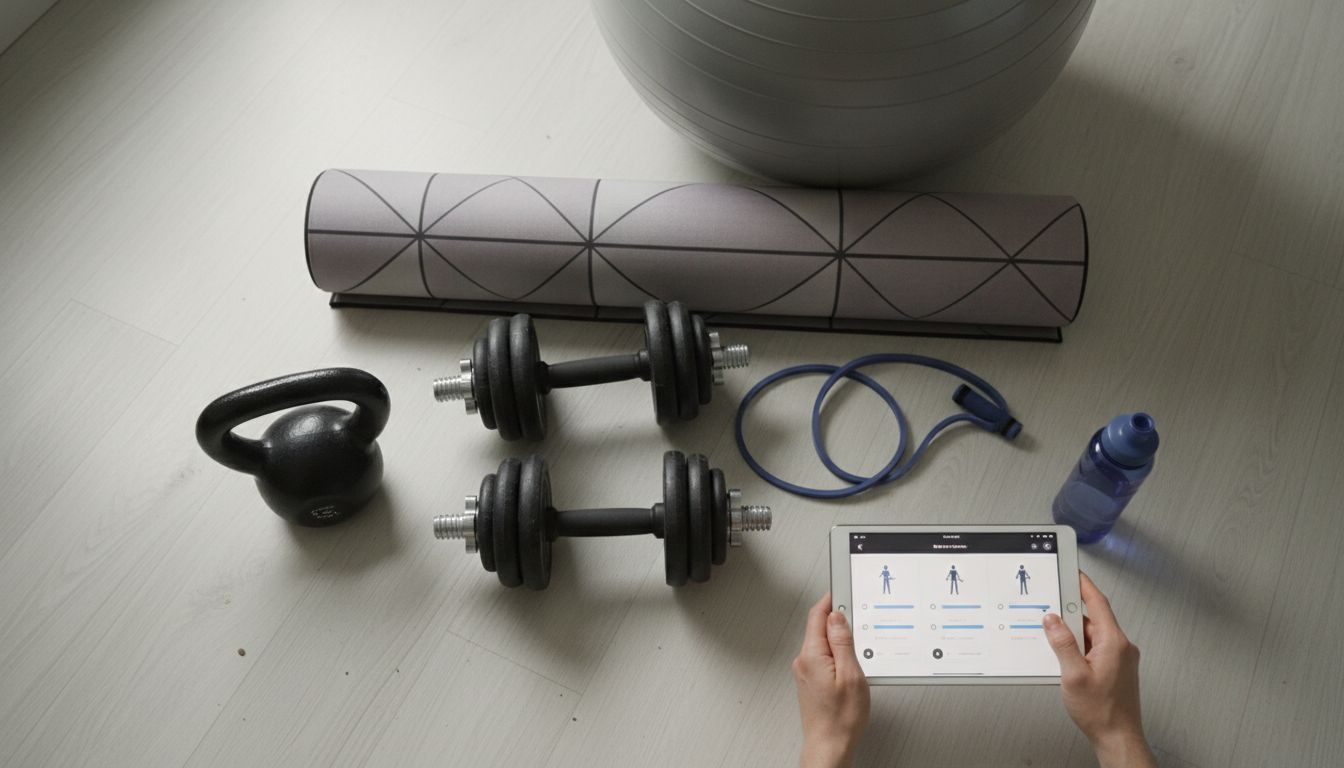
Novant Health recommends assembling an affordable home gym for under $100. Start with foundational pieces that offer maximum versatility. A high-quality yoga mat provides the perfect surface for bodyweight exercises, stretching, and core work.
Resistance bands are another game changer they suggest getting first. These lightweight tools can help you perform strength training exercises targeting multiple muscle groups without heavy weights.
Texas Health emphasizes selecting equipment aligned with your specific fitness objectives.
Consider investing in these key items:
- Adjustable dumbbells for strength training
- Exercise tubing for varied resistance work
- Kettlebells for dynamic full body movements
- Stability ball for core engagement and balance training
My top tip is to start simple. You do not need every piece of equipment at once.
Build your collection gradually and focus on mastering exercises with what you have. Your next step is learning proper form and technique for your home workouts.
Step 3: Perform Dynamic Warm-Up Exercises
A proper warm-up prepares your body for an effective full body workout and helps prevent potential injuries. Your goal is to gradually increase heart rate and muscle flexibility before diving into intense exercises.
Harvard Health recommends starting with light aerobic activities that boost blood flow and warm up your muscles. Begin with 5-10 minutes of movements like marching in place, arm circles, gentle jumping jacks, and walking lunges.
These dynamic exercises mimic the motions you’ll use during your main workout, helping your body transition smoothly from rest to active mode.
Create a warm-up sequence targeting major muscle groups:
- Arm circles forward and backward
- Leg swings side to side and front to back
- Torso twists to engage core muscles
- Light jogging or high knee lifts
- Shoulder rolls and neck rotations
My top tip is to listen to your body. A warm-up should feel challenging but not exhausting. Move at a pace that allows you to breathe comfortably and feel your muscles gently stretching.
Your next step is to transition into the main strength training portion of your workout.
Step 4: Follow a Full Body Workout Circuit
A full body workout circuit transforms your home exercise routine into an efficient weight loss strategy. You’ll design a comprehensive workout that targets multiple muscle groups while keeping your heart rate elevated and metabolism firing.
York College of Pennsylvania offers creative insights for home workouts, suggesting innovative ways to use everyday household items in your bodyweight exercises.
Start by creating a circuit with 5-6 exercises that engage different muscle groups. Consider using water bottles as weights, paper plates as gliders for core work, and resistance bands for added challenge.
Design your circuit with these principles:
- Alternate between upper and lower body movements
- Include 45-60 seconds of work per exercise
- Rest 15-30 seconds between exercises
- Complete 3-4 total circuit rounds
Sample full body circuit:
- Bodyweight squats
- Push-ups or modified push-ups
- Resistance band rows
- Lunges with water bottle weights
- Plank holds
- Mountain climbers
My top tip is to modify exercises to match your fitness level. Start with easier variations and progressively challenge yourself. Your next step is to track your progress and adjust your workout intensity.
Step 5: Track Progress and Adjust Your Routine
Tracking your fitness journey transforms random workouts into a strategic path toward weight loss success. You will create a systematic approach to monitoring your progress and making informed adjustments to your home workout routine.
Harvard Health recommends keeping a detailed workout journal to monitor your exercise performance.
Learn how to track fitness progress consistently by recording key metrics like workout duration, exercises completed, repetitions, and how you felt during each session. This documentation helps you identify patterns and potential areas for improvement.
Effective progress tracking involves multiple strategies:
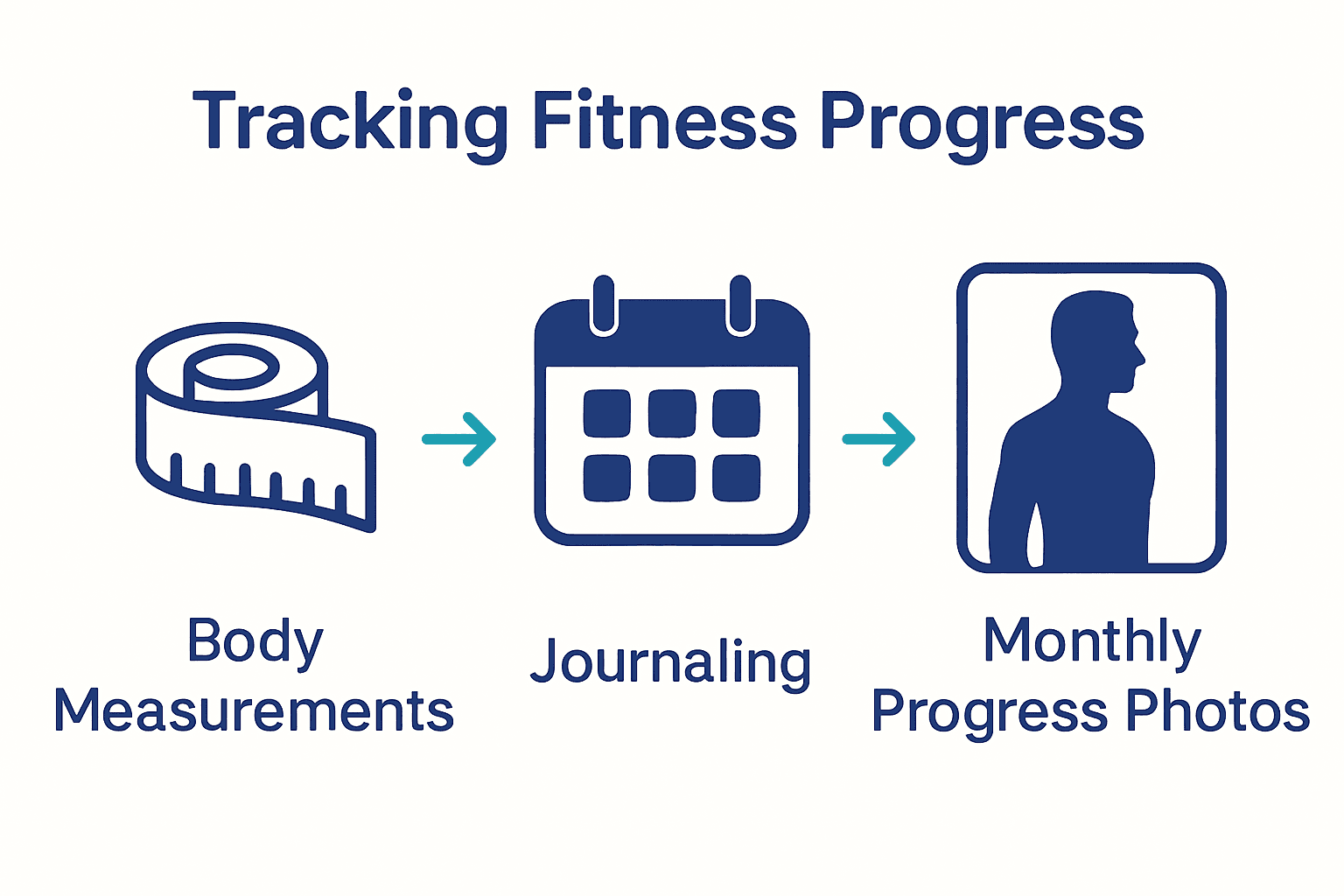
- Take body measurements monthly
- Record weight weekly at the same time
- Note your energy levels and workout performance
- Photograph yourself from multiple angles every 4-6 weeks
- Track workout intensity and perceived difficulty
My top tip is to be consistent but not obsessive. Progress is not always linear.
Some weeks you might see dramatic changes, while others might feel stagnant. Your body is adapting and changing in ways a scale cannot always reveal. Your next step is to stay patient and persistent in your fitness journey.
Transform Your Weight Loss Journey with Smart Home Workouts
Struggling to create an effective full body workout that fits your busy lifestyle and helps you lose weight at home can feel overwhelming.
The challenge is real when it comes to finding the right exercises, equipment, and routines that keep you motivated and deliver results without needing a gym membership.
This article breaks down key steps like setting up your space, warming up properly, and balancing strength and resistance training to boost your metabolism safely.
If you want more guidance on mastering movements that build strength and burn fat, explore our detailed Bodyweight Exercises – LeanAndFit section.
These exercises are perfect for maximizing your home workout without extra cost or complicated gear. Complement that by checking out Resistance Workouts – LeanAndFit for simple ways to add challenge and variety using bands or light weights.

Take control of your fitness routine now at leanandfit.info and unlock the full potential of your at-home workouts.
Start building strength, boost your energy, and see real progress by following proven methods designed specifically for weight loss success.
Your transformation begins with one smart step.
Frequently Asked Questions
A full body home workout for effective weight loss isn’t just about burning calories—it is about building a sustainable habit that fits your lifestyle.
The beauty of working out at home is its simplicity and flexibility.
You don’t need perfect conditions; you just need consistency and intent. By focusing on compound movements, maintaining intensity, and allowing proper recovery, you create a system that works with your body, not against it.
Over time, these small, consistent efforts lead to noticeable changes—not just physically, but mentally too.
Weight loss becomes less about struggle and more about smart, steady progress.
Q-1: Can a full body home workout really replace the gym for weight loss?
A-1: Honestly, yes—it absolutely can. Weight loss doesn’t depend on fancy machines or expensive memberships. What matters most is consistency, intensity, and engaging multiple muscle groups.
A full body home workout naturally does that by combining movements like squats, push-ups, lunges, and planks. These exercises activate several muscles at once, helping you burn more calories in less time.
In fact, home workouts often remove barriers like travel time and gym intimidation, making it easier to stay consistent. And consistency is where real results live.
Q-2: Why do full body workouts burn more fat compared to targeting one muscle group?
A-2: Think of your body like a team instead of individual players. When you work your entire body in one session, you demand more energy, which means more calories burned.
Full body workouts also elevate your heart rate, giving you both strength and cardio benefits at the same time. Plus, they trigger something called the “afterburn effect,” where your body continues burning calories even after your workout is done.
That is why they’re so effective for fat loss—they keep working even when you’re resting.
Q-3: How long should a home workout be to actually see weight loss results?
A-3: You don’t need hours—quality beats quantity every time. A focused 25–40 minute full body home workout can be incredibly effective if done with proper intensity.
The key is to minimize rest time and keep your body moving. Short, intense sessions push your metabolism higher than long, slow workouts. So instead of worrying about duration, focus on effort.
If you finish your workout slightly breathless and sweaty, you’re doing it right.
Q-4: What makes a home workout “effective” instead of just tiring?
A-4: Great question, because not all sweat sessions are equal. An effective workout has structure—it combines strength, movement, and progression.
It should challenge your muscles, elevate your heart rate, and gradually become harder over time.
Doing random exercises without progression might make you tired, but it won’t guarantee results.
Think of effectiveness as “purposeful effort.” Every move should have a reason, whether it’s building strength, improving endurance, or increasing calorie burn.
Q-5: Can beginners safely start a full body home workout without injury?
A-5: Absolutely, but the key is to start smart, not fast.
Beginners should focus on mastering basic movements like squats, modified push-ups, and simple core exercises. Form matters more than speed or repetitions.
It is better to do fewer reps correctly than many with poor form. Also, listening to your body is crucial—slight discomfort is okay, but pain is not. As your strength improves, you can gradually increase intensity.
A slow start often leads to faster long-term progress.
Q-6: Why do some people not lose weight even after doing home workouts regularly?
A-6: This can feel frustrating, but there’s usually a simple explanation.
Weight loss is influenced by multiple factors—diet, sleep, stress, and workout intensity. Sometimes people underestimate their calorie intake or overestimate how much they burn.
Other times, workouts may not be challenging enough to create a calorie deficit. It is also possible that the body is building muscle while losing fat, which may not immediately reflect on the scale.
Progress isn’t always linear, but it’s still happening.
Q-7: How important is rest between full body workouts for weight loss?
A-7: Rest is not laziness—it’s part of the process. When you do a full body workout, you’re engaging many muscles at once, and they need time to recover.
Rest days allow your body to repair, rebuild, and come back stronger. Without proper recovery, you risk burnout, fatigue, and even injury. For most people, 3–4 full body workouts per week with rest days in between works perfectly.
Think of rest as the silent partner in your weight loss journey.
Q-8: Can combining bodyweight exercises alone give visible fat loss results?
A-8: Yes, and many people are surprised by how powerful bodyweight training can be. Exercises like burpees, mountain climbers, squats, and push-ups don’t require equipment, but they can be incredibly intense.
The secret lies in how you combine them—circuit-style training keeps your heart rate high and maximizes calorie burn.
When done consistently and paired with a balanced diet, bodyweight workouts can deliver noticeable fat loss results over time.
Q-9: What’s the biggest mindset shift needed for home workout success?
A-9: The biggest shift is moving from “motivation” to “discipline.”
Motivation comes and goes, but discipline keeps you showing up even on low-energy days. At home, there are more distractions—your bed, your phone, your comfort zone.
That’s why building a routine matters. Treat your workout like an important appointment with yourself.
Once you shift your mindset from “I’ll do it if I feel like it” to “I do it because it matters,” everything changes.