

Most American adults are going to deal with weight gain in their lifetime, but over 60% of them are incorrectly informed about the causes of it.
There is an aspect to the reasons people gain weight that is often overlooked, and because of this, many people fall victim to misconceptions about weight gain.
Reviewing the facts about the causes of weight gain as well as considering the factors that do contribute to it can help American readers make better health decisions that will allow them to lead a healthier life.
Table of Contents
- Defining Weight Gain And Common Myths
- Biological And Genetic Influences On Weight
- Lifestyle Factors: Diet, Activity, And Sleep
- Medical Conditions And Medication Side Effects
- Emotional, Environmental, And Social Triggers
- Preventing Weight Gain: Effective Strategies
Key Takeaways
| Point | Details |
|---|---|
| Weight Gain Is Complex | Understanding weight gain involves recognizing the intricate interactions of genetics, hormones, environment, and lifestyle factors. It’s not solely about calories in versus calories out. |
| Genetic Influences Matter | Genetic predispositions significantly affect metabolic processes and individual responses to diet and exercise, making personalized strategies crucial. |
| Emotional and Environmental Factors | Emotional eating and environmental triggers play major roles in weight management, necessitating a compassionate approach that addresses psychological and social contexts. |
| Holistic Prevention Strategies | Sustainable weight management requires comprehensive strategies like mindful eating, regular physical activity, and stress management rather than restrictive diets. |
Defining Weight Gain and Common Myths
Weight gain is a complex physiologic process that involves numerous mechanisms that are much more intricate than the “calories in, calories out” theory.
Weight gain occurs when a person consumes more calories than they expend, and the reasons why people might gain weight are not as simple as most would assume.
Although some degree of weight gain may be influenced by personal choices and behaviors, a significant portion of the process is controlled by a person’s metabolism.
There are numerous myths pertaining to weight gain that distract and misinform people about the real causes of weight gain.
Myths about weight gain range from the idea that it is solely caused by overeating and lack of exercise to the theory that hormonal levels dictate a person’s ability to gain or lose weight. Weight gain can be caused by an impressive array of reasons that go beyond the control of most people.
The fact that some diets can cause people to gain weight shows that not all calories are equivalent, and that the science behind weight gain is much more complex than most would assume.
A better understanding of the mechanisms that are involved in weight gain can help people become informed about the condition and create healthier habits for themselves.
Biological and Genetic Influences on Weight
Genetics plays a much bigger role than many people care to admit in weight loss and weight gain.
There are certain genes that control how our bodies process and store calories and dictate whether we burn fat, conserve fat or allow fat to build up.
Researchers have uncovered genetic links to obesity and lean body type.
Some people’s genes dictate that they will either eat too much or have trouble burning fat, causing them to gain weight more easily or have difficulty losing it.
Scientists say that people can have the same diet and exercise and still end up with different weight because of their genes.

The idea of genetic predispositions is not only limited to gaining or losing weights. Some genes are considered “thrifty” and can predetermine a person’s ability to gain or lose weight depending on the situation. People with such genes are prone to obesity.
Genes That Control How We Store Fat May Be “Thrifty”
Genes controlling leptin (hormone) levels and, consequently, the amount of fat in the body are examples of ‘thrifty’ genes, which used to be beneficial for humans.
Gene Variations That Raise Obesity Risks Are Mostly Inherited
Genes which are responsible for such conditions as leptin resistance or insulin sensitivity are inherited.
Knowing Genetic Predispositions Can Help In Losing Excess Weight
The information about genetic predispositions can be highly valuable in understanding how our body deals with weight issues. It can also help in managing weight problems effectively.
Lifestyle Factors: Diet, Activity, and Sleep
Weight management is a multifaceted and multi-layered issue, which goes far beyond the simple equation of calories in and calories out.
Nutritionists have uncovered a plethora of diet-related nuances that go into the process, making it clear that it is not as easy as eating fewer meals and exercising regularly.
While the role of nutrition in the balance of the intake and expenditure of calories is undisputed, the mechanisms by which it affects human weight are often unclear to the general public.
Numerous diet-related peculiarities may affect the process, and therefore it is essential to consider them when trying to address the matter.
The quality of the food that a person ingests is at least as important as the quantity.
Modern researchers note that the way a person eats and what they eat have a far greater impact on the metabolic rate than previously thought.
In addition, a person’s diet affects the functioning of their endocrine system.
It also has an effect on their overall wellbeing, as the body requires various nutrients to operate normally.
The other two pillars of weight management are physical activity and sleep.
The former is particularly important, as a lack of it can considerably reduce the body’s metabolic rate.
Meanwhile, the latter plays a vital role in the secretions of hormones that are responsible for feelings of hunger and satiety.
The connection between diet, exercise, and sleep makes it possible to understand the mechanisms by which weight management works.
Each element in the combination affects the processes endocrinologically, and positively, and therefore their simultaneous use can produce better results than any single aspect alone.
For this reason, when attempting to effectively manage one’s weight, it is essential to take all of the discussed aspects into account.
Medical Conditions and Medication Side Effects
Medical complications often play an important role in a person’s ability to manage their weight. The presence of certain conditions and the use of specific medications can have a noticeable impact on a person’s metabolism.
The tendency to gain weight can be influenced by a wide range of factors related to the development of a particular individual. It is essential to recognize that the causes of overweight and obesity can be extremely diverse and not always obvious at first glance.
There are some medical conditions that considerably affect human metabolism resulting in weight gain that is not easy to lose.
For instance, people with diabetes, hypothyroidism, PCOS, or insulin resistance tend to gain weight due to the impaired endocrine system.
The impact of external factors such as nutrition or physical activity on a person’s weight is not absolute due to the presence of a genetic component. Epigenetics studies the connection between genetics and environment, and some acquired mutations can affect the way a particular gene works.
There are also various reasons why medications can lead to weight gain.
Most of them are connected to an individual’s metabolism and eating habits. Some antidepressants, diabetes medications, steroid preparations, and drugs affecting blood pressure can cause weight gain as a side effect.
Moreover, many psychiatric drugs have a considerable effect on a person’s weight; therefore, a doctor should be contacted in case of significant weight gain after staving any of these medications.
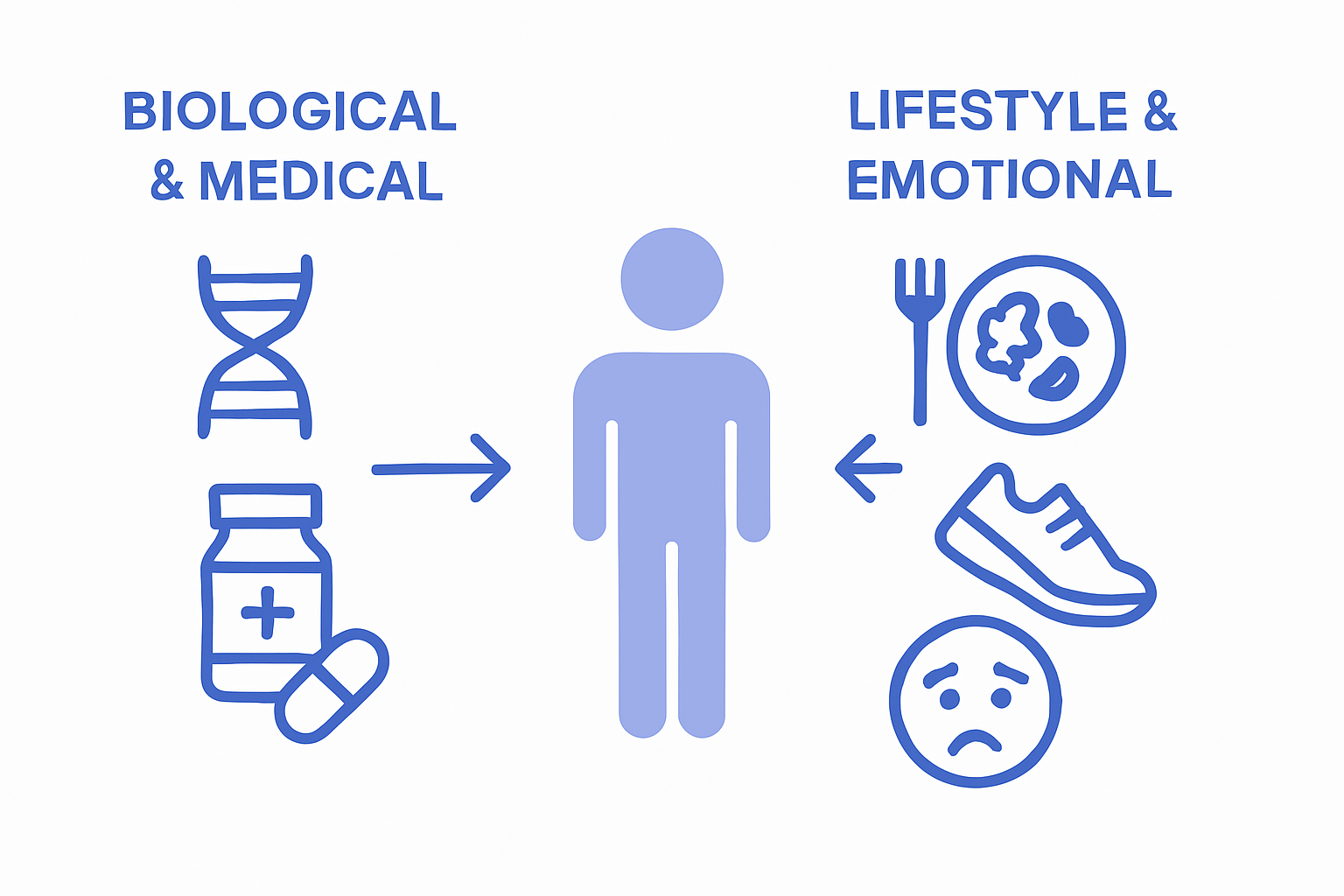
Understanding these medical factors is essential in addressing the issue of weight control. It is always important to remain considerate of the possible medical causes of weight gain and avoid self-blame as much as possible.
Therefore, with the help of health professionals, it is possible to find the right solution that would help manage the relevant medical condition and address the issue of weight control.
Emotional, Environmental, and Social Triggers
Emotional eating is an underestimated source of overweight and, consequently, a factor influencing weight loss.
Scientists have concluded that it is necessary to consider not only dietary changes but also to study the connection between emotions and eating behavior.
Moreover, the importance of the food environment, which often has a greater impact on our eating and metabolism than personal efforts, is also being discussed.
The current state of the food environment, which is based on an urban way of life, is associated with the transformation of the world around us and the constant presence of a choice.
The work environment, family, finances, and the resulting stress are the most influential aspects of a person in terms of food choices.
Moreover, stress and related factors such as anxiety, depression, or simply uncontrollable emotions can lead to emotional overeating and cause disorders of the digestion and metabolism.
In this regard, nutritionists’ statements that it is necessary not to fight against oneself and one’s habits in the struggle against overweight are significant.
To achieve optimal health based on balanced nutrition, it is necessary not only to change behavioral habits but also to consider other aspects of this issue, namely social and emotional ones.
Preventing Weight Gain: Effective Strategies
The prevention of weight gain necessitates a comprehensive and sophisticated approach that delves beyond the superficial aspects of dieting.
It is essential for nutritionists to consider the multi-tiered strategies for weight control that do not involve the deprivation of one’s favorite snacks.
Preventive measures against adiposity require a thorough knowledge of one’s metabolism and the development of an adequate diet and sport regime.
In addition, the establishment of certain behavioral patterns that would minimize stress and, consequently, the disruption of human endocrine functions is critically important.
There is a battery of proven tactics that can be utilized to prevent excessive weight gain.
A well-balanced diet that includes high-calorie, nutrient-dense foods and scheduled physical activities are two primary measures that should be undertaken by individuals who wish to maintain their weight.
Moreover, it is essential to adopt certain behavioral patterns, such as avoiding emotional eating and keeping a well-developed sleep schedule.
These mechanisms would allow people to keep track of their calorie intake and manage their stress levels.
Adequate sport activities, including strength training and other types of resistance exercises, are also beneficial because they help build muscle mass and increase the metabolism.
Take Control of What Really Drives Weight Gain
Understanding the underlying reasons for weight gain like hormonal imbalance, thyroid problems, and body inflammation is essential. There are various other health issues and genetic factors that may hinder the ability of people to lead a healthy lifestyle.
If you are determined to learn more about additional causes of overweight and how to deal with them without excessive effort, you should not miss the following section on
Hormonal Imbalance – LeanAndFit and Thyroid Dysfunction – LeanAndFit .
Do not allow the complicated mechanisms of your body to prevent you from having a healthy and strong body. Consult with us at LeanAndFit.info to get expert-approved advice and guidance that would help you overcome hormonal imbalance or any other issues related to female anatomy.
Frequently Asked Questions:
Q-1: What are the leading causes of weight gain in adults discussed?
A-1: Weight gain occurs from a variety of factors, including overeating, lack of exercise, hormonal irregularity, and stress, and not just a single reason.
More than 39% of adults are overweight in the world, which is a significant number.
For example, people who work overtime might not get enough sleep or may skip meals, leading to weight gain.
Q-2: What could be the reasons for unexpected weight gain even if I do not consume more food?
A-2: There are several reasons for unexplained weight gain, such as lower metabolism, hormone irregularity, or lack of workout.
Research shows that people’s metabolisms slow down by 2-3% after the age of 30.
For example, one may eat the same amount of food but start gaining weight because they have started to lead a sedentary lifestyle.
Q-3: What are the causes of Hormonal irregularity and slow metabolism in females that lead to weight gain?
A-3: Hormone irregularity such as estrogen and insulin and conditions such as PCOS can be a cause of weight gain in females.
PCOS affects 10-13% of women worldwide and can contribute to weight gain.
Hormone irregularities can also cause an increase in appetite and weight gain.
Q-4: How can stress and cortisol cause weight gain in people?
A-4: Stress and cortisol can cause weight gain as people tend to eat more when they are stressed.
70% of adults experience stress on a daily basis.
For example, people who study or work under stress may eat unhealthy snacks.
Recommended:
- Understanding the Connection Between Stress and Weight Gain – LeanAndFit
- How Processed Foods Contribute to Weight Gain? – LeanAndFit
- How Thyroid Hormone Deficiency Contributes to Weight Gain? – LeanAndFit
- How Chronic Stress Impacts Cortisol Levels and Weight Gain? – LeanAndFit
- Why Trust LeanAndFit.info?
- For educational purposes only