Starting a fitness journey can feel intimidating, especially if weight loss and improved health are top priorities.
Many American adults face uncertainty about where to begin with exercise routines and tracking progress.
By focusing on assessing your current fitness level and building from realistic goals, you can design a workout plan that fits your abilities, reduces injury risk, and supports sustainable results.
Discover how monitoring simple metrics and choosing approachable activities sets the stage for lasting transformation and motivation.
Table of Contents
- Step 1: Assess Your Current Fitness Level
- Step 2: Set Realistic Workout Goals
- Step 3: Choose Appropriate Beginner Exercises
- Step 4: Plan Your Weekly Workout Schedule
- Step 5: Track Results and Adjust Routinely
Quick Summary
| Main Insight | Explanation |
|---|---|
| 1. Assess Your Fitness Level | Evaluate heart rate, strength, flexibility, and body composition to create personalized workout plans. |
| 2. Set Attainable Goals | Define specific, small, and time-bound objectives to enhance motivation and monitor progress. |
| 3. Choose Suitable Exercises | Select beginner-friendly workouts that match your current fitness level to encourage consistency. |
| 4. Create a Weekly Schedule | Plan well-structured workouts that balance activity, rest, and recovery for sustained fitness. |
| 5. Track and Adjust Regularly | Consistently monitor your progress and make necessary adjustments to your fitness routine for optimal results. |
Step 1: Assess Your Current Fitness Level
Before launching into an exercise routine, understanding your starting point is crucial. Assessing your current fitness level helps create a targeted, realistic weight loss strategy that matches your individual capabilities.
To evaluate your baseline fitness, focus on several key measurement areas:
- Heart Rate and Endurance: Calculate your resting heart rate by counting pulse beats for 60 seconds when fully relaxed
- Strength Assessment: Perform standard exercises like pushups or planks to gauge muscle capacity
- Flexibility Check: Measure how far you can reach during simple stretching movements
- Body Composition: Calculate your body mass index (BMI) and waist circumference
Start with simple tests that don’t require advanced equipment. Use a stopwatch, measuring tape, and home scale to track initial metrics.
This baseline data becomes your roadmap for setting achievable fitness goals and tracking progress.
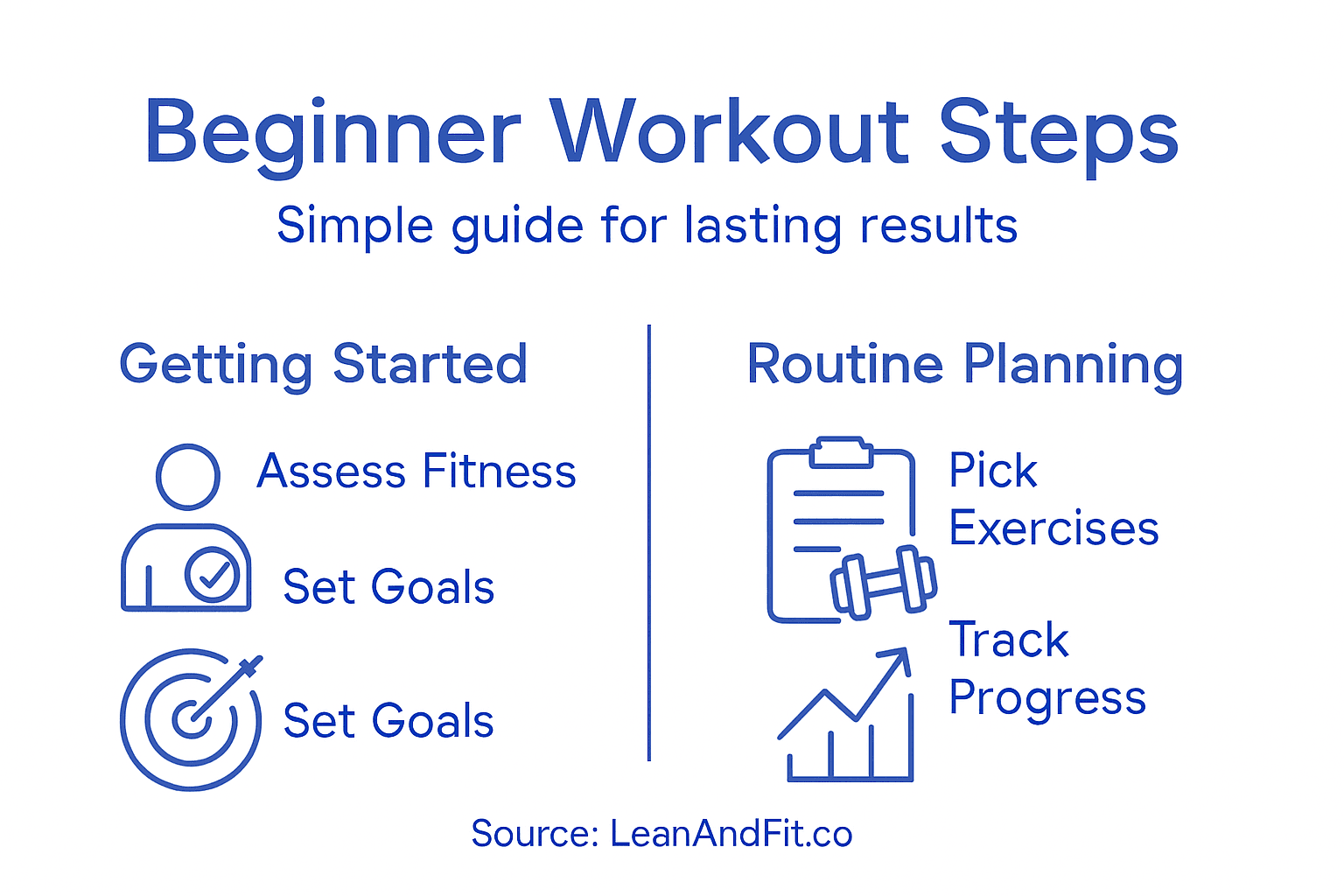
Here’s how different fitness metrics help tailor your workout strategy:
| Fitness Metric | What It Reveals | How It Guides Planning |
|---|---|---|
| Resting Heart Rate | Cardiovascular health | Sets baseline for endurance work |
| Strength Assessment | Current muscle power | Informs choice of starter exercises |
| Flexibility | Joint range of motion | Determines stretching needs |
| Body Composition | Fat and muscle levels | Personalizes weight loss targets |
Knowing your starting point isn’t about judgment – it’s about creating a personalized pathway to success.
Pro tip: Record your initial measurements in a dedicated fitness journal to visually track your transformation and stay motivated.
Step 2: Set Realistic Workout Goals
Establishing achievable fitness goals is the cornerstone of a successful weight loss journey. Setting realistic weight loss goals transforms your fitness aspirations from abstract dreams into actionable plans.
When creating your workout objectives, consider these critical strategies:
- Start Small: Begin with modest, attainable goals that build confidence
- Be Specific: Define clear, measurable targets like “lose 10 pounds” or “exercise 3 times weekly”
- Create Timebound Goals: Set realistic deadlines for your fitness milestones
- Track Progress: Develop a system for monitoring your advancement
Break down larger goals into smaller, manageable weekly or monthly targets.
This approach prevents overwhelm and maintains motivation. Instead of aiming to lose 50 pounds immediately, focus on sustainable 5-10 pound increments that feel achievable and encourage continued effort.
Your fitness journey is a marathon, not a sprint – consistency matters more than perfection.
Pro tip: Write down your goals and place them somewhere visible, transforming them from abstract thoughts into tangible commitments.
Step 3: Choose Appropriate Beginner Exercises
Starting your fitness journey requires selecting exercises that match your current fitness level and keep you motivated.
Home exercises for beginners offer an accessible pathway to improving health without expensive equipment.
Consider a balanced workout routine that incorporates multiple fitness dimensions:
- Cardiovascular Exercises: Walking, swimming, light jogging
- Strength Training: Bodyweight squats, modified push-ups, lunges
- Flexibility Work: Basic stretching, gentle yoga poses
- Low-Impact Movements: Stationary cycling, elliptical training
Focus on proper form and gradual progression. Start with shorter durations and lower intensity, gradually increasing as your fitness improves. This approach prevents injury and builds sustainable workout habits. Remember that consistency trumps intensity when you’re just beginning.
Your body is learning a new skill – patience and persistence are your greatest allies.
Pro tip: Listen to your body and modify exercises as needed, understanding that everyone’s fitness journey starts at a different point.
Step 4: Plan Your Weekly Workout Schedule
Creating a structured workout plan transforms fitness aspirations into achievable results. Effective workout planning requires strategic thinking and realistic goal setting that fits your lifestyle.
Design your weekly workout schedule with these essential components:
- Cardiovascular Exercise: 150 minutes of moderate activity
- Strength Training: Two dedicated sessions per week
- Rest and Recovery: Minimum 1-2 dedicated rest days
- Flexibility Work: Stretching or yoga integrated throughout week
Distribute your workouts strategically to prevent burnout and maximize recovery. Consider alternating muscle groups and combining different exercise types.
For example, pair strength training days with light cardio or flexibility work to maintain momentum without overexerting specific muscle groups.

Review this weekly schedule blueprint for balanced weight loss progress:
| Day of Week | Primary Activity | Recovery Strategy |
|---|---|---|
| Monday | Cardio (Brisk walk) | Light stretching after workout |
| Tuesday | Strength training | Focus on hydration |
| Wednesday | Cardio/light yoga | Gentle mobility movements |
| Thursday | Rest or full yoga | Extra sleep or meditation |
| Friday | Strength training | Foam rolling, healthy snack |
| Saturday | Cardio (swimming) | Leisure walk for recovery |
| Sunday | Rest and reset | Plan and reflect for coming week |
Consistency matters more than perfection – build a schedule you can actually maintain.
Pro tip: Schedule your workouts like important meetings and set phone reminders to increase your commitment and follow-through.
Step 5: Track Results and Adjust Routinely
Successful weight loss demands consistent monitoring and strategic adjustments to your fitness routine.
Tracking fitness progress consistently helps you stay motivated and understand your body’s unique transformation journey.
Establish a comprehensive tracking system with these key metrics:
- Body Measurements: Weight, waist circumference, body fat percentage
- Performance Indicators: Number of repetitions, exercise duration, weight lifted
- Progress Photos: Monthly visual documentation of physical changes
- Digital Tools: Fitness apps or journals for systematic recording
Regularly review your progress every 4-6 weeks. If you’re not seeing desired results, consider tweaking workout intensity, duration, or exercise types. Remember that plateaus are normal and do not signify failure – they are opportunities for strategic recalibration.
Your fitness journey is dynamic – embrace adaptability as your greatest strength.
Pro tip: Take measurements and progress photos at the same time of day, wearing similar clothing, to ensure accurate and consistent tracking.
Take Control of Your Fitness Journey with Proven Beginner Strategies
Starting a new workout routine can feel overwhelming when you want lasting weight loss success.
This article highlights the importance of assessing your current fitness level, setting realistic goals, and building sustainable exercise habits that fit your life.
If you are seeking practical, easy-to-follow workouts that match your beginning stage and keep you motivated, you are in the right place.
Bodyweight Exercises – LeanAndFit offers simple and effective exercises designed particularly for beginners.
Combine these with expert guidance from our Exercise Regimens – LeanAndFit section for a well-rounded program that supports your weight loss goals without overwhelming your body.
Don’t forget to explore engaging Cardio Intervals – LeanAndFit that progressively build heart health and endurance.

Start transforming your health today with tailored workouts that reflect your unique starting point and lifestyle.
Visit us at leanandfit.info to access expert advice, detailed plans, and ongoing support. Your lasting weight loss success begins with the right first step—take it now.
Frequently Asked Questions
Q-1: How do I assess my current fitness level before starting a workout routine?
A-1: To assess your current fitness level, measure your resting heart rate, test your strength with exercises like pushups, check your flexibility through stretching, and calculate your body mass index (BMI). Use a stopwatch, measuring tape, and home scale to gather this data, creating a baseline that will guide your fitness goals.
Q-2: What are some realistic workout goals for beginners?
A-2: Realistic workout goals for beginners should include specific, measurable targets, such as losing 5-10 pounds or exercising three times a week. Start with small achievable milestones, like committing to 20 minutes of exercise daily, to build confidence and momentum over time.
Q-3: What beginner exercises should I include in my weight loss routine?
A-3: Include a mix of cardiovascular exercises like walking or swimming, strength training with bodyweight exercises such as squats and lunges, and flexibility workouts like gentle yoga or stretching. Start with 20-30 minutes of these activities, gradually increasing duration or intensity as your fitness improves.
Q-4: How can I create an effective weekly workout schedule?
A-4: To create an effective weekly workout schedule, aim for 150 minutes of moderate cardiovascular exercise, two strength training sessions, and at least one or two rest days. Plan your workouts consistently, consider alternating exercise types, and include flexibility work, ensuring that the schedule fits within your lifestyle.
Q-5: How do I track my fitness progress and make necessary adjustments?
A-5: Track your fitness progress by measuring body metrics like weight and waist circumference, recording performance indicators such as repetitions and duration, and taking monthly progress photos. Review your achievements every 4-6 weeks, and if needed, adjust your routine by varying intensity or types of exercises to continue progressing effectively.
Q-6: What should I do if I hit a plateau in my weight loss journey?
A-6: If you hit a plateau, it’s essential to assess your diet and workout routine for areas to tweak, such as increasing workout intensity or changing exercise types. Consider setting new, smaller goals or trying different activities to reignite motivation and push through the plateau.
Recommended
- Home Exercises for Beginners: Start Weight Loss Today – LeanAndFit
- Complete Guide to Weight Loss for Beginners – LeanAndFit
- Easy Home Workouts for Effective Weight Loss Results – LeanAndFit
- Effective Workout at Home Tips for Safe Weight Loss – LeanAndFit
- How water can help you lose weight? – EQUA – Sustainable Water Bottles
- Why Trust Us?
- For educational purposes only