How much water should an adult drink a day?
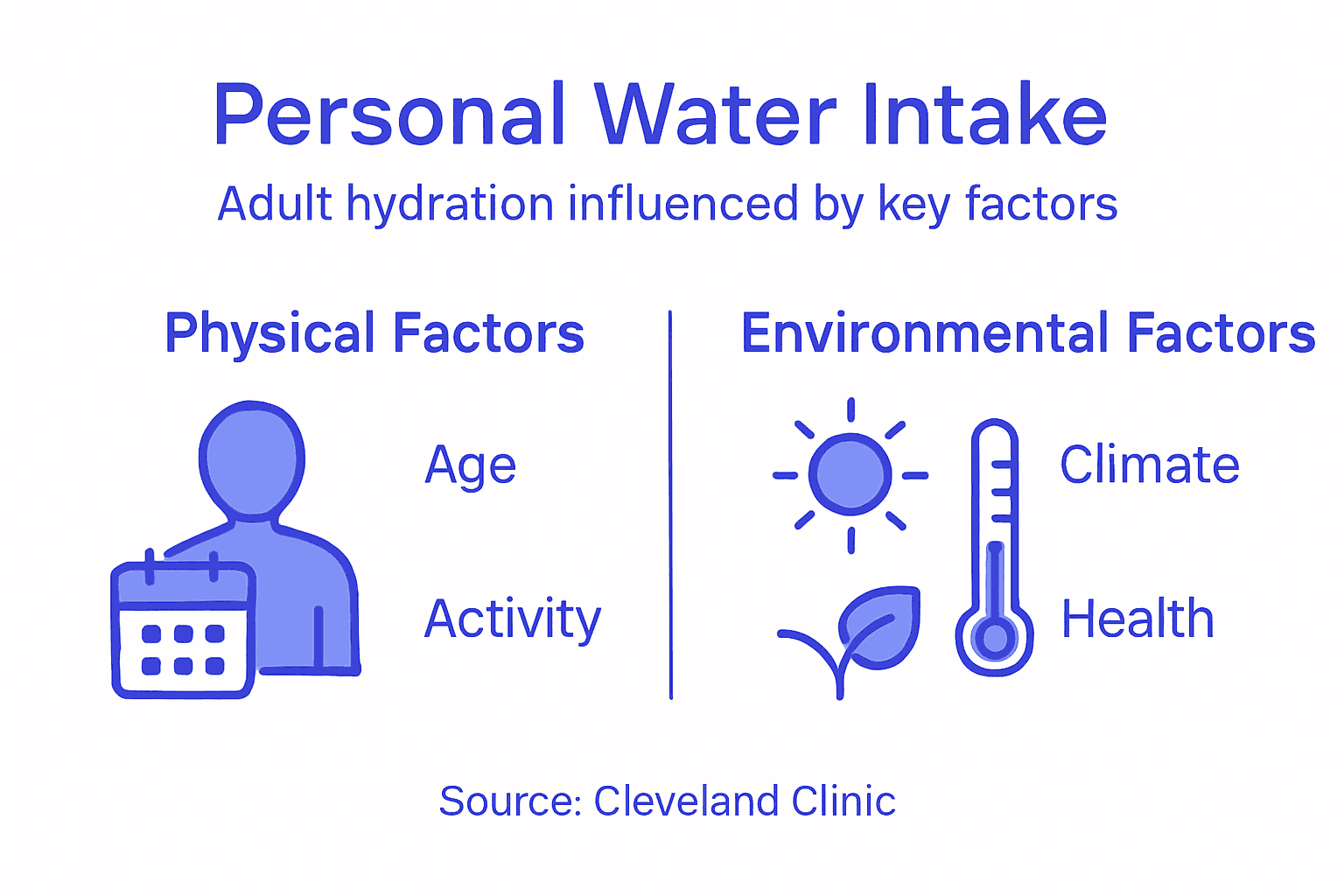
There is no single amount of water that every adult needs. This amount depends on age, sex, activity level, climate, health, and other factors.
A good way to think about it is to consider how much water you get from food, as well as drinks, and not fix on a specific number of glasses.
The National Academies of Sciences, Engineering, and Medicine have established an adequate intake of 3.7 liters (125 ounces) of total water per day for men and 2.7 liters (91 ounces) of total water per day for women.
These numbers do not mean that every man must drink 3.7 liters of water per day or that every woman must drink 2.7 liters of water per day.
There is a range, so your requirements could be different from these numbers.
Table of Contents
- How Much Water Do Adults Need Each Day?
- What Counts Toward Your Daily Water Intake?
- What Determines How Much Water You Need?
- Water Intake for Men and Women
- Does Age Affect Water Needs?
- How Much Water Do You Need When Exercising?
- Do You Need More Water in Hot Weather?
- What About Pregnancy and Breastfeeding?
- How Can You Tell If You Are Drinking Enough?
- Signs You May Be Dehydrated
- Can You Drink Too Much Water?
- Is Eight Glasses of Water a Day Enough?
- Does Drinking More Water Help With Weight Loss?
- Practical Ways to Stay Hydrated
- Frequently Asked Questions
- Bottom Line
How Much Water Do Adults Need Each Day?
The National Academies provides reference values for total water intake, which includes water from beverages and foods.
For adults aged 19 and older, the adequate intake is approximately:
| Group | Total Water Per Day |
|---|---|
| Adult Men | 3.7 liters (about 125 oz) |
| Adult Women | 2.7 liters (about 91 oz) |
| Pregnancy | 3.0 liters (about 101 oz) |
| Breastfeeding | 3.8 liters (about 128 oz) |
These numbers relate to all water, not only water drunk but also water obtained with food.
The National Academies’ report cited above estimates that about 20% of total water intake may come from food, on average, but that it varies greatly depending on the diet.
Fruits, vegetables, soup, and other water-rich foods can supply significant amounts of water.
So, when you see a recommendation of 2.7 or 3.7 liters, you should not assume that you need to drink that amount of plain water.
Consider these values as reference values rather than rigid daily targets.
What Counts Toward Your Daily Water Intake?
Water is not the only source of fluid.
Fluids can come from several sources, including:
- Plain water
- Sparkling water
- Tea
- Coffee
- Milk
- Other drinks
- Soups which are liquids
- Foods with high water content
Plain water is often the simplest choice because it contains no calories. The CDC recommends drinking water instead of sugar-sweetened beverages as a means of reducing calorie intake.
Coffee and tea are also fluids. Moderate caffeine intake does not appear to contribute significantly to dehydration, but everyone reacts differently to caffeine.
Alcohol is a liquid, but it shouldn’t be considered as a way to get fluids into the body.
What Determines How Much Water You Need?
Your daily hydration requirements can vary depending on your sex, activity level, health, and other personal factors.
Key factors that contribute to the different fluid requirements in individuals are:
Activity Level
Exercise or activity that causes sweating results in higher fluid loss.
The fluid requirement increases with an increase in the duration and intensity of the activity.
The Climate and the Environment
Higher levels of humidity and higher temperatures increase sweating and thus fluid loss.
Individuals working in high-stress environments such as outside in the sun may need way more fluid than those inside in a controlled environment.
The Body Size
A larger body generally contains more water than a smaller body. However, body size alone does not determine exactly how much fluid someone needs.
Body weight should not be used as a sole reference point for calculating body fluid needs.
Age
An individual’s fluid requirements change as they grow from infancy to adulthood.
Older adults tend to become more vulnerable to dehydration due to lower perception of thirst as they age.
Their fluid needs may also increase during illness, physical activity, or hot weather.
Pregnancy and Breastfeeding
Pregnancy and breastfeeding increase fluid requirements compared with the needs of non-pregnant women. The National Academies of Sciences, Engineering, and Medicine lists an adequate intake of 3.7 liters (125 ounces) of total water per day for men and 2.7 liters (91 ounces) of total water per day for women.
Illnesses
Illnesses such as fever, vomiting, and diarrhea cause higher fluid loss.
Fluid losses may increase during illness, particularly with fever, vomiting, or diarrhea. In these situations, fluid replacement may be important.
Cases such as vomiting and/or diarrhea may require higher medical intervention if the individual is unable to retain enough fluids.
Medical Conditions and Medications
Some medical conditions and their corresponding medications can reduce an individual’s ability to control fluid retention in the body.
For instance, people living with heart disease, kidney disease, or liver disease may be required to restrict their fluid intake.
If your health professional instructs you to consume fewer fluids, avoid following a self-regimen of additional water consumption.
Water Intake for Men and Women
The commonly cited National Academies numbers are:
- Men: about 3.7 liters of total water per day
- Women: about 2.7 liters of total water per day
Again, these are total water figures, including water from food and beverages.
They should not be interpreted as a requirement to drink 3.7 liters or 2.7 liters of plain water.
Individual needs can vary significantly.
For instance, a person who spends several hours exercising outdoors in hot weather may need significantly more fluids than someone who works at a desk in an air-conditioned environment.
Does Age Affect Water Needs?
Age can impact fluid needs and how well the body can process them.
As people age, the sense of thirst can begin to diminish. Therefore, relying on thirst alone may not be enough, especially in hot weather, or when sick.
Older people need to make sure they have water available to them at all times, and remind themselves to drink even when not thirsty
People with fluid balance issues, or diseases that impact the kidney’s or heart’s ability to function properly should consult with their doctor about what their specific needs are.
How Much Water Do You Need When Exercising?
There is no universal amount of water that everyone needs to drink when exercising.
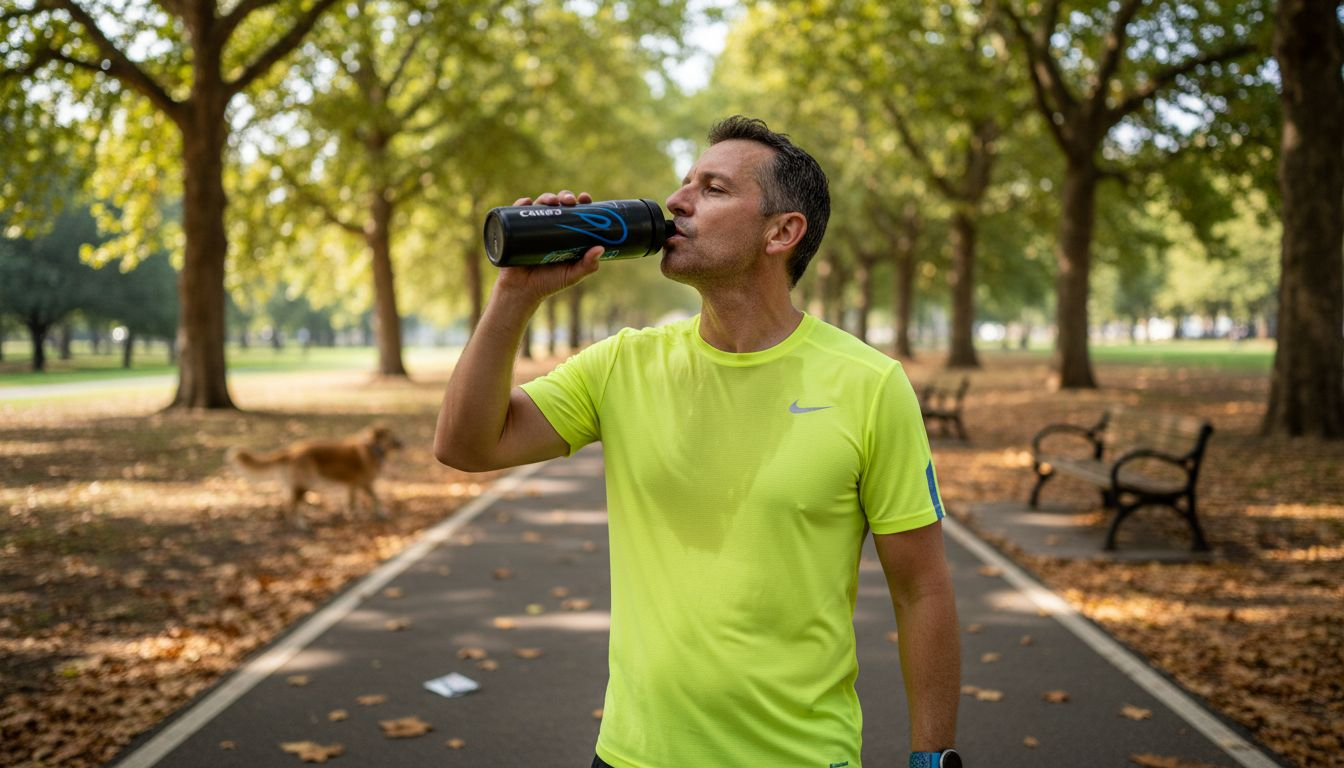
The amount of fluid lost when working out depends on the:
- Level of activity
- Length of time exercised
- Body mass
- Temperature
- Humidity
- Clothing worn
- Sweat rates
Plain water is recommended for less strenuous and shorter exercises. However, highly intense and extended activities require individualization and the replacement of fluids.
During prolonged or intense exercise, particularly in hot conditions, replacing electrolytes may become important depending on how much fluid and sodium are lost through sweating.
Drinking excessive amounts of water during prolonged exercise can be dangerous because it may dilute the sodium concentration in the blood, causing hyponatremia.
Do You Need More Water in Hot Weather?
Usually, yes.
Hot and humid weather will likely cause you to sweat more and lose more fluids.
You may need more fluids if you:
- Do outdoor work
- Exercise outdoors
- Are outside in the heat for long periods of time
- Sweat heavily
- Have a fever
- Have vomiting or diarrhea
The CDC specifically lists hot climates, physical activity, fever, vomiting and diarrhea as situations in which fluid needs can increase.
Instead of a rigid hourly formula, think about your activity, environment, thirst, urine color and fluid losses in combination.
What About Pregnancy and Breastfeeding?
Pregnancy and breastfeeding increase the demand for fluids.
The National Academies recommends about 3.0 liters of total water per day during pregnancy and 3.8 liters while lactating. This means that water from food and water from drinks add up to that amount.
That does not mean that every pregnant or breastfeeding woman needs to drink exactly that amount of plain water.
Everybody has different requirements, so it is best to consult with your doctor if you feel like you need more or less water than recommended, especially if you experience serious discomfort like vomiting that prevents you from keeping fluids down.
How Can You Tell If You Are Drinking Enough?
There is no simple home test that can determine the exact amount of water that is right for every individual. However, some practical indicators can help.
For many healthy adults:
- Urine that is pale yellow generally suggests adequate hydration.
- Darker urine can be a sign that you need more fluids.
- Feeling thirsty can also be a useful signal.
- Frequent or prolonged thirst, particularly alongside other symptoms, deserves attention.
The color of the urine cannot be an indicator in all cases, since some medications, vitamins, or food could tint the urine. Also, the overall condition and environment play a vital role.
Signs You May Be Dehydrated
Mild dehydration may present with signs and symptoms like:
- Thirst
- Dry mouth
- Dark urine
- Headache
- Fatigue
- Dizziness
- Reduced physical performance
More severe cases may lead to confusion and severe weakness amongst other severe symptoms.
Patients experiencing severe dehydration cases should seek medical help immediately especially if the condition was brought about by vomiting, diarrhea, fever or extreme heat.
Can You Drink Too Much Water?
Yes.
While cases of excessive water consumption are rare in healthy adults, the kidneys have a limited capacity to excrete water over a given period.
Drinking excessive amounts of water can dilute the sodium concentration in the blood, causing hyponatremia.
Symptoms may include:
- Nausea
- Headache
- Confusion
- Weakness
- Muscle spasms
- Seizures or other neurological problems
Drinking excessive amounts of water does not provide a safe or reliable way to accelerate weight loss.
More is not always better.
Is Eight Glasses of Water a Day Enough?
The familiar eight 8-ounce glasses rule would be about 64 ounces, or roughly 1.9 liters.
It can be an easy reminder to drink fluids, but it is not a universal requirement.
Some adults may need less than this amount of drinking water, while others may need substantially more because they obtain less fluid from food or lose more through sweating.
The National Academies’ reference values are considerably higher when total water from food and beverages is considered.
So rather than asking whether eight glasses is exactly right, a better question is:
Are you getting enough fluid for your individual circumstances?
Does Drinking More Water Help With Weight Loss?
This question relates to staying well-hydrated however I feel this question should be separated from the topic of basic water intake recommendations.
Drinking water can aid in healthy weight management in various ways.
For instance, substituting a sugar-sweetened beverage with water can eliminate calories from the drink. Water can also be a good calorie-free beverage choice with meals.
Some small studies have investigated drinking water before meals, with mixed results across the broader research. If you want to explore that specific question, see our guide to drinking water before meals.
For a broader discussion of the evidence, see our article on hydration and weight loss.
The important point is that drinking more water is not a guaranteed weight-loss strategy.
There is also no good reason to force excessive amounts of water in an attempt to “boost” metabolism.
If your main question is how much water to drink specifically for weight management, see our guide on how much water to drink for weight loss.
Practical Ways to Stay Hydrated
You don’t need a complicated hydration program.
Simple strategies can help you remember to drink:
Keep water available
Fill a reusable water bottle when you’re working, traveling, or exercising.
Drink with meals
Having water with your meals is an easy way to make sure you’re getting fluids.
Replace sugary drinks with water
Replacing sugar-sweetened beverages with water can reduce calorie intake.
Drink more when you need fluids.
Pay closer attention to fluid intake when you’re exercising, sweating heavily, spending time in hot weather, or recovering from vomiting or diarrhea.
Eat water-rich foods
Such as fruits, vegetables, soup and others.
Make water more appealing
If you don’t like the taste of plain water, try sparkling water or add a splash of lemon, lime, cucumber or another flavor that you like to make it more interesting. But don’t add sweeteners or syrup and make it into a flavored “water” drink.
Frequently Asked Questions:
How much water should an adult drink per day?
There’s no exact amount of water that all adults need to drink every day. The National Academies recommend that men consume approximately 3.7 liters of total water per day and women approximately 2.7 liters.
Is 2 liters water a day enough?
Two liters may be enough for some adults but not for others.
Your needs are probably dictated by your body size, activity level, climate, diet, age and health. In addition, two liters of just water can’t really be compared to the total-water figures cited by the National Academies.
Is 3 liters of water a day too much?
Not necessarily – it depends on the person and how much fluid they’re consuming over a particular timeframe.
A healthy, active person may need more fluid, particularly in hot weather or during prolonged exercise.
How much water should men drink per day?
The National Academies have a suggested value of about 3.7 liters of total water per day for adult men.
How much water should women drink per day?
The equivalent number for adult women would be approximately 2.7 liters of total water per day.
Should I drink eight glasses of water every day?
Drinking eight 8-ounce glasses of water can be a helpful guide, but it’s not necessarily an absolute requirement for everybody.
Some people need more and some people need less.
Does coffee count towards our daily water intake?
Yes. Coffee and other caffeinated beverages can contribute to total fluid intake. Moderate caffeine intake does not generally negate the fluid provided by the beverage.
Do I need more water when exercising?
Generally speaking, yes, you need more water when working out because you sweat more.
How much you need depends on how long and hard you work out, how much you sweat, your body mass and the outside temperature.
Electrolyte replacement may also become important during prolonged or intense exercise, particularly when you sweat heavily or exercise in hot conditions.
Do I need more water in the heat?
Generally speaking, yes, you need more water in hotter weather because you tend to sweat more.
Can drinking too much water be dangerous?
Yes, it can be.
Ingesting too much water in too short a period of time can cause dangerously low levels of sodium in the blood.
What is the best way to know whether I’m hydrated?
For most healthy individuals, feeling thirsty and noticing the color of your urine can be very helpful indicators of your hydration status.
Generally, light colored urine is consistent with adequate hydration, while darker urine can be a sign that you may need more fluids.
It is important to remember, however, that these signs aren’t always reliable because certain medications, supplements and health conditions can affect them.
Bottom Line
There is no single amount of water that every adult should drink each day.
The National Academies provides reference values of about 3.7 liters of total water for men and 2.7 liters for women per day, including water from food and beverages.
The amount of water needed for each person may vary depending on:
- Level of physical activity
- Outside temperature
- Body weight
- Age
- Pregnancy or breastfeeding
- Illness
- Medications
- Underlying health problems
For most people, it is considered healthier to not focus on a certain amount of water they should drink regardless of other factors.
Aim to develop healthy hydration habits, drinking water when thirsty and paying attention to how much is needed in certain activities or circumstances, such as hot weather, illness, or periods of increased physical activity.
Remember that not only an insufficient amount of water can be detrimental for the body, but an excessive amount as well.
If your main interest is weight management, explore our separate guides on hydration and weight loss and how much water to drink for weight loss.
References:
- National Academies of Sciences, Engineering, and Medicine. Dietary Reference Intakes for Water, Potassium, Sodium, Chloride, and Sulfate. National Academies — Dietary Reference Intakes for Water
- Mayo Clinic. Water: How much should you drink every day? Mayo Clinic — How Much Water Should You Drink Every Day?
- Centers for Disease Control and Prevention (CDC). About Water and Healthier Drinks. CDC — About Water and Healthier Drinks
- Mayo Clinic. Caffeine: Is it dehydrating or not? Mayo Clinic — Caffeine: Is It Dehydrating or Not?
- Mayo Clinic. Dehydration — Diagnosis & treatment. Mayo Clinic — Dehydration: Diagnosis & Treatment
- Centers for Disease Control and Prevention (CDC). Rethink Your Drink. CDC — Rethink Your Drink
- Why Trust Us?
- For Educational Purposes Only