

It is easy to overlook how quickly hours spent sitting at a desk or in traffic add up during a typical American workday.
For adults who want to stay healthy, this pattern of inactivity can quietly increase serious health risks such as weight gain and metabolic problems.
This overview tackles the reality of a sedentary lifestyle, clears up common misconceptions, and introduces simple ways to add more movement into even the busiest routine.
Table of Contents
- Sedentary Lifestyle Explained And Misconceptions
- Types Of Sedentary Behavior In Daily Life
- How Prolonged Sitting Affects Metabolism And Health
- Major Physical And Mental Health Risks
- Obesity And Chronic Disease Connections
- Practical Strategies To Reduce Sitting Time
Key Takeaways
| Point | Details |
|---|---|
| Sedentary Lifestyle Risks | Prolonged sitting increases risks for chronic conditions like cardiovascular disease, type 2 diabetes, and mental health issues. |
| Metabolic Disruption | Extended sitting impairs metabolism, leading to reduced calorie burning and hormonal imbalances. |
| Intervention Strategies | Incorporate short movement breaks and technology solutions to reduce sitting time and improve health outcomes. |
| Long-Term Impacts | An active lifestyle is essential for maintaining optimal health and preventing obesity-related chronic diseases. |
Sedentary lifestyle explained and misconceptions
A sedentary lifestyle represents a modern health challenge characterized by prolonged periods of physical inactivity and minimal movement throughout daily routines.
Significant health risks emerge from extended sitting that extend far beyond simple weight gain.
People often misunderstand sedentary behavior as merely a lack of structured exercise. However, it encompasses much more complex physiological impacts.
A sedentary lifestyle typically involves:
- Extended computer work
- Long commuting hours
- Minimal walking during workdays
- Excessive television or screen time
- Sitting for more than 8 hours daily
Contrary to popular belief, occasional gym sessions do not completely counteract the negative health consequences of prolonged sitting.
Metabolic damage occurs continuously during sedentary periods, reducing calorie expenditure and disrupting critical bodily processes.
Medical research reveals that sedentary behavior significantly increases risks for multiple chronic conditions, including:
- Cardiovascular disease
- Type 2 diabetes
- Certain cancers
- Metabolic syndrome
- Depression and anxiety
Muscle weakness and reduced metabolism represent additional consequences that accumulate silently over time.
The human body requires consistent movement to maintain optimal functioning, and sedentary behavior dramatically reduces calorie burning even among individuals who appear physically fit.
Pro tip: Implement 5-minute movement breaks every hour to interrupt prolonged sitting and restart your metabolic processes.
Types of sedentary behavior in daily life
Sedentary behavior encompasses a wide range of low-energy activities that dominate modern lifestyles.
Patterns of sedentary time vary significantly across different populations and involve multiple daily scenarios that reduce physical movement.
Typical sedentary activities can be categorized into several key environments:
- Workplace Sedentary Behaviors:
- Extended computer work
- Prolonged desk sitting
- Conference room meetings
- Stationary office tasks
- Home-Based Sedentary Activities:
- Television watching
- Smartphone and tablet use
- Reading while seated
- Online streaming
- Transportation-Related Sedentary Time:
- Driving personal vehicles
- Commuting via public transit
- Long-distance travel
- Ride-sharing services
Sedentary behavior metrics reveal complex patterns that go beyond simple total sitting time.
Researchers now examine factors like total sedentary duration, average bout length, and frequency of movement breaks to understand health impacts.
Demographic differences play a significant role in sedentary behaviors.
Younger adults typically experience longer sedentary periods with more frequent interruptions, while middle-aged individuals tend to have more continuous sitting times.
Socioeconomic status, occupation, and cultural background all influence these patterns.
Here’s a quick reference guide for differentiating sedentary behaviors across environments:
| Environment | Typical Activities | Unique Challenges |
|---|---|---|
| Workplace | Desk work, meetings | Few opportunities for movement |
| Home | TV viewing, device use | Passive leisure habits |
| Transportation | Driving, transit sitting | Extended immobility during travel |
| Community/Public | Waiting rooms, events | Limited access to physical activity |
This overview highlights how various environments contribute uniquely to sedentary time.
Pro tip: Track your daily sitting time using a smartphone app or wearable device to gain insights into your sedentary behavior patterns.
How prolonged sitting affects metabolism and health?
Metabolic disruption occurs rapidly when the human body remains stationary for extended periods. Prolonged sitting dramatically alters metabolic health markers, creating a cascade of physiological changes that compromise overall wellness.
The metabolic consequences of prolonged sitting are comprehensive and multifaceted:
- Reduced Calorie Burning:
- Lower resting energy expenditure
- Decreased muscle activation
- Slower metabolic rate
- Reduced fat oxidation
- Hormonal Disruptions:
- Insulin resistance
- Elevated cortisol levels
- Decreased growth hormone production
- Altered glucose metabolism
- Circulatory System Impacts:
- Reduced blood flow
- Decreased cardiovascular efficiency
- Poor lymphatic circulation
- Increased inflammation markers
Inactivity significantly impairs metabolic functions, transforming the body’s fundamental energy processing mechanisms.
Muscles become less efficient at breaking down fats and sugars, while overall metabolic flexibility diminishes.

The long-term health implications are profound.
Continuous sedentary behavior can lead to a progressive decline in metabolic efficiency, increasing risks of obesity, type 2 diabetes, and cardiovascular diseases.
The body essentially enters a state of metabolic hibernation, where energy processing becomes increasingly compromised.
Pro tip: Set an hourly movement reminder to stand, stretch, or walk for 2-3 minutes to interrupt metabolic stagnation.
Major physical and mental health risks
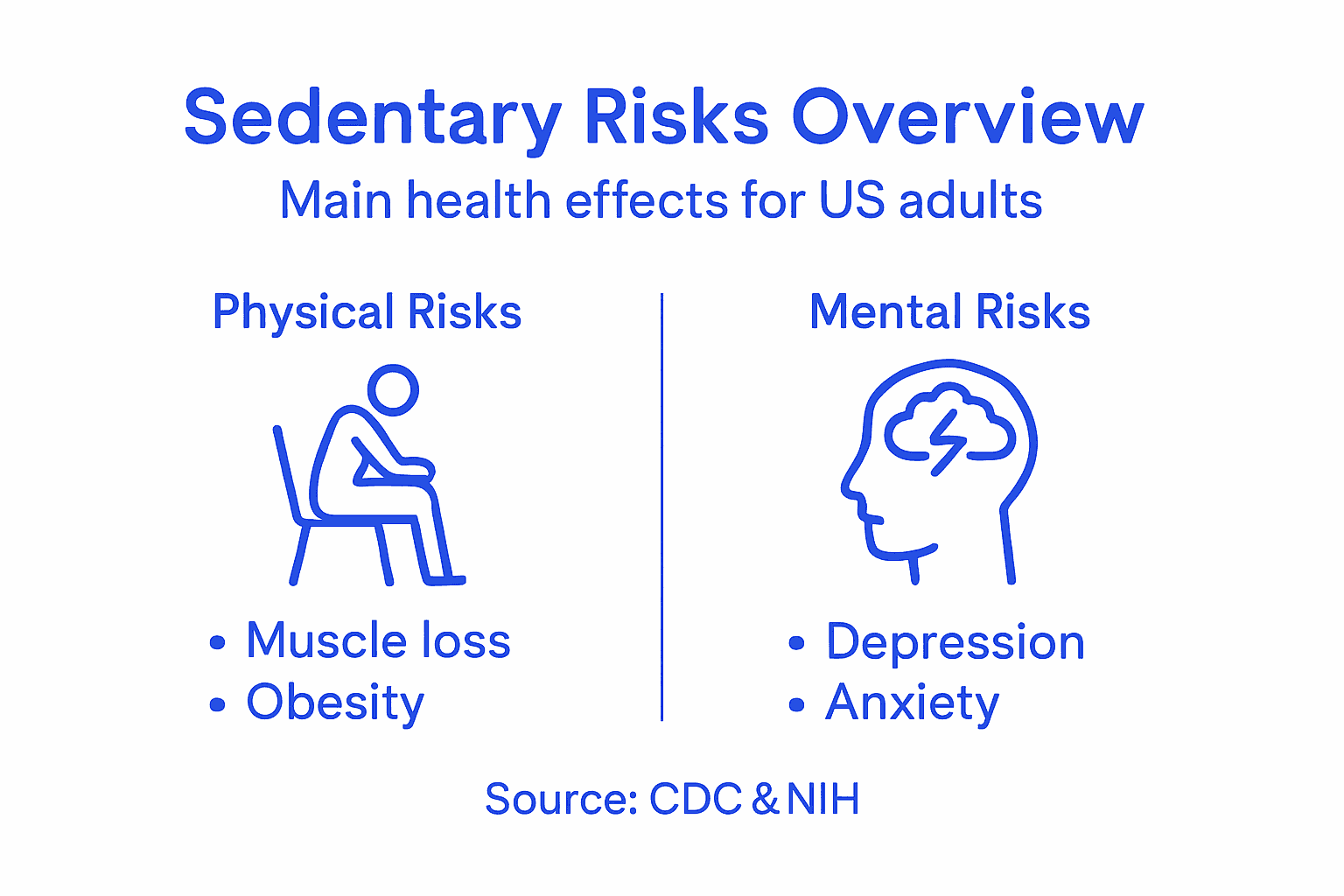
Sedentary lifestyles present profound risks that extend far beyond physical appearance, impacting both physiological and psychological well-being. Occupational sedentary behavior significantly increases mental health risks, creating a complex web of health challenges for modern adults.
The physical health risks associated with prolonged sitting include:
- Cardiovascular Problems:
- Increased heart disease risk
- Higher blood pressure
- Reduced circulation
- Elevated cholesterol levels
- Metabolic Disorders:
- Insulin resistance
- Higher diabetes risk
- Weight gain
- Reduced metabolic efficiency
- Musculoskeletal Issues:
- Muscle weakness
- Poor posture
- Chronic back pain
- Reduced flexibility
Sedentary behavior correlates with increased depression risks, particularly among younger populations.
Mental health consequences emerge through multiple interconnected pathways, including reduced physical activity, social isolation, and neurochemical changes triggered by prolonged inactivity.
The psychological implications are equally concerning. Continuous sedentary behavior can lead to increased anxiety, reduced cognitive function, and diminished overall emotional resilience.
The body-mind connection means that physical stagnation directly impacts mental performance and emotional stability.
Compare the effects of prolonged sitting on physical versus mental health:
| Impact Type | Example Effects | Long-Term Consequences |
|---|---|---|
| Physical | Weak muscles, slowed metabolism | Higher disease and mobility risk |
| Mental | Lower mood, reduced cognition | Increased anxiety and depression |
This table helps clarify the distinct yet interconnected risks from extended sedentary periods.
Pro tip: Implement a daily movement routine that includes at least 30 minutes of moderate activity to counteract sedentary health risks.
Obesity and chronic disease connections
Obesity functions as a complex gateway to numerous chronic health conditions, creating a cascading effect of physiological complications.
Sedentary behavior significantly contributes to obesity-related chronic disease risks, transforming what seems like a simple lifestyle choice into a serious medical challenge.
The interconnected chronic disease risks include:
- Cardiovascular Complications:
- Heart disease
- High blood pressure
- Stroke risk
- Arterial inflammation
- Metabolic Disruptions:
- Type 2 diabetes
- Insulin resistance
- Metabolic syndrome
- Hormonal imbalances
- Cancer Associations:
- Increased cancer risk
- Breast cancer
- Colon cancer
- Endometrial cancer
Prolonged occupational sitting increases mortality risks, highlighting the profound impact of sedentary behavior.
The biological mechanisms involve complex interactions between reduced physical activity, fat accumulation, and systemic inflammation.
The relationship between obesity and chronic diseases is cyclical.
Excess weight creates inflammatory environments that further compromise metabolic function, creating a self-reinforcing pattern of declining health. Each additional pound increases the likelihood of developing multiple chronic conditions.
Pro tip: Integrate 30 minutes of moderate physical activity daily and monitor your body mass index to interrupt the obesity-chronic disease progression.
Practical strategies to reduce sitting time
Movement integration is crucial for combating the health risks associated with prolonged sitting. Workplace solutions can dramatically reduce sedentary behaviors, offering practical approaches to increase daily physical activity.
Effective strategies for reducing sitting time include:
- Workplace Modifications:
- Use standing or adjustable desks
- Hold walking meetings
- Take short movement breaks
- Use stairs instead of elevators
- Technology-Assisted Solutions:
- Set hourly movement reminders
- Use fitness tracking apps
- Create standing work stations
- Use balance boards while working
- Personal Habit Changes:
- Walk during phone calls
- Do light stretches between tasks
- Use commercial breaks for movement
- Practice active sitting techniques
Small movement breaks provide significant health benefits, transforming sedentary patterns into opportunities for increased physical activity. Consistent, short interruptions in sitting time can substantially improve metabolic health and overall wellness.
Implementing these strategies requires a multifaceted approach. Start with small, manageable changes and gradually build more movement into your daily routine. The goal is creating sustainable habits that naturally reduce sedentary time without feeling overwhelming.
Pro tip: Start by adding just 5-minute movement breaks every hour and gradually increase duration and intensity of physical activity.
Take Control of Your Health by Breaking Free from a Sedentary Lifestyle
Are you ready to fight back against the dangers of prolonged sitting discussed in the article Sedentary Lifestyle Risks – How It Impacts US Adults.
The challenges of increased heart disease risk, metabolic disruption, and mental health struggles can feel overwhelming but you do not have to face them alone.
Discover effective strategies and supportive resources on our Sedentary Lifestyle – LeanAndFit page where we focus on natural lifestyle adjustments to boost your energy and improve your wellbeing

Start transforming your daily habits today to reduce risks related to Heart Disease – LeanAndFit and other chronic conditions Our practical guidance empowers you to make small changes that lead to big results.
Visit https://leanandfit.info and join a community committed to helping you stay active healthy and strong The time to act is now Take the first step toward a more vibrant life.
Frequently Asked Questions
Q-1: What are the most serious health risks associated with a sedentary lifestyle in US adults?
A-1: A sedentary lifestyle — characterized by prolonged sitting and minimal physical activity — can contribute to a range of serious health problems in US adults.
These include increased risk of metabolic dysfunction (such as insulin resistance and type 2 diabetes), cardiovascular disease, unhealthy weight gain, and poor circulation. When muscles remain inactive for extended periods, the body’s ability to manage blood glucose and lipids declines, increasing chronic disease risk.
Emerging evidence also links sedentary behavior with cognitive decline and mood disorders, illustrating that long-term physical inactivity health consequences in American adults go well beyond simple weight gain.
Q-2: How does sitting for long periods affect metabolic health even when people exercise regularly?
A-2: Extended sitting has metabolic effects that are partially independent of formal exercise. Even among adults who meet recommended workout guidelines, long periods of uninterrupted sitting can reduce the effectiveness of muscle glucose uptake and lower metabolic rate.
This means blood sugar regulation worsens and triglyceride levels can rise simply due to inactivity between bouts of exercise.
This phenomenon highlights the importance of reducing overall sedentary time and adopting metabolic impacts of extended sitting despite regular exercise to improve overall metabolic health.
Q-3: Why does a sedentary lifestyle increase the risk for heart disease in adults?
A-3: Prolonged physical inactivity contributes to poor cardiovascular function by promoting higher blood pressure, elevated LDL (“bad”) cholesterol, and reduced arterial flexibility.
When the heart and blood vessels are underutilized due to low physical demand, the body’s ability to circulate blood efficiently declines. This creates an environment that accelerates plaque buildup and increases risk of heart attack or stroke.
The correlation between sedentary behavior and cardiovascular health decline in sedentary adults is becoming increasingly clear in public health data.
Q-4: Can a sedentary lifestyle affect mental health in US adults?
A-4: Yes. Extended inactivity is associated with higher rates of anxiety, depression, and decreased cognitive clarity.
Physical movement stimulates the release of endorphins and supports neuroplasticity, both of which contribute to emotional resilience and mental fitness.
When daily movement is limited, these benefits are lost, and stress responses may become heightened.
Consequently, addressing mental wellbeing risks of prolonged inactivity is crucial in any discussion about sedentary lifestyle consequences.
Q-5: How can adults reduce sedentary lifestyle risks during typical workdays?
A-5: Minimizing sedentary time involves small but consistent actions: incorporate standing or walking breaks every 30–60 minutes, use standing desks or laptop stands, take stairs instead of elevators, and schedule short activity bursts after meals.
Breaking up sitting time with light movement improves circulation, enhances glucose metabolism, and reduces muscle stiffness.
Adopting daily movement habits to counteract risks of inactive lifestyle not only supports physical health but also improves energy levels and overall quality of life.
Recommended
- How Prolonged Sitting Impacts Metabolic Health? – LeanAndFit
- How Sedentary Behavior Reduces Calorie Expenditure? – LeanAndFit
- How to Recognize the Role of Urbanization in Contributing to Obesity? – LeanAndFit
- Is Your Office Chair Making You Obese? The Shocking Truth – LeanAndFit
- Mental Health Programs: People Navigate Challenges With Adult
- Why trust leanandfit.info?
- For educational purposes only