

Finding the time to work out is a constant struggle for American women who want to lose weight and keep themselves healthy.
High Intensity Interval Training, otherwise known as HIIT, is one such revolutionary metabolic equivalent that has proven to be effective and time saving.
Not only can this vigorous workout regimen help you shed those extra pounds, it can also be incorporated into the average female’s daily life in spite of a busy schedule
Learn more about this new way to get in shape and find out what’s true and what’s not when it comes to HIIT workouts.
Table of Contents
- HIIT Training Defined And Common Myths
- HIIT Types And Popular Workout Formats
- How HIIT Burns Fat And Enhances Fitness
- Key Health Benefits And Everyday Applications
- Risks, Common Mistakes, And Safety Tips
Key Takeaways
| Point | Details |
|---|---|
| HIIT Is Versatile | HIIT can be adapted for various fitness levels, making it suitable for everyone from beginners to elite athletes. |
| Short Workouts, Big Benefits | HIIT can deliver significant fitness improvements in less than 30 minutes, challenging the idea that longer workouts are always better. |
| Focus on Form and Safety | Proper technique and gradual progression are crucial to avoid injuries and maximize the effectiveness of HIIT sessions. |
| Regular Assessment and Adaptation | Progressively increase workout intensity and complexity while being mindful of your body’s responses to training. |
HIIT Training Defined and Common Myths
High-Intensity Interval Training (HIIT) is a concept that can revolutionize the way you work out.
It can take you from an average gym-goer to a well-toned athlete.
The American College of Sports Medicine defines HIIT as a form of interval training that involves alternating intervals of high-intensity work and low-intensity work.
These workouts can be in various formats, for instance,
tabata which is 20-seconds of maximum effort and 10-seconds rest for 4-minute workouts or circuit training is multiple exercise stations with minimal rest in between or even sprint interval training.
A common belief about HIIT is that it is exclusively for advanced fitness enthusiasts, but this is far from the truth because various modifications can be made for each level.
Another popular myth regarding HIIT is that the workouts are too long, but again, this is untrue because most formats are under 30-minutes.
Even if you are a beginner in fitness, you can start with more rest time and minimal intensity and advance as your cardiorespiratory fitness improves.
HIIT is a phenomenal tool for improving metabolic health and physical performance.
According to Harvard’s nutrition source, HIIT workouts call for you to work out at least 80 percent of your maximum heart rate.
You can achieve a significant improvement in athletic performance, increase your body’s ability to utilize glucose, and reduce body fat with these workouts.
Benefits of HIIT Training:
- Increases metabolic rate
- More calories are burned during a workout than during regular physical activity
- Improves cardiovascular health
- Requires little or no equipment.
- You can build a great workout anywhere.
- All you need is the bodyweight.
Potential Drawbacks:
- High-intensity workouts increase the risk of improper form leading to injuries.
- People with a preexisting medical condition should consult their doctor before doing this type of workout.
- High-intensity training is not recommended for people with preexisting medical conditions.
- It needs a higher level of determination and discipline to stick to a high-intensity workout schedule.
Pro tip: To avoid injuries and develop a solid HIIT foundation, start with short and easy high-intensity interval training and gradually progress to more challenging levels.
HIIT Types and Popular Workout Formats
High Intensity Interval Training: Workouts of Different Levels Essay
There is a wide range of high-intensity interval training for people with different levels of experience and fitness goals.
Exercises can be adjusted to any preferences as there are numerous variations, which differ in rules and specifics.
Most popular workout formats include:
- Tabata (20s + 10s) x8 = 4 min
- 30:30
- 30:20:10 (interval workout)
- Sprint intervals (high-intensity cardio)
- Circuit training (station to station with limited rest)
Tabata is probably the most popular workout protocol as it was developed by a Japanese scientist Izumi Tabata and has specific rules and recommendations.
This protocol highlights the importance of intervals, when one has to give 100% effort followed by a short break to recover to 50-60% of the initial level to be ready to perform another round.
A work interval is 20 seconds, and a rest is 10 seconds – 8 rounds are performed during 4 minutes.
As it was mentioned before, 30:30 is another popular option, which implies an interval character of each set.
It states that in case of 30s intervals, one has to work at 100% effort followed by another 30 seconds of moderate effort.
Second important point is that Tabata’s protocol is appropriate for dynamic exercises requiring a quick burst of power.
Expert Tip: All programs are built on the same principle, which implies that they are constructed following the rules of short intervals of high-intensity and low-intensity.
Here is a concise comparison of popular HIIT workout formats and their primary characteristics:
| Format | Interval Structure | Intensity Focus | Typical Duration |
|---|---|---|---|
| Tabata | 20 sec work : 10 sec rest | Max effort | 4 minutes |
| 30:30 Model | 30 sec work : 30 sec rest | Moderate to high | 15–25 minutes |
| 30-20-10 Interval | 30/20/10 sec decreasing rest | Increasing with each set | 10–20 minutes |
| Sprint Intervals | 10–60 sec sprint : long rest | Explosive maximum | 10–20 minutes |
| Circuit Training | Multi-exercise, short rest | Varied, whole-body | 20–30 minutes |
Exercise Options for HIIT Workouts:
The Best HIIT Exercises:
- Bodyweight exercises (push-ups, burpees)
- Running and sprinting
- Cycling
- Rowing
- Jump rope
- Kettlebell workouts
Key Elements of HIIT Training:
- Individualized intervals
- Short high-intensity intervals
- Progressive difficulty
- Correct technique
- Focus on listening to your body
HIIT workouts are designed to challenge the participant, however, they can be easily modified to suit individual preferences and needs. Individuals have to start with short intervals and gradually increase the difficulty as their fitness level improves.
How HIIT Burns Fat and Enhances Fitness?
High-Intensity Interval Training is a form of training that is extremely effective for health improvement. The energy expenditure during such exercises creates favorable conditions for fat loss that are permanent even after the exercise is over.
Main advantages of High-Intensity Interval Training for fat loss:
- Elevated metabolic rate due to higher energy expenditure
- Increased excess post-exercise oxygen consumption
- Improved fat oxidation rates
- Enhanced insulin sensitivity
- Improved muscle function as well as increased muscle mass
- HIIT workouts are effective because they create favorable conditions for fat loss in the human body.
Excess post-exercise oxygen consumption or EPOC is a physiological phenomenon described as oxygen debt that occurs after high-intensity exercise.
During such workouts, the body enters a heightened state and requires more oxygen to break down stored fats during recovery.
This results in higher calorie expenditure during a workout and additional calorie loss after the workout during the recovery period.
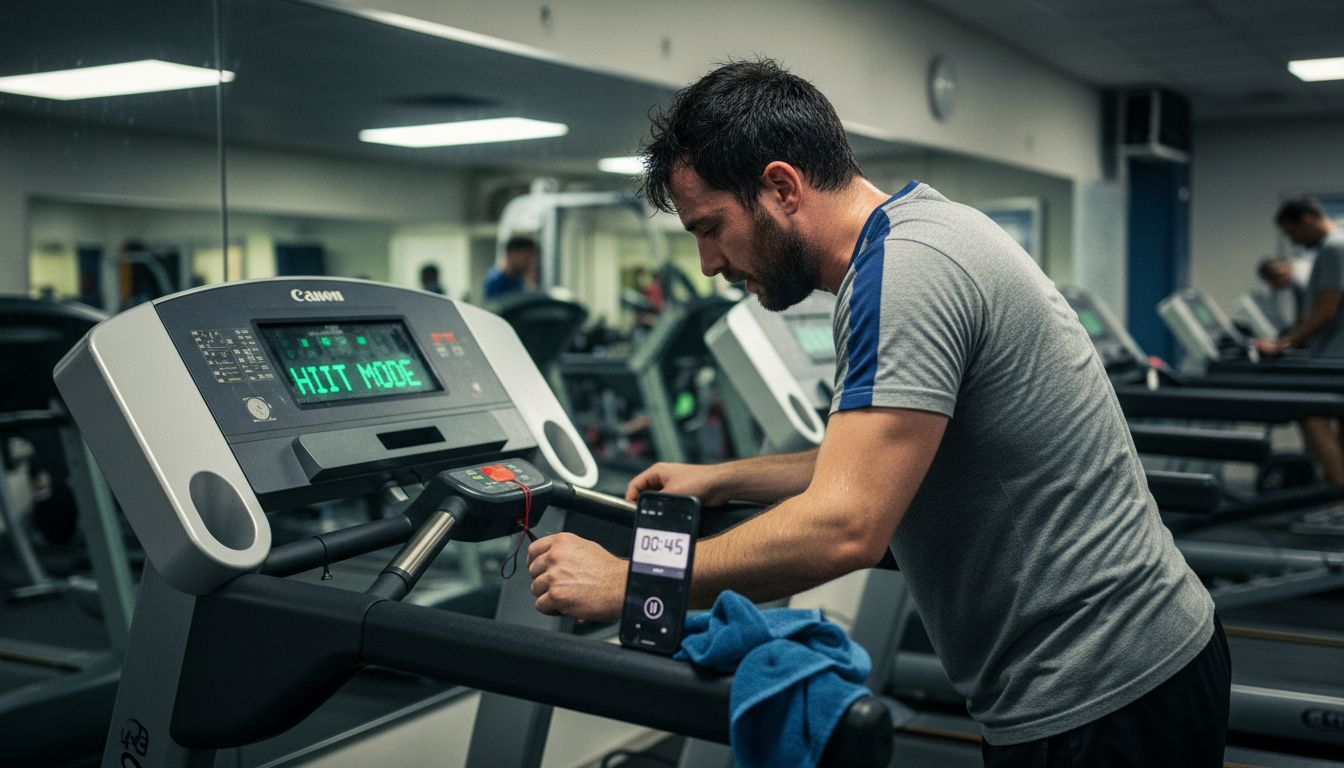
Scientific studies indicate that HIIT workouts can cause a variety of physiological reactions beyond the simple burning of calories.
The high-intensity interval training described below can lead to an increase in muscles’ growth hormones, improve aerobic and anaerobic performance, and even allow the body to burn more fat at rest.
Physiological Benefits of HIIT:
- Increases the stroke volume of the heart,
- improves oxidative capacity of muscles,
- increases fat oxidation,
- causes muscles to repair,
- improves the overall efficiency of the cardiovascular system.
HIIT can transform the body by causing it to burn calories even when you are resting, long after you have finished exercising. Therefore, it is recommended to include two or three of these high-intensity workouts per week in the beginning.
Key Health Benefits and Everyday Applications
High-Intensity Interval Training (HIIT) is associated with numerous health benefits, which go far beyond the advantage of traditional approaches to workout.
The health benefits of appropriate physical activity are undeniable, while the opportunity to address specific goals by making the right choice while exercising is tempting for everyone who wants to improve their well-being.
In this sense, the benefits of high-intensity interval training are numerous and attractive, including the fact that this type of workout can be adapted to the individual needs of each person.
List of health benefits:
• decrease in body fat,
• improved cardiovascular function,
• improvement of the metabolic process,
• development and strengthening of muscles,
• increased energy levels,
• healthy aging.
Adaptability is another advantage of this training, which makes it beneficial for people of all categories. Unlike a standard workout program, HIIT exercises can be modified to meet the individual requirements of each person.
Everyday Applications for Different Populations
- Busy young professionals
- older people
- athletes
- people trying to lose weight
- individuals with a lifestyle that does not allow for much physical activity
Research has shown that HIIT workouts are appropriate for older people since they are beneficial when the workout is modified to the individual’s needs.
Proper warm-ups and form during the workout will reduce the possibility of injuries and have a positive effect on the body. HIIT training is a great way to improve general health and fitness levels regardless of age or lifestyle.
Pro tip: Consult with a fitness professional to design a personalized HIIT program that matches your current health status and fitness goals.
Risks, Common Mistakes, and Safety Tips
High-Intensity Interval Training (HIIT) is an extremely effective method of exercising, but it can also be quite dangerous if one ignores safety precautions.
A variety of recommendations exist to promote safety while participating in this activity in order to achieve maximum benefits.
The potential dangers presented by HIIT may include such injuries as sprains, strains, and damage to joints.
Moreover, one may experience overtraining and consequent burnout, as well as excessive fluid loss.
In addition, improper form leads to increased danger, and the training loads may also be too high for some people, presenting a danger to the cardiovascular system.
There are also some common mistakes related to exercising that should be avoided while performing HIIT.
The most common mistakes consist of exercising without a warm-up, incorrect form, and overtraining. These issues are detrimental to one’s training and may lead to injuries if not corrected.
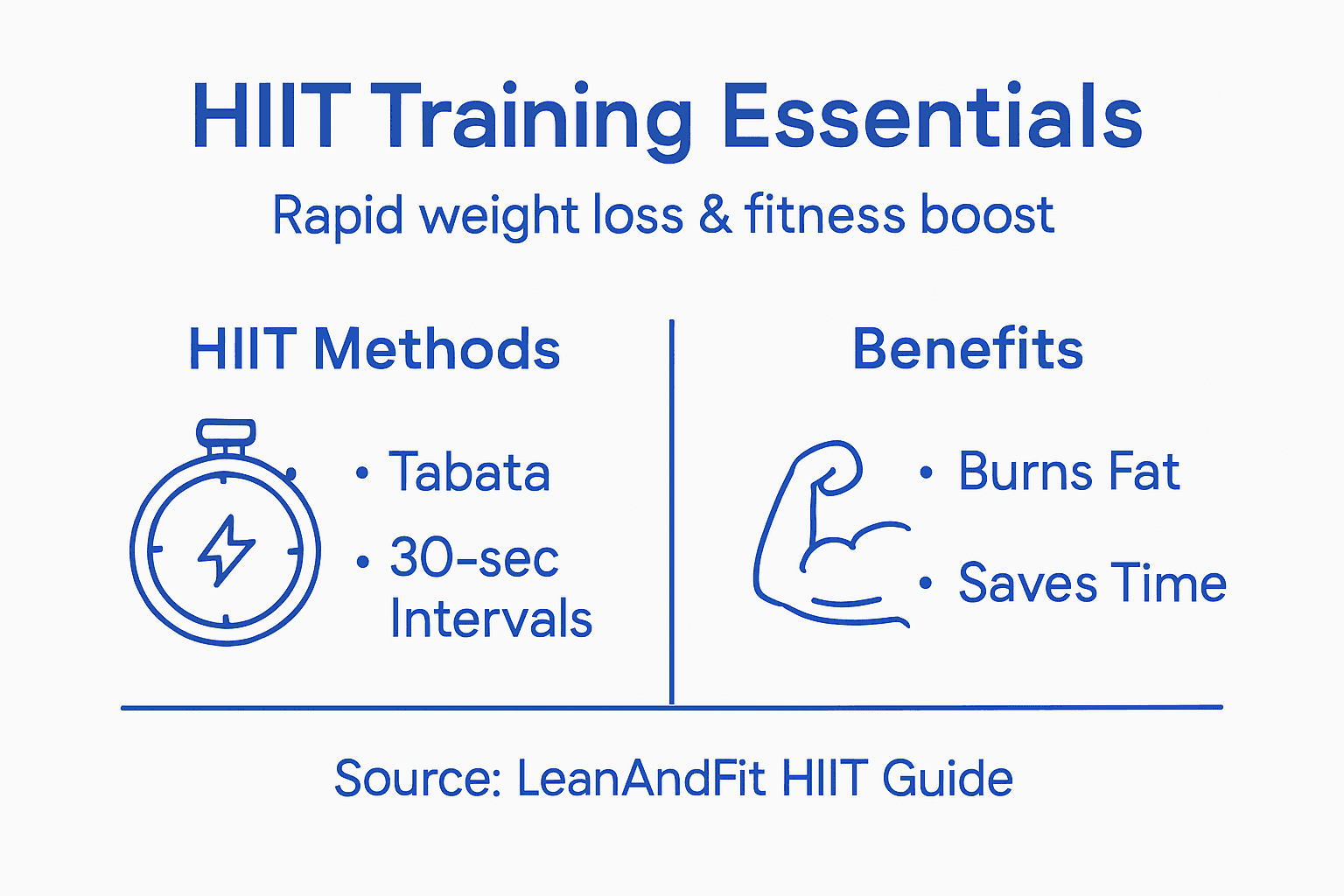
The following table summarizes common HIIT mistakes and how to prevent them for safer workouts:
| Common Mistake | Impact on Training | Prevention Strategy |
|---|---|---|
| Skipping warm-up | Higher injury risk | Start with 5–10 minute warm-up |
| Poor exercise form | Joint and muscle strain | Focus on technique, not just speed |
| Overestimating ability | Rapid exhaustion, burnout | Modify intervals to fitness level |
| Inadequate recovery time | Less effective sessions | Schedule rest days between HIIT |
| Ignoring hydration | Decreased performance | Drink water before, during, and after |
Key Safety Strategies for HIIT:
- Begin with low-impact modifications
- Focus on correct techniques
- Allow for adequate recovery time
- Hydration is essential
- Always listen to your body
- Consultation with healthcare professionals
For older people and those with health issues, it is essential to make appropriate modifications and consult a doctor before attempting any high-intensity interval training (HIIT). In turn, the talk test is a good way to ensure that the selected intensity is not too high for one’s current level of fitness.
Moreover, safety during HIIT is achieved through a combination of proper warm-up and cool-down, as well as listening to one’s body.
Pro tip: A proper warm-up and cool-down are necessary prior to and following HIIT to reduce the risk of injuries.
Unlock Rapid Weight Loss and Fitness Gains with Expert HIIT Guidance
Looking for an effective workout that would help you achieve great results in the shortest possible time?
This article about HIIT Training will tell you how interval training can help you burn fat, increase your metabolism, and improve your heart health.
If you are an active person but face obstacles such as a lack of time or the fear of getting injured, then this LeanAndFit resource will offer you credible solutions to begin your journey to a healthier life.
Explore different workout plans and get valuable tips to make the most of your training by visiting our HIIT Sessions – LeanAndFit and Cardio Intervals – LeanAndFit sections.
If you enjoy sports and want to do workouts outside, then you are welcome to our Outdoor Workouts – LeanAndFit section.
So, what are you waiting for?
Pay a visit to the above mentioned LeanAndFit sections and equip your body with healthy habits that make a difference!
Frequently Asked Questions
Q-1: Why does HIIT feel harder than longer workouts, yet appears to get results faster?
A-1: The very nature of HIIT workouts is that they challenge the heart and lungs to the maximum extent possible, and they cause the muscles to experience an extremely intense workload.
Although HIIT workouts are shorter and more intense, the afterburn effect that they produce increases the metabolic rate.
Q-2: Can I actually lose weight with only a 15-20 minute HIIT workout?
A-2: You can definitely lose weight with only 15-20 minute HIIT workouts, as long as they are of a sufficiently high intensity.
HIIT workouts can be done anywhere from 10 to 60 minutes. They primarily differ in the amount of calories burned during the workout. However, they should also be supported by a healthy diet.
Q-3: Why do I feel exhausted after a HIIT workout, but then experience a wave of energy?
A-3: Exhaustion after a HIIT workout is normal, as your body is still trying to return to homeostasis.
However, once that happens, the body releases endorphins, which cause the wave of energy that you feel. In fact, that is why many people continue to engage in HIIT.
Q-4: Is HIIT only for those who are already fit and healthy?
A-4: HIIT can be adapted to work anybody, even those who have just begun their fitness journey.
The only difference is that less intense exercises will have to be used for those who are just beginning their fitness journey.
Q-5: Why do people seem to plateau quickly when it comes to HIIT?
A-5: People plateau quickly when they stop challenging themselves.
HIIT workouts must be changed often in order to achieve better results, as the body quickly adapts to the same exercises.
Q-6: Can doing HIIT too frequently actually hurt weight loss?
A-6: HIIT should not be done every day because it suppresses the body and creates the need for recovery days.
Working out too frequently can lead to overtraining. A steady and sustainable workout plan is better than extremely intense workouts that leave you drained.
Q-7: What is the biggest mindset change one must experience to be successful with HIIT?
A-7: The biggest change is the understanding that your time is valuable. It will help you become more focused and more determined.
Recommended
- How to Use High-Intensity Interval Training (HIIT) for Fat Loss? – LeanAndFit
- Is HIIT the Secret to Getting Lean and Fit or Just Overhyped? – LeanAndFit
- Why Tabata HIIT Workout Beats All for Getting Lean and Fit? – LeanAndFit
- How to Get Lean and Fit with Sprint Intervals? – LeanAndFit
- 7 Migliori Software Contabili per Studi di Fitness nel 2026
- Why Trust Us?
- For educational purposes only