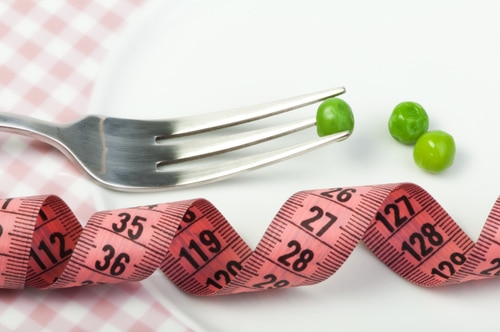
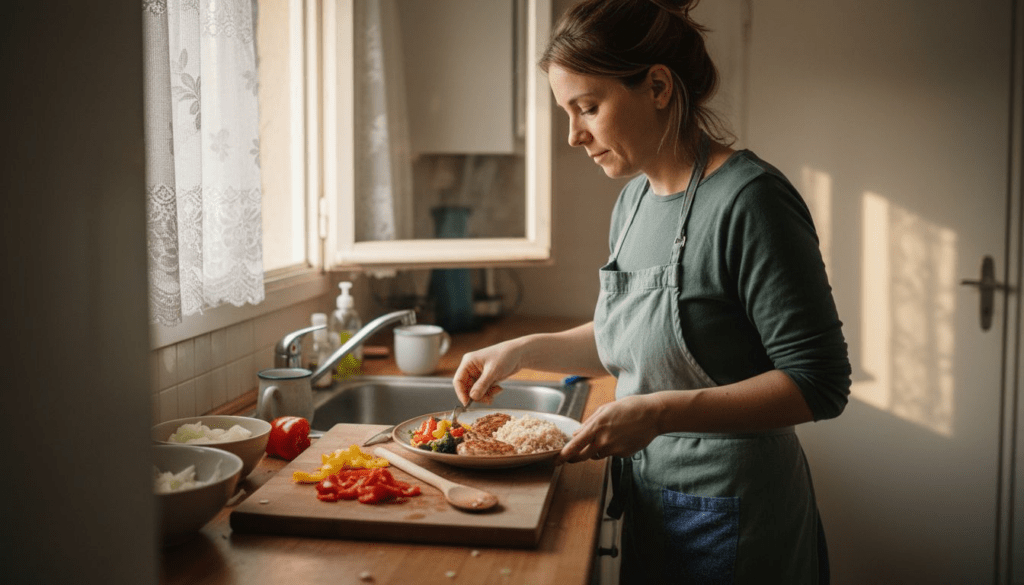
Are you looking for low calorie meals for weight loss naturally???
Feeling discouraged about your progress on the scale can often be due not to a lack of effort but rather the way you assemble your meals
Massive portions, lack of variety, and the use of high-calorie ingredients can make you unaware of how much you are actually eating.
You will be surprised to know that there is no need to make a complete overhaul of your diet in order to make meaningful changes.
This article will give you some practical tips that can help you make healthier and more delicious meals that are lower in calories. You will learn more about how to make the most out of every calorie, as well as how to add variety and make the most out of every bite.
Each tip is easy to follow and can help you make small but meaningful adjustments to your current diet.
You will learn how to prepare more meals that are not only more healthy but also more enjoyable so you can get the most nutrition and satisfaction from every bite.
Table of Contents
- Understand Portion Control With Low Calorie Meals
- Choose Lean Protein Sources For Fullness
- Incorporate Colorful Vegetables For Nutrients
- Use Whole Grains For Lasting Energy
- Swap Out High Calorie Ingredients Smartly
- Prepare Quick Low Calorie Breakfast Ideas
- Enjoy Filling Low Calorie Dinner Recipes
Quick Summary
| Key Message | Explanation |
|---|---|
| 1. Control Portion Sizes | Manage portion sizes using visual cues to avoid overeating and achieve weight loss. |
| 2. Prioritize Lean Proteins | Choose lean protein sources to keep you fuller for longer and avoid snacking. |
| 3. Incorporate Colorful Vegetables | Eat a variety of colorful vegetables for nutrients and low calories, enhancing satiety. |
| 4. Use Whole Grains | Swap refined grains for whole grains to maintain stable energy levels and reduce cravings. |
| 5. Smart Ingredient Swaps | Make simple ingredient substitutions to cut calories without sacrificing taste in meals. |
1. Understand Portion Control with Low Calorie Meals
Portion control is vital to the strategy of low calorie meals for weight loss.
It doesn’t matter how healthy your diet is, if you are eating a big enough portion, you stand to gain more calories than you would if you were to eat less.
The upside to this is, learning how to control your portion sizes is simple, and once you get used to it, eating proper-sized meals becomes easy.
When large portions are provided in restaurants or homes, people tend to eat more than they would if they ate modest portions.
Consuming an excessive amount over and over again is likely to lead to obesity.
A person’s desire to eat is influenced greatly by the look of the dish in front of them.
Serving size has changed dramatically within the last 50 years here in America, and this greatly contributes to obesity and other health problems.
Portion control helps moderate a person’s diet in relation to their activity level.
By learning to measure out a proper portion, one can keep themselves from consuming too much food and too many calories.
There’s no need to break out the measuring tape, as there are other simple ways to keep track of serving sizes. Compare a serving size of vegetables to a baseball, or the size of a deck of cards.
By learning to estimate serving sizes this way, a person can keep track without having to invest in a lot of new kitchen equipment.
The hands are another excellent way of measuring serving size. Through the process of eating too much food and learning from it, your body will teach itself how much food makes you feel comfortably full. Your brain will recognize when you eat too much, and it will take time to readjust your ideal feeling of fullness if you continue to eat the same way.
Calories-in should equal calories-burned for a healthy lifestyle.
By practicing moderation with your meals and feeding your body just the right amount of nutrition, you allow yourself to eat more often without feeling guilty.
The first step to low calorie meals for weight loss is picking a meal this week and practicing the portion estimation techniques you have learned in this article. You’ll be a pro at it once you put a little practice in!
Smart Tip: A good tip to remembering your portion sizes is to use smaller plates and bowls at mealtimes. This helps to keep the sizes appropriate without feeling deprived of food.
2. Choose Lean Protein Sources for Fullness
Protein is absolutely essential when you are on a diet. First of all, the protein-rich foods keep you from getting hungry too fast. That way, you can resist the temptation to have a snack. Secondly, the proteins make you more satiated, so you cannot eat as much as you would normally eat at a meal.
Proteins should constitute a third of your daily diet. You want to eat skimmed meats, such as, chicken breast, turkey and fish. They have plenty of proteins but unlike red meats they do not have much saturated fat.
Proteins contained in legumes and other plant foods help keep you full for long. Moreover, eating plant proteins is good for the digestive system. When you are on a weight loss diet, you need to eat lean meat and low fat dairy products. That allows your muscles to receive essential amino acids while you are on a calorie-restricted diet.
The American Heart Association advises varying protein-rich food throughout the day. Have chicken for lunch, fish for dinner and a salad with beans for the next lunch. It helps you to eat different foods, so that they do not get boring.
It also enables you to take different proteins that are beneficial for your body. Having a variety of proteins also prevents overeating. Varying the foods you eat also reduces the number of calories you consume. Having the same high-protein food twice is not healthy.
It is important that you include high-protein food at each meal.
The proteins in farm eggs and in Greek yogurt help you to sustain your blood sugar level. A high-protein breakfast can keep you from getting too hungry soon after. After a protein-rich breakfast, you can resist the call of snacks between breakfast and lunch.
When you have plenty of protein at lunch, you will be less tempted to skip dinner. Having enough proteins makes sure that the portion of food you eat at dinner has enough lean meat in it for satiation.
When you eat vegetarian meals you need to pay extra attention to how your body gets proteins. It is not enough to have just a dish or two. It requires a combination of plant proteins. Beans, for example, contain some of the proteins needed by the human body.
Eating different plant-based foods provides the body with all the proteins it needs. You can make a meal by combining a couple of low-fat, high-protein foods. In order to lose weight, you will need to restrict calories.
Smart Tip: When grilling or baking your meat, you want to limit the amount of fats and oils. It can reduce the calories of the meal to a minimum while keeping it delicious and satiating.
3. Incorporate Colorful Vegetables for Nutrients
Colorful vegetables can help you eat a plentiful serving for fewer calories, and deliver diverse, concentrated nutrition your body needs to drop fat. Vegetables are a powerhouse of nutrients, providing disease-fighting antioxidants, fiber, and essential vitamins and minerals.
Aim to eat a variety of fruits and vegetables, particularly of different colors
When you eat more vegetables in every meal and snack, your body gets the fuel it needs for fat loss. You also decrease hunger, because veggies add volume to your food, without adding many calories. Eating a variety of different colored vegetables on the same day is also good for your health.
Vegetables of different colors have different nutrients
Red colored vegetables such as tomatoes contain lycopene, an antioxidant that reduces the risk of heart disease and cancer.
Orange and yellow vegetables, such as carrots and sweet peppers are good for eyesight. Dark green leafy vegetables are full of antioxidants, which rid the body of free radicals.
Purple vegetables contain anthocyanins, which are powerful antioxidants that fight cancer. Veggies offer plenty of good nutrients for fat loss.
The best part about eating a rainbow of fruits and vegetables is that your meals don’t become monotonous,
so you are less likely to throw in the towel on your diet. Substitute romaine lettuce for spinach. Or use another variety of lettuce and throw in some red peppers. You can also include purple cabbage and orange carrots in your salad.
By eating different colored vegetables, you give your body a variety of nutrients that work together to promote fat loss.
Having a variety of veggies also has a beneficial effect on your overall health.
You can start today by simply trying to eat at least one green vegetable with a serving of red tomatoes, orange carrots, and purple onion. If you have more time, you could prepare a stir-fry with broccoli, bell peppers, snap peas, and mushrooms.
Keep in mind that buying frozen vegetables is a convenient way to eat a rainbow of veggies.
These may be just as nutritious as fresh, and you will save money and time this way. Moreover, you’ll have a supply of veggies ready to eat, so that you won’t end up skipping a meal due to lack of time to prepare it.
4. Use Whole Grains for Lasting Energy
While whole grains are the opposite of the energy crash caused by refined carbs, but refined carbs can give you an energy crash an hour after you eat them.
They will leave you feeling hungry again.
Whole grains give you energy that sustains you through the day.
When it comes to losing weight, this is important.
Whole grains are comprised of three parts: the bran, the germ and the endosperm.
Refined grains have had the bran and the germ removed.
That’s why whole grains are so great for digestion; they have fiber in them.
Fiber helps with digestion and keeps you feeling full longer.
This keeps your energy levels stable.
Another thing that whole grains can do for you when you’re trying to lose weight is give you the nutrients you need to feel good.
Brown rice has B-vitamins, that help your metabolism.
It also has minerals like magnesium and antioxidants to reduce stress and act as an anti-inflammatory.
They can help you in your quest to lose weight.
Switching from using mainly refined grains as a staple in your diet to using whole grains is an easy way to improve your diet.
You can substitute whole wheat bread for white bread, whole wheat pasta for regular pasta and brown rice for white rice.
If you eat cereal for breakfast instead of white bread try eating oatmeal.
Instead of eating a sugary cereal for breakfast, you can eat healthier and have more energy.
By just using these simple changes in your diet, you can reduce your caloric intake and feel full longer.
Using whole grains instead of refined grains in the foods you eat can be the difference between eating a snack at three in the afternoon or waiting until dinner.
It’s important to make smart choices when shopping and when cooking to lose weight, but it’s also very affordable.
To make breakfast you can buy a small amount of oatmeal and have enough for several meals.
You can make many meals with brown rice, and when added to a salad with some protein, it will fill you up for a reasonable price.
One healthy, filling meal with plenty of nutrients for under three hundred calories can be made with brown rice, some veggies and some protein.
To lose weight you don’t have to spend a lot of money on healthy foods.
Smart Tip: Make smart choices when buying food and always check the label to see if the whole grain is listed as an ingredient first.
5. Swap Out High Calorie Ingredients Smartly
One of the easiest ways to reduce calorie intake without making serious sacrifices in your diet is simply substituting certain ingredients with healthier ones. This way you are not limiting yourself to eating specific foods and you are still able to enjoy the dishes you love.
Many simple swaps may save you several hundreds of calories each day.
Foods that are especially high in calories may be found in the dairy aisle.
For instance, you may substitute sour cream with nonfat Greek Yogurt or use low-fat cheeses instead or higher-fat varieties.
Opt for fat-free or low-fat dairy products which would have reduced amounts of cholesterol or sodium. Your tastebuds might get used to the new flavors and textures within a couple of weeks.
Baked foods usually call for flour and sugar and here some healthy swaps could be made as well. When making muffins, pancakes or cookies you could try replacing white flour with whole wheat flour.
In certain cases, it may even be possible to substitute certain amount of flour with ground oats or almonds. Other than being lower in calories, oats and nut flours would also add some fiber and healthy fats to the mixture.
A similar strategy could be applied when buying red or ground meat. Wherever your recipe asks for minced meat, you could try adding half a cup or lentils or black beans instead. They would enrich your dish in calories and fiber, however, not nearly to the same extent as meat would. On the other hand, you would not be making a serious sacrifice in terms of nutrition.
It is even possible to have meatless meals once or twice a week.
By substituting fat for water, you may also significantly reduce your calorie intake each time you make a dish that requires cooking in fat. Moreover, you would reduce the amount of saturated fats and cholesterol in your meals as well.
Most substitutes only require a few changes to a recipe, however, it may take a bit of practice to pick the right ingredients. When doing that, go slow and only experiment with one or a few ingredients at a time, so that you always know what works and what doesn’t.
Finally, keeping healthy substitutes at hand will greatly help you in avoiding high-calorie ingredients at all.
6. Prepare Quick Low Calorie Breakfast Ideas
Breakfast sets the tone for the day.
Without it, you may find yourself famished by mid-morning, causing you to reach for unhealthy snacks and overeat at your next meal. A healthy breakfast can help regulate blood sugar, curb appetite and boost metabolism.
The best part is that they usually take just five minutes to prepare.
Oatmeal is your friend. It is very healthy and filling.
A bowl of oatmeal with berries and almonds can be prepared faster than you can get a coffee in the morning.
Oatmeal will keep you satiated until noon. It has fiber, vitamins and iron. The fiber in oatmeal prevents the spike and fall in your blood sugar, which can make you feel hungry again shortly after eating.
You can portion out your oatmeal ahead of time to save yourself even more time. Try steel cut oats, rolled oats or instant oats. Each kind is healthy, so you can eat them with different berries and spices so that you wont get bored of them.
Eggs are also great for breakfast.
For example, two hard-boiled eggs with whole grain bread and a banana will give you thirty grams of protein and keep you full for a long time. You can hard boil a dozen of eggs on Sunday and eat them throughout the week.
If you want something creamier, you can try Greek yogurt with berries and nuts. This will also give you a good portion of protein and keep you full for a long time with only two hundred calories.
Smoothies are a good option if you have a gym session in the morning before work.
However, you need to know how to prepare them properly. If you go to a juice bar, they will probably add more sugar and honey to them and you will end up getting more calories for your money.
You can make smoothies at home with low-fat yogurt, your favorite fruit, spinach and water. The best thing about it is that you can prepare the fruit and spinach beforehand in bags and in the morning you just need to blend the spinach and the fruit with some yogurt in a blender. It takes only ninety seconds.
It is important to keep in mind that skipping breakfast will make you overeat later in the day.
Therefore, it is a good idea to eat a small breakfast, even if you think you are going to exercise in the morning. This small breakfast should have protein and fiber, since these nutrients keep you satiated for a long time.
Smart Tip: Portion out your breakfast foods on the weekend so that you can grab and go on weekdays, so that you wont eat junk food on the run.
7. Enjoy Filling Low Calorie Dinner Recipes
Dinner is the biggest challenge for people on a weight loss journey. After a stressful day, you may find yourself ordering takeout or eating too much just because you are too hungry to stop.
The key to successful and convenient dinner cooking is having meals that are rich in flavor but do not contain excessive calories. Dinner should be high in satiety to prevent evening cravings and promote weight loss.
The easiest way to achieve this goal is to cook meals with lean meat, plenty of vegetables, and some carbohydrates.
This combination will keep you full for a long time because all basic nutrients are present.
Meals with lean proteins and roasted vegetables are ideal for weight loss. They are healthy, nutritious, and most importantly, delicious. Chicken breast with broccoli and sweet potato is a great example of such a dinner. It is not very calorie-dense (under 400 Cal) but contains all the nutrients one can possibly need.
Fish tacos with tomatillo sauce and cabbage slaw are another option that is both high in protein and very tasty. For something heartier, try turkey chili with beans and vegetables. It will warm you up on a cold day and keep you satisfied for a long time.
Vegetable stir-fry with tofu or shrimp and brown rice is another example of a high-satiety dinner. Lentil soup is also a good choice, as it contains fiber and protein and is not very fatty.
Vegetarian grain bowls with a variety of roasted vegetables and quinoa are extremely convenient and healthy. There is a wide variety of meals that one can make with vegetables as the main ingredient. All these dishes have in common that they are high in satiety and do not have many calories. With such dinners, one is less likely to experience cravings after eating.
The described above meals can be prepared relatively quickly. If you want to make a dish that will not take more than 15 minutes to cook, try sheet pan meals. All you have to do is cut the chosen vegetables into small pieces and toss them in olive oil with some seasonings.
Then, place the sheet on a baking tray and put it in the oven. While the food is cooking, you can prepare other things or relax. Another option is to cook in a slow cooker. Such dishes only need to be prepared in the morning, and you will be able to enjoy a healthy dinner in the evening.
The described above methods and products can help you lose weight. However, it is important to remember that every person burns a different amount of calories.
Therefore, it is essential to calculate your daily caloric needs and choose your meals according to that number.
If you eat too few calories, you will most likely experience severe hunger. In this state, it will be much easier to give in to cravings and overeat. Remember that the most effective way to lose weight is to make your dinner satiating enough so that you do not feel hungry several hours after eating.
Smart Tip: A good rule of thumb is to make sure your dinner contains all three of the following ingredients: meat, vegetables, and carbohydrates.
Below is a comprehensive table summarizing the key strategies and benefits discussed in the article for managing weight loss through dietary adjustments and meal planning.
| Category | Strategy or Key Points | Benefits |
|---|---|---|
| Portion Control | Use visual cues, such as hand sizes, to measure serving sizes accurately. | Regulates calorie intake and promotes long-term satiety. |
| Protein Choices | Incorporate lean proteins like chicken, fish, legumes, and tofu. | Supports muscle health while ensuring longer satiety. |
| Vegetable Intake | Include a variety of colorful vegetables in meals. | Provides essential nutrients and fiber, improving overall health. |
| Whole Grains Integration | Substitute refined grains with whole grains like oats, brown rice, and whole wheat bread. | Offers steady energy release, reducing cravings. |
| Ingredient Substitutions | Replace high-calorie options with healthier alternatives, such as using Greek yogurt instead of sour cream. | Cuts calorie intake while maintaining flavor and texture. |
| Breakfast Preparation | Opt for quick, healthy breakfast options such as oats, eggs, or smoothies. | Stabilizes energy levels and reduces mid-morning hunger. |
| Dinner Solutions | Plan balanced dinners with lean proteins, vegetables, and whole grains. | Ensures satisfaction and curbs post-dinner cravings. |
This table organizes the critical components provided in the article, facilitating easy adoption of these weight management practices.
Take Control of Your Weight Loss Journey with Smart Meal Strategies
Struggling to find easy low calorie meals that will satisfy your hunger while helping you to lose weight?
In this article, we have discussed some of the challenges of maintaining a calorie deficit while avoiding high-calorie ingredients and ensuring that you do not feel hungry and deprived.
The challenges that were identified in the article can assist you in overcoming the feeling of frustration as you work towards accomplishing your weight loss goals, despite the difficult undertones of temptation and hunger.
By understanding simple ideas about calories, such as calorie deficits and meal planning, you can begin to enjoy your low-calorie meals and begin your journey to better health.
For expert advice and techniques, check out our articles on Calorie Restriction and Meal Planning.
Learn how to balance calories effectively by visiting https://leanandfit.info today for step-by-step plans and tips tailored to your lifestyle.
Start transforming your eating habits now to feel energized, confident, and on track toward sustainable weight loss.
Frequently Asked Questions:
Q-1: Why do I feel hungry even when I eat low calorie food?
A-1: Your feeling of hunger is due to consumption of low calorie meals which doesn’t provide the essential nutrients to the body. When you feel hungry even after a meal, it means that the meal is not balanced.
You can have low calorie meals that are more filling as opposed to having low calorie foods that are highly processed and have little nutrients.
Q-2: How can I reduce calorie intake without reducing the quantity of the food I eat?
A-2: The most feasible way of reducing calorie intake without reducing the amount of you eat is by practicing the volume eating style.
This eating style focuses on eating large portions of foods that are low in calories.
This can only be achieved by eating foods that are healthy and take up much volume in the plate like leafy vegetables, cucumbers, zucchini, and soups.
Q-3: How can I ensure that the low calorie meals I prepare are filling?
A-3: Making use of herbs and spices to add more flavor to the meals you prepare will help you eat more while reducing calories.
You can as well try using other cooking techniques that enhance the flavor of the meals.
Q-4: Why do I tend to feel hungry immediately after eating a low calorie meal?
A-4: This is because your stomach is emptied faster after eating a low calorie meal. You should therefore incorporate more protein in your meals to increase the length of time food stays in your stomach.
Protein-rich foods include eggs, legumes, chicken, and yogurt. Simply adding a few drops of yogurt in your meals will help you feel full for a longer time.
Q-5: Are there any commercially produced low calorie meals that I can use?
A-5: Yes, you can use commercially produced low calorie meals as they help save time and prepare healthy meals.
However, these meals are not always healthy due to the additional additives used to enhance their taste, hence it is better to make your own healthy meals.
Q-6: What are some of the best and easiest low calorie meals to prepare?
A-6: Some of the easiest meals to prepare and has a good chance of being low in calories include:
- Vegetable Omelets
- Grilled Chicken Salad
- Lentil Soup
- Chicken and Whole Grain wrap- these meals are all relatively easy to prepare and healthy.
Q-7: Why do I feel so hungry after skipping meals as a way of reducing calorie intake?
A-7: Skipping meals as a way of reducing calorie intake can make you feel hungry because the body ends up craving for more calories leading to overeating during the next meal.
Therefore it is not advisable to skip meals as a way of reducing calorie intake. Instead, ensure that your meals are low in calories but are more satisfying.
Q-8: how can I make my low calorie meals more filling?
A-8: To make your low calorie meals more filling you can:
- Eat foods that are high in fiber.
- Drink more water.
- Eat meals that are well-balanced.
- Eat at a slower speed to give your brain enough time to register that you are full.
Q-9: What mindset should I maintain when trying to ensure that my meals are low in calories?
A-9: The mindset to maintain when ensuring that your meals are low in calories is seeing it as a way of making better food choices.
In this case, you are not limiting yourself but you are choosing what to eat in order to ensure that you are eating healthy meals.
Healthy meals are more filling and you can easily adhere to them without feeling like your diet is being restricted.
This will help you maintain a lower body weight in the long term since you will be able to easily adhere to healthy eating plans.
Recommended
- 25 Tasty Low Calorie Lunch Ideas for Healthy Eating – LeanAndFit
- 7 Simple Dinner Recipes Healthy for Every Night – LeanAndFit
- 10 Easy Meal Prep Ideas for Weight Loss Success – LeanAndFit
- 7 Easy Healthy Lunch Ideas for a Fresh Start – LeanAndFit
- Routine visage anti-rides à domicile : guide complet – Beauty-Privée
- Why Trust Us?
- For educational purposes only