

Almost forty percent of American adults are obese, which makes basic guidance towards fitness critically important.
Working out can be scary, especially if you are looking to lose weight and have no idea where to start.
This article will provide basic beginner’s guidance for American adults looking to evaluate themselves, establish goals, and start working out in a safe and healthy manner.
Basically, you learn how to start exercise naturally for weight loss.
Table of Contents
- Step 1: Assess Your Current Health And Set Goals
- Step 2: Choose Activities That Match Your Fitness Level
- Step 3: Create A Simple Weekly Exercise Schedule
- Step 4: Start Gradually And Track Your Progress
- Step 5: Adjust Your Plan For Continued Success
Quick Summary
| Key Insight | Explanation |
|---|---|
| 1. Assess Your Current Health | Track metrics like heart rate, pace, and BMI to understand your starting point for fitness. |
| 2. Choose Suitable Activities | Select exercises that match your fitness level to ensure safety and enjoyment while working out. |
| 3. Create a Weekly Exercise Plan | Design a realistic exercise schedule that includes various activities spread throughout the week. |
| 4. Start Gradually and Track Progress | Increase workout intensity slowly and monitor your improvements to build sustainable habits. |
| 5. Adjust Your Plan Regularly | Continuously modify your exercise routine to prevent plateaus and maintain motivation. |
Step 1: Assess your current health and set goals
Before going on a diet, it is essential to evaluate the current state and health indicators. This step is critical to determine the level of fitness and set achievable goals.
Several parameters should be considered while measuring the baseline fitness.
First, the current heart rate should be measured, and the progress can be observed by comparing the number to the initial value. The pace can also be useful in determining the baseline fitness level. It is necessary to count how many steps per minute a person can make while walking or running.
Other straightforward assessments can estimate the level of activity and the flexibility of the joints. For instance, a certain number of push-ups and specific exercises can show the progress.
The flexibility can be evaluated by doing a particular stretching program and comparing the results to the initial indicators. Moreover, the body mass index (BMI) and the ratio of body mass and waist circumference should also be measured.
By observing and recording the results of these five simple tests, it is possible to create a practical plan for weight loss. The ultimate goal of weight loss programs is to decrease the body mass. It is essential to set achievable and reasonable goals in accordance with the baseline fitness level.
For instance, if someone wants to reduce 50 pounds, it might be more effective to set smaller goals and measure progress in each stage. Thus, it might be possible to aim for 5-10 pound reduction and set a diet and sport regime to achieve this goal.
Pro Tip: I would recommend asking for advice from a healthcare professional who can give an individual assessment and prescribe a fitness program.
Here’s a quick overview of key health metrics and what they reveal about your fitness starting point:
| Metric | What It Measures | Why It Matters |
|---|---|---|
| Resting Heart Rate | Heart efficiency | Indicates cardiovascular health |
| Walking/Running Pace | Cardiovascular capacity | Shows aerobic endurance |
| Push-ups Completed | Muscular strength | Reflects upper body power |
| Flexibility | Joint/muscle mobility | Prevents injury and discomfort |
| Waist Circumference | Body fat distribution | Helps assess health risks |
| Body Mass Index (BMI) | Weight status | Screens for obesity or underweight |
Step 2: Choose activities that match your fitness level
Choosing the right exercises is essential for weight loss and motivation.
Exercises should be selected depending on a person’s fitness level, to ensure safety and to get them motivated for working out.
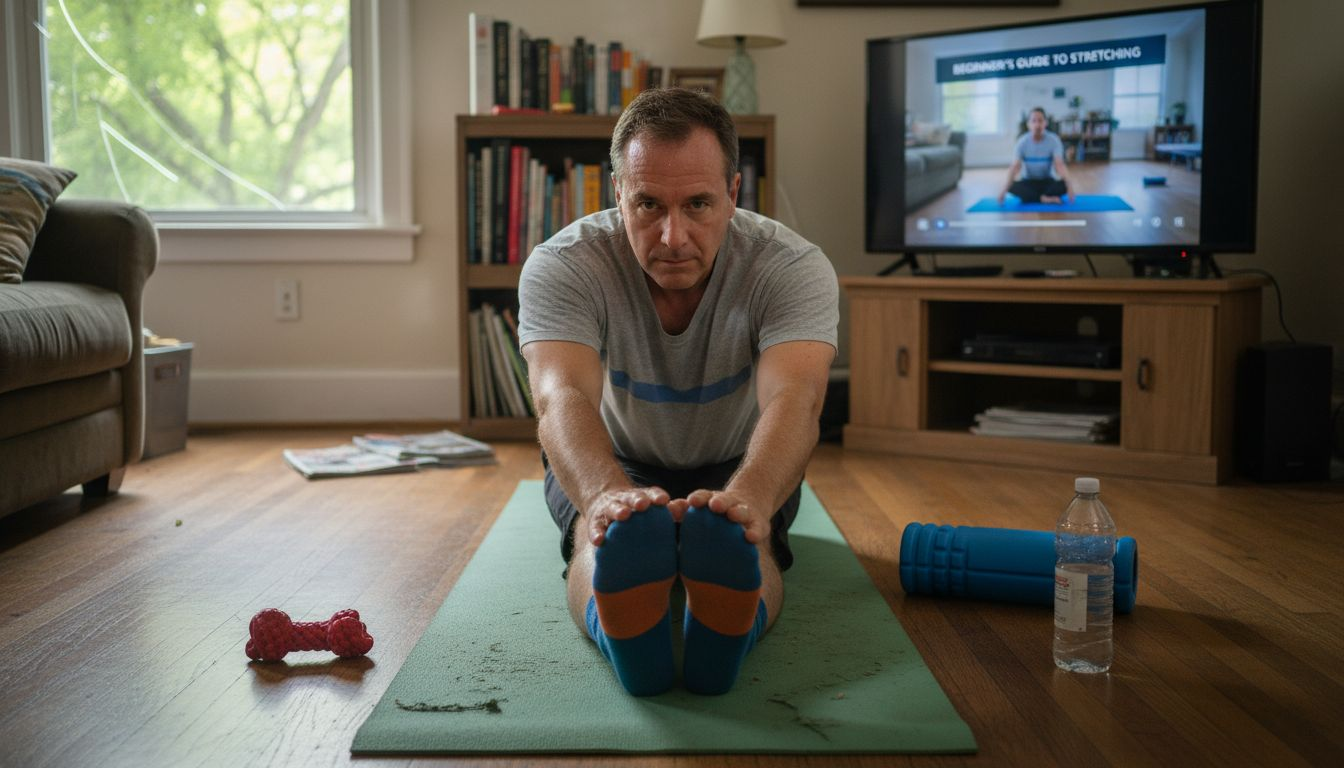
Start exercising activities which are convenient but hard.
For starters, try something gentle like a brisk walk, swimming, or a bike ride. They will help you get a decent workout without putting too much strain on your body.
The U.S Department of Health and Social Services recommends at least 150 minutes of aerobic activity a week. It could be 30 minutes of moderate-intensity exercise.
More intense activities like jogging, aerobic dances, or interval training will help you burn more calories. As a result, you continue to challenge your body to avoid adaptation.
Moreover, it is essential to change types of exercise. It can be cardio and strength training, using your body weight or machines. It will allow you to target different areas and get a variety of movements.
It is vital to tone muscles and be fit while losing weight. The abovementioned exercises will give you an opportunity to increase muscle mass and transform your body.
Pro Tip: Finally, do not overdo it while trying to lose weight and try to exercise regularly. Your body will adapt to new conditions gradually, so it is vital not to push yourself too hard during the first weeks.
Here’s a comparison of beginner vs. intermediate exercise routines:
| Activity Type | Beginner Routine Example | Intermediate Routine Example |
|---|---|---|
| Cardio | 30 min walking, 3x/week | 30 min jogging, 4x/week |
| Strength Training | Bodyweight exercises | Free weights, resistance bands |
| Flexibility Training | Simple stretching routines | Yoga or Pilates sessions |
| Weekly Goal | 150 min moderate activity | 200+ min varied intensity |
Step 3: Create a simple weekly exercise schedule
Designing a weekly plan in exercise is crucial for your progress. It is vital to develop the strategy to adhere to while working out from home and simultaneously support your weight loss.
Firstly, it is essential to plan in advance and allocate particular hours per week for sport activities. Set the number of desired sessions per week, at least three, up to five, and spread them through the week.
So, for instance, one could organize their own weekly plan in such a way: 30 minutes of cardio exercises on Monday, Wednesday, and Friday and two-hour weight training on Tuesday and Thursday. Having days off between two consecutive workouts allows the muscles to rest and recover.
It is also critical to change the types of exercises to work different sets of muscles and keep the motivation high. Thus, a person could alternate between walking, swimming, doing sports, and bodybuilding.
The idea is to leave some free time for other weekly tasks and not overload the schedule.
Finally, a person should make a weekly plan in exercise for weight loss in accordance with their own calendar and lifestyle and gradually increase the time and difficulty of workouts.
Pro Tip: It is advisable to count the number of calories burnt during each sport activity and track the progress on a scale. A good idea to stay motivated and inspired by achievement and an excellent visualisation of results is to use an electronic calorie counter.
Step 4: Start gradually and track your progress
The successful loss of weight is usually attributed to the development of healthy habits and a better perception of one’s fitness needs.
Keeping a record of one’s fitness progress can help in maintaining the necessary motivation and show how the fitness journey is going in percentages.
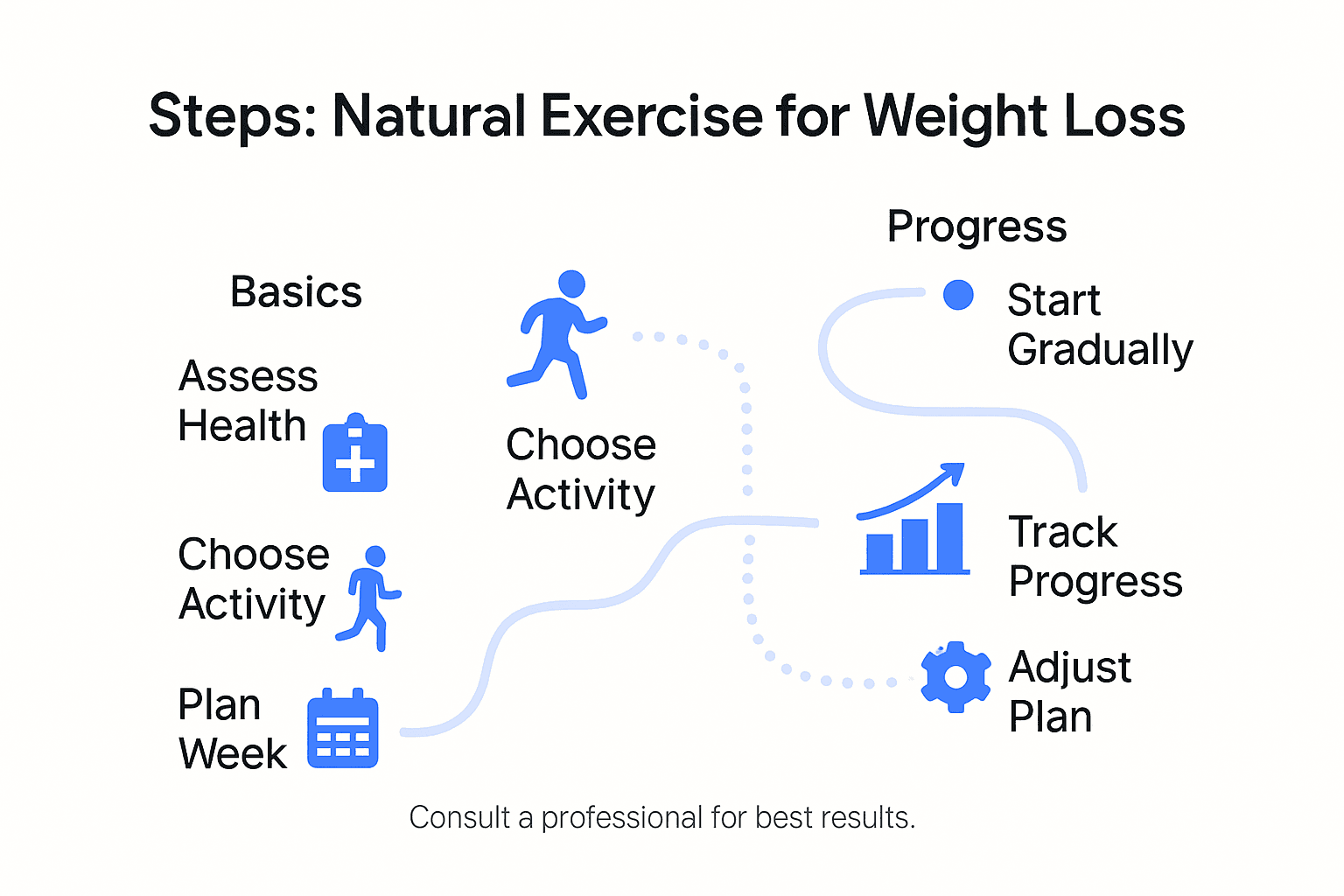
Begin by setting your expectations low and up your exercise intensity slowly – no more than 10 percent per week.
Workout shorter (10-15 min) and begin to grow longer as you begin to feel more comfortable (up to 30 min). Maybe invest in something to keep track of your workouts – a notebook or an app.
Note the changes in your body and how you are now able to do things you couldn’t before.
Most people have failed at some point in their fitness journey, and the reason was because they tried to do “too much, too soon”.
Build a fitness lifestyle and create a habit, and then reward yourself for the things you accomplish and the things you do not.
It will take time and you will feel like you have gone nowhere some days, but you only need to move foward an inch to improve.
Pro Tip: My recommendation would be to track your progress with pictures and measurements every month. You may see results that the scale does not show.
Step 5: Adjust your plan for continued success
Successful fitness requires a progressive and well-thought-out approach. Designing a personal plan that can be adjusted in accordance with new fitness levels is essential for sustained motivation and preventing overtraining.
As the body adapts to regular physical activity, it becomes essential to alter the workout regime in order to continue seeing results.
This may entail increasing the intensity of the workout, trying out new variations of the same exercise, or changing the frequency. It is also important to listen to your body and remain flexible as far as exercising is concerned.
If a particular set of exercises ceases to provide the expected challenge, it may be necessary to add more reps or weight to the program. On the other hand, if one feels excessively drained or sore after a workout, it may be a sign that it is time to take a break.
It is also essential to remain flexible and adapt the plan in accordance with one’s needs and circumstances.
There will be days or even weeks when life gets busy and the person cannot manage to work out as efficiently as they usually do
It is important not to get discouraged by such situations and try to encourage oneself to adhere to the fitness regime as much as possible.
Some days may only allow for 15-minute exercises, but it is still a positive step towards a healthier lifestyle. The point is to focus on being consistent and not getting frustrated with oneself over missed workouts.
Pro Tip: I would advise to set aside a particular day every month to evaluate one’s fitness progress, determine what works and what doesn’t, and make necessary changes to the plan.
Take Charge of Your Weight Loss Journey with Tailored Exercise Plans
Starting exercise can be a difficult habit to establish when you do not know how to measure your fitness levels and what exercises are suitable for you.
The article mentions several essential tips for measuring progress and preventing overtraining, such as setting realistic goals, finding enjoyable activities to prevent getting bored, and tracking your progress.
If you have faced challenges while trying to determine a plan for exercising and staying motivated, you are in the right place.
Many people struggle to find a way to develop a working strategy and adhere to it consistently to lose weight.
See the most popular and expert-approved methods of exercising and find the best fit for your current habits and fitness level.
Cardio Intervals – LeanAndFit and other interesting ideas from Outdoor Workouts – LeanAndFit will help you keep track of your progress and stay motivated by new and exciting projects.
Go to LeanAndFit.info right now to plan your natural fitness regimen and develop healthy habits for a lifetime of results.
Frequently Asked Questions:
Q-1. Can the best first exercise program for weight loss be something that doesn’t feel like a workout at all?
A-1. Yes. Brisk walking, dancing, climbing stairs, gardening, active chores or playing with children can be good ways to add movement without a workout. The most important thing for a beginning is to think of something he/she can stick with – and NIDDK specifically recommends that the activity should be enjoyable, since that can make it easier to be persistent.
Q-2. Why could a five minute walk be more valuable than a one hour workout when it comes to weight loss?
A-2. Getting up to move, even briefly, establishes the habit of moving. NIDDK specifically says that those who were inactive could try starting with very short periods of activity, such as 5 or 10 minutes, and they recommend building a regular routine of movement, which can be more valuable than trying to do a demanding workout.
Q-3. Could the choice the exercise based on the energy level the day to make a weight-loss exercise easier to manage?
A-3. To some extent, yes. An exercise schedule can be flexible enough to allow easy activities on days when the beginner is tired and a more demanding activity when they feel energetic. This helps to avoid the “hard workout” trap, where a missed workout can lead to despair and inactivity for the whole day. The idea is to stay active and build a regular routine, which can then be made gradually more demanding.
Q-4. What if the first sign of progress in the exercise is the fact that it is easier to do everyday activities than when starting, rather than loss of weight?
A-4. That is a sign that the activity is providing value. Exercise has value independent of weight loss – it makes a person healthier and more fit. Losing weight is only a side benefit and it may be that the scale is not going down, even when the person is burning calories through exercise. The other benefits are also important.
Q-5. Can building the exercise around an existing daily habit is a better way to make exercise a regular part of the day than setting aside a specific time to workout?
A-5. Yes, because it uses a habit loop. A daily habit can be a convenient way to remind oneself to exercise. It could be a walk after lunch, using the stairs instead of the elevator or a brief set of yoga stretches after the morning coffee. The NIDDK recommends that physical activity be incorporated into everyday activities, while also recommending that brief activities can be scheduled when time is limited.
Q-6. Why should the beginner avoid trying to make every session of exercise more difficult as soon as losing weight becomes a goal?
A-6. It can be exhausting to do demanding workouts when the beginner is trying to lose weight. A better option is to work out for more minutes, with sessions occurring more often, before adding greater difficulty to the workouts. The NIDDK specifically recommends that activity be increased gradually, paying attention to how the body responds, before increasing the difficulty of the workout.
Q-7. Can “moving more” in general be considered a valuable step between being inactive and starting a workout program?
A-7. Yes. Someone who is spending most of their day being inactive/sedentary does not need to start with a workout. Just getting them to get up and move for a few minutes every day can be a beneficial step towards a more active lifestyle.
Activities such as walking, climbing stairs, gardening or even housework can help to reduce sedentary time. It can even be beneficial to break up long sedentary periods with occasional stretching or movement breaks. Moving more is always better than sitting.
Q-8. How can the beginner know if the exercise is challenging enough to be valuable to the weight loss efforts, without it being an endurance test during the first week?
A-8. The talk test is a simple way to judge if the activity is at a reasonable intensity. When exercising at a moderate level, a person should be able to talk in sentences, but shouldn’t be able to sing comfortably. This approach requires no special equipment and is recommended by NIDDK, while more intense activity should be left to when the beginner has had more practice.
Q-9. Could making an enjoyable activity a part of the fitness routine be considered more of a weight-loss trick than a real strategy?
A-9. It can be, since a valuable strategy for weight-loss is to make the necessary behaviors into habits. People tend to stick better to what they like, so making the daily habit part of an enjoyable activity makes it more likely to occur regularly.
NIDDK’s recommendation to choose enjoyable activity and one that is appropriate to the skill level fits this concept, since it encourages persistence. Weight-loss programs, on the other hand, focus on the value of goals, tracking, support and developing strategies for managing setbacks.
Q-10. What should the beginner track during the first month of the exercise program if the desired weight loss is not yet reflected on the scale?
A-10. A lot of things are important to track besides the number on the scale. The most immediate indication is the number of days of exercise and the amount of time spent exercising.
The NIDDK suggests that the beginner tracks how many days they were active, how long they exercised, how far they walked if applicable, how much they have been exercising (frequency and duration), the effort required, improvements in strength or endurance, and how easily they are performing the everyday activities.
The calories burned by the body during exercise will impact the weight, which can be reduced by making sure that the person is burning more calories through activity than they consume.
Recommended
- Complete Guide to Weight Loss for Beginners – LeanAndFit
- Full Body Home Workout for Effective Weight Loss Results – LeanAndFit
- Effective Workout at Home Tips for Safe Weight Loss – LeanAndFit
- 7 Home Workout Ideas for Weight Loss and Fitness Success – LeanAndFit
- Why Trust LeanAndFit.info?
- For educational purposes only