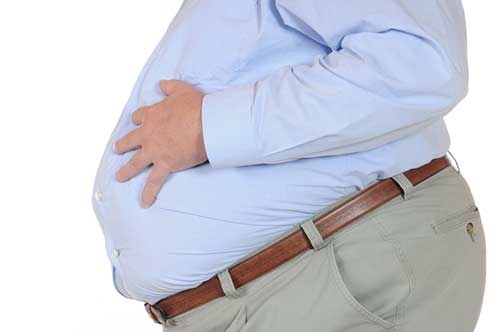

Over one-third of American adults have a percentage of body fat that is considered to be over the healthy range as defined by many health experts.
The topic of body composition goes far beyond vanity and appearances. Having healthy body fat levels are important for general health, as well as energy levels and quality of life.
See how uncovering the science behind what makes up our body can help you gain control over your wellness and body fat.
Table of Contents
- What Body Composition Means in Health
- Types of Body Fat and Lean Mass
- How Body Composition Is Measured
- Body Composition Versus Body Weight
- Improving Body Composition Safely
Key Takeaways
| Point | Details |
|---|---|
| Understanding Body Composition | Body composition goes beyond weight, analyzing fat, muscle, bone, and water proportions to assess health risks and metabolic potential. |
| Types of Body Fat | Distinguish between essential fat, necessary for bodily functions, and storage fat, which can pose health risks when excessive, especially visceral fat. |
| Measurement Techniques | Advanced methods like Bioelectrical Impedance Analysis and DEXA provide accurate assessments of body composition, offering better health insights than simple weight measurements. |
| Safe Improvement Strategies | Focus on balanced nutrition and strength training to gradually enhance body composition, prioritizing long-term health over quick fixes. |
What Body Composition Means in Health?
The body composition refers to the particular breakdown of what our body is composed of. Scales usually give a general idea of the weight, but the information about the body composition is more detailed.
It reflects the ratio of body fat to muscle, bone, and water. Interpretation of various percentages of body components indicates the potential risks to health.
The purpose of determining body composition is to understand how to best approach health and fitness, depending on the predominance of body tissues.
Muscle tissue, bone tissue, internal organs, connective tissues, and fluids are lean body mass. The percentage of body fat is crucial since it indicates the amount of energy stored in the body that is available for use. However, a high level of body fat may be hazardous to health since body fat is the source of many diseases.
Lean mass is vital because muscles control most of the body functions, and the bones protect vital organs.
Researchers also highlight the importance of water percentage in the body. Water is essential for life and helps the body to perform various functions.
Scientists highlight several key components that make up body composition. The main four are muscle mass percentage, body fat, percentage of bones, and total body water.
The analysis of the body composition assists in developing the plan for nutrition and physical activity in order to improve health.
This way, the data about body composition can be helpful to understand what is currently happening in the body and what steps should be taken to enhance health indicators.
I find the concept intriguing due to the possibility of determining what is going on with the body on the inside, depending on the distribution of body mass. Monitoring the numbers can be an additional motivation to work out and get stronger. Furthermore, it can help to see the progress that is not always visible on the scales.
Types of Body Fat and Lean Mass
Different types of body fat play unique roles in maintaining overall health, ranging from critical survival mechanisms to potential metabolic risks. Essentially, body fat can be categorized into two primary types: essential fat and storage fat.
Body fat and lean mass can be generally divided into several groups based on their location and other factors.
First, essential fat is a term, which refers to fat associated with normal body functions. It is found in vital organs, such as adrenals, bone marrow, and the nervous system. Secondly, storage fat is another type of body fat found in fat tissues.
It acts as a backup source of energy; however, having too much of it may be harmful to health. Visceral fat is categorized as storage fat as well, but it is located close to the organs and is more dangerous than the subcutaneous type.
Researchers also use the term “lean body mass” when referring to body composition.
It actually means the proportion of muscles, bones, and other non-fat tissues in the human body. The major share of it is lean muscle, which is important for overall health.
Lean muscle tissue is more labile than fat, meaning it is easier to gain and lose. Moreover, muscles produce more energy, so having a higher percentage of muscle tissue usually means a healthier and more fit body.
People, training at the gym, usually aim to increase their lean muscle mass, as it improves the body’s functional capacity and provides the ability to lead a healthier lifestyle.

Knowing the ratio between body fat and lean bulk is essential if one knows how to take care of themselves.
Genes govern a part of the process, but the other is determined by external factors such as diet, sport, and stress levels.
Working out and increasing the intensity of exercises allow you to reduce harmful fats and gain more muscle mass.
How Body Composition is Measured?
Measuring body composition can be performed in a variety of ways. Unlike regular scales, body composition measurement devices allow researchers and clinicians to get detailed insights into the body structure of the subject.
There are several approaches to measuring body composition, each of which has its own benefits and drawbacks.
For example, using a bioelectrical impedance analyzer, it is possible to determine the percentage of body fat, lean body weight, and other features with relative ease.
However, this method has some shortcomings due to the influence of various factors on the results.
More advanced technologies, such as DEXA scans, allow us to get extremely detailed information about the body structure while being relatively safe and radiation-free.
Hydrostatic weighing has another set of advantages and disadvantages compared to other methods. Basically, it determines the body fat percentage based on the principle of water displacement.
The article mentions other approaches, such as caliper measurements, which are used in conjunction with specific calculations. All these methods are useful and give a more extensive understanding of the human body than weighing on scales.
The article authors note that measuring body composition is a better indicator of health than just determining weight.
Body weight can be influenced by numerous variables, but the described methods allow a more precise assessment of the body’s components. Therefore, the overall effect of such analysis on health is more significant. In addition, it should be noted that all the described methods have varying degrees of complexity and different levels of equipment requirements.
For this reason, a qualified clinician should always choose the method based on the goals, means, and patient’s preferences. On the other hand, the principles of body structure are often universal for most people, so such analyses are also helpful in determining the general state of health.
Body Composition Versus Body Weight
Body weight and body composition are two different concepts that help understand the state of one’s health. It is essential to distinguish the two and know the importance of each.
While the former regards the person’s weight measurement, the latter considers the former’s breakdown into percentages of bodybuilding.
Therefore, weight measurement is not enough to tell someone’s body composition
as it only shows the amount of weight a person has without specifying whether it is fat or muscular.
The reading on a scale shows an individual’s weight regardless of their body structure. As such, two people can weigh the same, but their body composition may differ.
For instance, a person may gain weight due to an increase in muscle rather than fat. In addition, fat is more spaced out compared to muscle, so two people can have the same weight even if one has more muscle mass than the other.
Muscles are dense compared to fat, meaning that a person who gains muscle will weigh more.
On the contrary, a person who gains fat will weigh more too, but their bodybuilding will not be as dense as a person with more muscle.
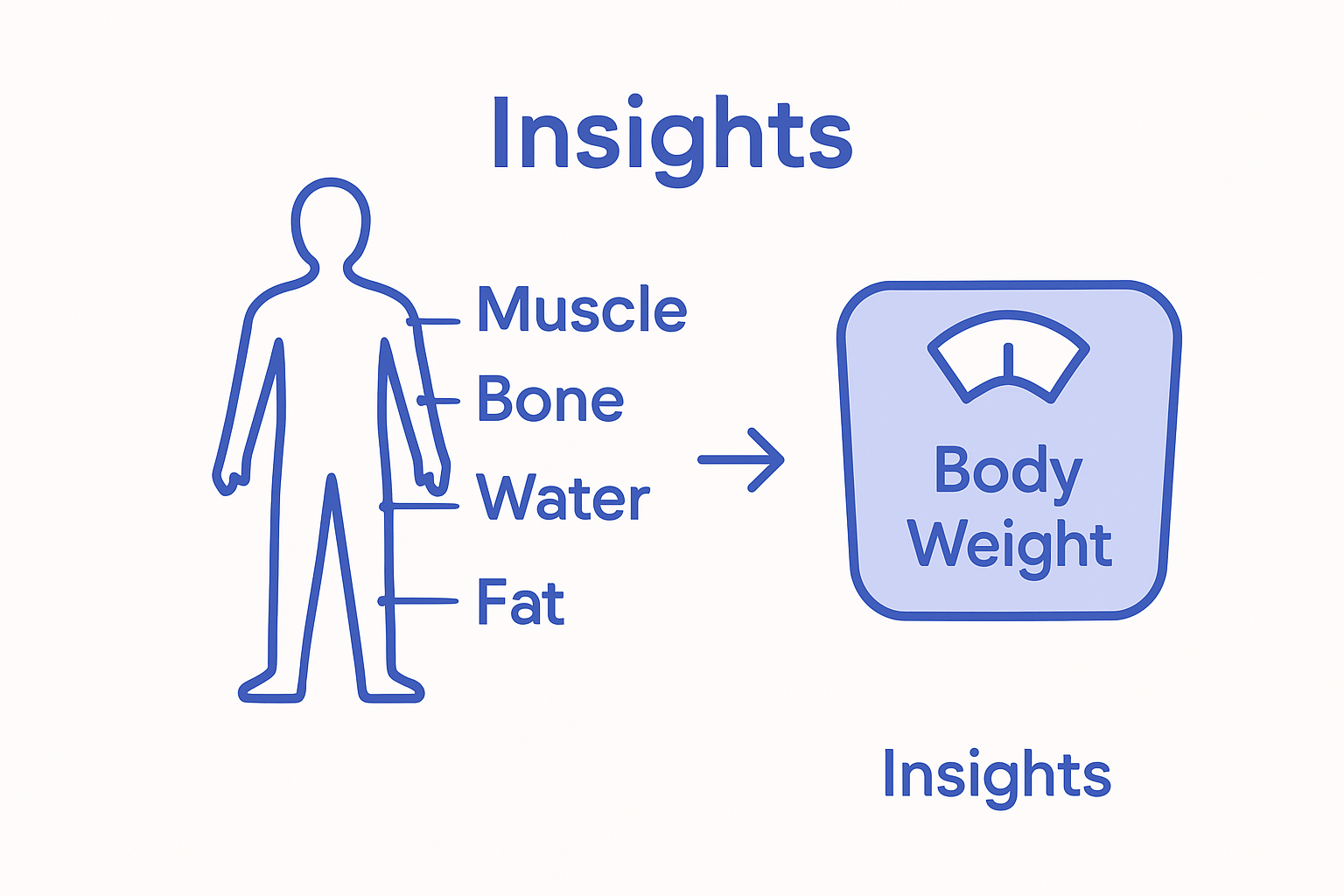
The research and practice of body analysis show that body composition as a determinant of health is more reliable than weighing.
The amount of lean body mass determines the body’s metabolic activity and the level of protection against diseases.
Body fat, particularly visceral fat, is a major contributor to chronic health problems and the development of many cancers.
Medical practitioners now encourage measuring body composition instead of weighing oneself as it provides more information about the body’s metabolic state and overall health status.
A shift from weighing to body composition analysis will enable individuals to adjust their unhealthy habits based on the results.
Individuals need to stop worrying about their weight and focus on building lean body mass.
A healthy body comprises a combination of lean body mass and fat in the ratio that suits each person’s body type.
People can, therefore, make wise decisions about managing their health and achieve positive results by tracking their body composition instead of weighing.
Improving Body Composition Safely
Understanding the mechanisms that lie behind the alterations in body fat may contribute to finding effective solutions to reduce it.
A better body image can be achieved through appropriate measures, such as paying attention to the diet, engaging in different types of sports, and making changes to one’s lifestyle.
These interventions allow for cutting down the percentage of fat in one’s body in a healthy and balanced way, which, in turn, can lead to improved well-being.
In fact, the key to a healthier body weight is to make efforts to change it little by little so that no harm is done to the body. Strength training exercises should play an important role in the process.
They help build muscles while losing weight. With the help of increased resistance, one can lose body fat and gain muscle tissue. Moreover, progressive resistance is essential as it helps gain muscle mass and power.
Exercises should ideally involve large muscles, as they allow to work out several parts of the body at a time.
Furthermore, it is vital to begin the training with low weights in order to avoid injury. It is worth noting that a significant amount of health scholars agree that a balanced diet is equally important when it comes to losing weight.
Proteins should be consumed in larger quantities as they help build muscle mass, which is vital for a healthy body weight. It is estimated that an average person needs between 1.6 and 2.2 grams of protein per 1 kilogram of weight.
A well-rounded diet that includes carbs, proteins, and healthy fats, will yield better results.
Lastly, staying hydrated and having regular meals throughout the day contributes to a healthier body weight. When it comes to bodybuilding, safety should be the primary concern.
Therefore, it is essential to take a step-by-step approach to the process.
Pro Tip: In addition, consulting a physician and learning about one’s body weight history can help prevent health issues.
Take Control of Your Body Composition for Lasting Health
Knowing your body composition is the key to being able to truly change the state of your health and shed those persistent kilograms.
This article talks precisely about what many women and men have been trying to avoid for too long — body weight and its inaccurate measurements.
To be able to gain lean body mass and reduce your percentage of harmful fat, you need to rely on solid experience and go through a serious and purposeful process.
See below what practical steps help you get the desired results.
Check out our useful guides on Strength Training – LeanAndFit and Bodyweight Exercises – LeanAndFit to learn how to achieve your goals of increasing muscle mass and reducing body fat.
A good understanding of the processes taking place in the digestive tract will allow you to achieve success in weight loss and bodybuilding. Get to know more about Gut Modulation – LeanAndFit.
Get started on the right track to improving your body composition and, consequently, your overall health. Turn to the professionals at https://leanandfit.info for valuable advice and useful insights into the world of fitness and nutrition.
Don’t put your dreams and desires aside for tomorrow — start right now!
Frequently Asked Questions:
Q-1: If the scale is not telling the whole truth, what is it that body composition can say about me?
A-1: Body composition can be considered as a “behind-the-scenes report” of your body. It provides a comprehensive description of your body made up of percentages of your body fat, water, muscle, and minerals.
For instance, two people may weigh the same on the scale, but each one has a different amount of body composition. Therefore, using a weighing scale cannot help you determine your body composition.
Q-2: Why do I look fitter in the mirror even though I do not lose weight?
A-2: It is fantastic that you have been having these results! In this case, you are losing fat and gaining muscles as fat is being converted to muscles during the process of recomposition.
Your body may have the same weight as before, but you are now having a more compact body with a lower percentage of body fat. As such, you begin to look better and fitter in the mirror even though you are not losing weight.
Q-3: Is it possible to improve my body composition without losing weight?
A-3: Yes, it is possible to improve your body composition without losing weight. Loss of weight is not the only indicator of body composition. The changes that happen to your body during exercise and regular physical activity are what determine your body composition.
Therefore, if you want to gain muscles and reduce body fat, you need to take part in regular physical activities. These activities will help you improve your general appearance, and fitness level without necessarily losing any weight.
Q-4: What is the significance of muscles in body composition?
A-4: Muscles can be described as the most important tissue in the human body. Muscles help to shape and define body contours. They also play a significant role in determining a fit and healthy body composition because having more muscles increases the resting calorie expenditure.
As a result, increasing muscles can help you maintain a healthy body composition due to the increased calorie expenditure.
Q-5: Is it possible to have a normal weight but a bad or unhealthy body composition?
A-5: Yes, it is possible to have normal weight with an unhealthy body composition. Most people do not understand that body weight is not an indicator of body composition. Body weight is simply a measure of how much you weigh, and it does not tell you anything about your body fat or muscle mass.
However, body composition is a perfect indicator of whether your weight is healthy or not. Body composition determines your fitness level and can indicate whether you are at risk of developing certain illnesses and diseases.
Q-6: How can day-to-day activities improve my body composition?
A-6: All the things you do or do not do improve or lower your body composition. Having healthy lifestyle habits can help you have a good body composition, but an unhealthy lifestyle has the opposite effect on your body composition.
For instance, exercising and eating healthy food can help you improve your body composition. In contrast, a low level of physical activity and a poor diet can have a negative effect on your body composition.
Recommended
- Understanding the Healthy Weight Range for Better Health – LeanAndFit
- Energy Balance Explained: Key Principles and Impact – LeanAndFit
- What Is Healthy Living? Complete Overview and Guide – LeanAndFit
- Complete Guide to the Role of Gut Health – LeanAndFit
- What Is Sculpting Shapewear? Complete Guide for Women – Saga Women
- Why Trust LeanAndFit.info?
- For educational purposes only