
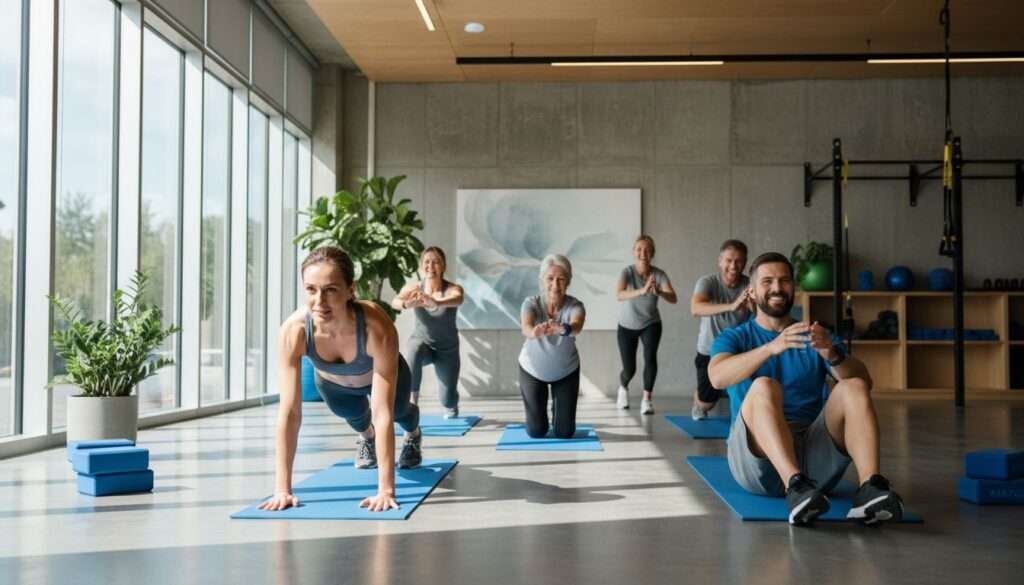
Over 60 percent of american adults struggle with lower back pain at some point and weak core muscles are often to blame.
A strong core does more than shape your midsection. It gives you stability, supports good posture, and protects you during daily movement.
Discover how specific exercises can help you strengthen your core, improve balance, and reduce the risk of injury—all without fancy equipment.
Table of Contents
- 1. Plank: Build Core Stability And Endurance
- 2. Bicycle Crunches: Target Obliques And Burn Fat
- 3. Russian Twists: Improve Rotational Strength
- 4. Mountain Climbers: Cardio For Core And Calorie Burn
- 5. Leg Raises: Strengthen Lower Abdominal Muscles
- 6. Bird Dog: Enhance Balance And Back Support
- 7. Dead Bug: Improve Core Control And Posture
Quick Summary
| Key Message | Explanation |
|---|---|
| 1. Engage your core with planks | Holding a plank strengthens abdominal muscles and improves posture while building overall core stability effectively. |
| 2. Perform bicycle crunches for fat burning | This exercise targets obliques and engages multiple muscle groups, enhancing calorie burn and overall core strength. |
| 3. Incorporate Russian twists for rotational strength | Engaging in this movement boosts oblique strength and improves core stability, crucial for sports and daily activities. |
| 4. Use mountain climbers for cardio and core | Combining cardio with core workout, mountain climbers burn calories and strengthen core muscles simultaneously. |
| 5. Focus on leg raises for lower abs | This targeted exercise strengthens lower abdominal muscles, enhancing core definition and stability while minimizing injury risk. |
1. Plank: Build Core Stability and Endurance
The plank is a powerhouse exercise that transforms your core strength with zero equipment needed. This deceptively simple bodyweight movement targets multiple muscle groups simultaneously, making it a secret weapon for building stability and burning calories.
At its core, planking is about isometric muscle engagement. When you hold a plank position, you are essentially creating tension throughout your entire body particularly in your abdominal muscles, lower back, shoulders, and glutes.
This sustained tension not only builds muscular endurance but also dramatically improves your overall body control and posture.
To perform a perfect plank, start by positioning yourself face down with forearms flat on the ground, elbows directly under your shoulders. Extend your legs behind you, lifting your body weight so that only your forearms and toes touch the ground.
Maintain a straight line from your head to your heels a form often called the “neutral spine position”. Engage your core by pulling your belly button towards your spine and squeeze your glutes to prevent sagging.
Key Benefits of Regular Planking:
- Builds core muscle strength
- Improves overall body stability
- Enhances posture and balance
- Burns calories through sustained muscle engagement
- Reduces risk of back injuries
Beginners should aim to hold a plank for 20 to 30 seconds and gradually increase duration as strength improves. Pro tip: quality matters more than duration. A 15 second perfect form plank beats a minute of poor technique.
Learn more about how planks improve core stability and transform your fitness journey.
Remember that consistency is key. Incorporate planks into your routine 3 to 4 times per week, and you will start noticing significant improvements in your core strength and overall body composition.
2. Bicycle Crunches: Target Obliques and Burn Fat
Bicycle crunches are a dynamic, full body exercise that transforms your core workout from mundane to magnificent. This powerhouse movement not only targets your abdominal muscles but also engages multiple muscle groups for maximum fat burning potential.
According to research from the University of Maryland, bicycle crunches are exceptional at engaging both upper and lower abdominal muscles while creating a rotational challenge that activates more muscle fibers than traditional crunches University of Maryland. The unique twisting motion means you are working your core from multiple angles simultaneously.
To perform a perfect bicycle crunch, start by lying flat on your back with hands gently supporting your head. Lift your shoulders off the ground and bring your knees toward your chest.
Alternate extending each leg while rotating your upper body, bringing the opposite elbow toward the bent knee. The key is maintaining a controlled, fluid motion that keeps your core constantly engaged.
Key Benefits of Bicycle Crunches:
- Targets oblique muscles
- Burns more calories than standard crunches
- Improves overall core strength
- Requires zero equipment
- Enhances body coordination
Research from the National Institutes of Health suggests that proper technique is crucial. By using wearable sensors, athletes can monitor and enhance their performance while preventing potential injuries National Institutes of Health.
Aim to perform 3 sets of 15 to 20 repetitions, focusing on form over speed. Remember that quality movement trumps quantity every time. Integrate strength training strategies for weight loss to maximize your results and transform your fitness journey.
3. Russian Twists: Improve Rotational Strength
Russian twists are a dynamic core exercise that transforms your abdominal workout from ordinary to extraordinary. This powerful movement challenges your body in ways traditional exercises cannot, targeting your obliques and building remarkable rotational strength.
According to research published in Frontiers in Sports Medicine, core muscle training like Russian twists is crucial for enhancing rotational strength which plays a significant role in sports performance and injury prevention Frontiers in Sports Medicine.
The exercise uniquely engages multiple muscle groups simultaneously creating a comprehensive core conditioning experience.
To perform a proper Russian twist, sit on the floor with knees bent and feet slightly lifted off the ground. Lean back at a 45 degree angle while keeping your back straight. Clasp your hands together or hold a weight for added resistance.
Rotate your torso from side to side while maintaining a steady core and controlled movement. The goal is smooth controlled rotation that fires up your core muscles.
Key Benefits of Russian Twists:
- Strengthens oblique muscles
- Improves core stability
- Enhances rotational power
- Can be modified for different fitness levels
- Requires minimal equipment
Research from the National Institutes of Health suggests that using wearable sensors can help monitor technique and prevent potential injuries during this exercise National Institutes of Health.
Start with 3 sets of 12 to 15 repetitions and gradually increase difficulty by adding weight or extending hold times.
Remember that proper form matters more than speed or repetitions.
By integrating Russian twists into your workout routine, you will develop a stronger more resilient core that supports overall athletic performance.
4. Mountain Climbers: Cardio for Core and Calorie Burn
Mountain climbers are the ultimate full body exercise that transforms your workout from mundane to intense. This dynamic movement combines cardiovascular training with core strengthening in a single explosive motion that will leave you breathless and burning calories.
Research from Frontiers in Sports Medicine reveals that mountain climbers are exceptional for engaging core muscles while providing significant cardiovascular benefits Frontiers in Sports Medicine.
Unlike traditional stationary exercises mountain climbers simulate the dynamic movements athletes use in real world scenarios creating a comprehensive workout experience.
To perform mountain climbers start in a high plank position with hands directly under your shoulders. Engage your core and bring one knee toward your chest then quickly alternate legs as if you are running in place.
The key is maintaining a steady rhythm while keeping your hips low and back flat. Your goal is to move quickly and maintain proper form simultaneously.
Key Benefits of Mountain Climbers:
- Burns significant calories
- Strengthens core muscles
- Improves cardiovascular endurance
- Requires zero equipment
- Enhances overall body coordination
The National Institutes of Health suggests using wearable sensors to monitor technique and prevent potential injuries during this high intensity exercise National Institutes of Health. Start with 3 sets of 30 seconds and gradually increase duration as your fitness improves.
For maximum results explore our complete guide to cardio for fat loss and integrate mountain climbers into a comprehensive fitness strategy.
Remember that consistency and proper form are more important than speed. Mountain climbers can transform your workout routine helping you build strength endurance and torch calories simultaneously.
5. Leg Raises: Strengthen Lower Abdominal Muscles
Leg raises are the secret weapon for sculpting those elusive lower abdominal muscles that seem impossible to target. This powerful exercise transforms your core workout by focusing intensely on the often neglected lower abs region.
Research from Frontiers in Sports Medicine highlights that core muscle training like leg raises is crucial for enhancing lower abdominal strength and preventing potential injuries Frontiers in Sports Medicine.
Unlike other core exercises that provide generalized stimulation leg raises specifically target the lower abs creating a more focused and effective muscle engagement.
To perform leg raises lie flat on your back with legs extended and arms resting alongside your body. Keep your lower back pressed against the floor and slowly lift your legs upward forming a 90 degree angle with the ground.
Lower them back down with controlled movement ensuring your core remains engaged throughout the entire motion. The key is maintaining tension and avoiding momentum.
Key Benefits of Leg Raises:
- Targets lower abdominal muscles precisely
- Improves core stability
- Enhances muscle definition
- Can be performed with minimal equipment
- Reduces risk of lower back injuries
The National Institutes of Health recommends using wearable sensors to monitor technique and ensure proper form National Institutes of Health. Start with 3 sets of 10 to 15 repetitions and progressively increase difficulty.
Learn how deadlifts can complement your core strength training for a comprehensive approach to muscle development.
Remember that consistent practice and proper form are more important than the number of repetitions. Leg raises can be your pathway to a stronger more defined core when performed with dedication and precision.
6. Bird Dog: Enhance Balance and Back Support
The bird dog exercise is a game changing movement that transforms core training from mundane to extraordinary. This seemingly simple yet powerful exercise challenges your balance stability and muscular coordination in ways traditional workouts cannot.
According to groundbreaking research from the National Institutes of Health, the bird dog exercise combined with the hollowing maneuver can significantly increase core muscle thickness National Institutes of Health. This means you are not just exercising but fundamentally rebuilding your core strength and stability from the inside out.
To perform the bird dog start on all fours with hands directly under your shoulders and knees under your hips. Maintain a neutral spine by keeping your back flat and core engaged. Slowly extend your right arm forward while simultaneously extending your left leg backward.
Hold for a few seconds then return to the starting position and alternate sides. The key is moving with precision and control keeping your hips level throughout the movement.
Key Benefits of Bird Dog Exercise:
- Improves core stability
- Enhances overall body balance
- Strengthens lower back muscles
- Reduces risk of back injuries
- Requires zero equipment
Research from Frontiers in Sports Medicine confirms that core exercises like bird dog are essential for sports performance and injury prevention Frontiers in Sports Medicine.
Begin with 3 sets of 8 to 10 repetitions on each side and gradually increase complexity as your strength improves. Discover how deadlifts can complement your core strength training for a comprehensive approach to fitness.
Remember that consistency and proper form are your greatest allies in mastering the bird dog. Your body will thank you with improved stability strength and resilience.
7. Dead Bug: Improve Core Control and Posture
The dead bug exercise might sound ridiculous but it is a powerhouse movement for transforming core strength and body control. This seemingly simple yet incredibly effective exercise challenges your stability and muscular coordination in ways traditional workouts cannot.
Research from the National Institutes of Health reveals that the dead bug exercise combined with the hollowing maneuver can significantly increase core muscle thickness National Institutes of Health. This means you are not just exercising but fundamentally rebuilding your core strength from the inside out.
To perform the dead bug start by lying on your back with arms extended toward the ceiling and legs raised with knees bent at 90 degrees. Slowly lower your right arm behind your head while simultaneously extending your left leg straight and close to the ground.
Maintain a completely flat lower back against the floor throughout the movement. Return to the starting position and alternate sides. The key is moving with precision and maintaining core engagement.
Key Benefits of Dead Bug Exercise:
- Improves core muscle control
- Enhances overall body stability
- Corrects postural imbalances
- Reduces risk of lower back injuries
- Requires zero equipment
Frontiers in Sports Medicine confirms that core exercises like dead bug are essential for sports performance and injury prevention Frontiers in Sports Medicine. Begin with 3 sets of 8 to 10 repetitions on each side and gradually increase complexity as your strength improves.
Explore how Pilates can complement your core strength journey for a comprehensive approach to fitness.
Remember that consistency and proper form are your greatest allies in mastering the dead bug. Your body will reward you with improved stability core strength and overall physical performance.
Below is a comprehensive table summarizing the core exercises discussed throughout the article, focusing on their benefits, key steps, and additional insights for effective implementation.
| Exercise | Key Muscles Targeted | Description & Steps | Benefits |
|---|---|---|---|
| Plank | Abdominal muscles, lower back, shoulders, glutes | Start face down, forearms on ground, elbows under shoulders; lift body in straight line from head to heels; engage core by pulling belly to spine. | Builds core strength, improves stability, enhances posture, burns calories, reduces back injury risk. |
| Bicycle Crunches | Oblique muscles, upper and lower abs | Lie on back, support head, lift shoulders; bring knees to chest, alternate extending legs and rotate upper body, bringing opposite elbow to knee. | Targets obliques, burns more calories, improves core strength, enhances coordination. |
| Russian Twists | Oblique muscles | Sit on floor, knees bent, feet lifted; lean back, clasp hands; rotate torso side-to-side, keeping core engaged. | Strengthens obliques, improves stability, enhances rotational power. |
| Mountain Climbers | Core muscles | Start in high plank, hands under shoulders; alternate knees to chest quickly, keeping hips low and back flat. | Burns calories, strengthens core, improves cardiovascular endurance, enhances coordination. |
| Leg Raises | Lower abdominal muscles | Lie on back, legs extended, arms by side; lift legs forming a 90-degree angle, lower back down with control. | Targets lower abs, improves core stability, enhances muscle definition, reduces lower back injury risk. |
| Bird Dog | Core and lower back muscles | Start on all fours, extend right arm and left leg simultaneously; alternate sides, keeping hips level, maintain control. | Improves stability, balance, strengthens lower back, reduces back injury risk. |
| Dead Bug | Core muscles | Lie on back, arms extended, legs bent at 90 degrees; slowly lower opposite arm and leg, keep lower back flat, alternate sides. | Improves core control, enhances stability, corrects postural imbalances, reduces lower back injuries. |
Strengthen Your Core and Accelerate Weight Loss Today
Transform your core strength while burning fat effectively with exercises designed to build stability, endurance, and calorie burn.
If you are looking to overcome challenges like weak abdominal muscles or difficulty burning excess fat, the right combination of movements such as planks, bicycle crunches, and mountain climbers can be your game changer.
These exercises not only improve posture and balance but also enhance overall body coordination to support a healthier lifestyle.

Ready to take control of your fitness journey?
Explore our comprehensive collection of Bodyweight Exercises for easy-to-follow routines that require no equipment.
Pair your core workouts with proven Resistance Workouts to maximize fat loss and strength gains.
Visit LeanAndFit now for expert guidance, motivation, and resources that help you build a leaner, stronger body starting today!
Frequently Asked Questions:
Recommended:
- How Deadlifts Build Core Strength for a Lean Physique? – LeanAndFit
- How Planks Improve Core Stability and Make You Fit? – LeanAndFit
- How Planks Improve Core Stability and Aid in Fat Loss? – LeanAndFit
- What is the Role of Core Strength in Pilates Sculpt for Achieving a Lean Physique? – LeanAndFit
- Why Trust LeanAndFit.info?
- For educational purposes only